The poster gallery at the BILT Bridging Event Policies for the digital transformation and integration of AI in TVET includes submissions by UNEVOC Centres and other TVET stakeholders. They display research results, projects, initiatives, methodologies or tools, related to the conference theme. Visitors of the virtual gallery are welcome to reach out to the authors of the posters to learn more.
The National Service for Commercial Apprenticeship
Submitted by the National Service for Commercial Apprenticeship (Senac), Brazil (Presidency Pro-Tempore of the Alliance for Dual VET in Latin America and the Caribbean)
Founded in 1946, Senac is Brazil’s leading vocational education and training (VET) institution, preparing individuals with the knowledge, skills, and competencies needed to work in the goods, services, and tourism sectors. As a private institution linked to the Commerce System, Senac has contributed significantly to Brazil’s socioeconomic development through high-quality education that promotes social and productive inclusion. Over the past eight decades, it has provided education and training to more than 78 million people.
With a nationwide presence, Senac offers a wide range of programs and courses at various levels, including Initial and Continuing Education, Secondary Vocational Education, and Higher Education. Its courses are available through both in-person and distance learning formats. Senac is committed to enhancing the competitiveness of the commerce sector, driving innovation, and responding swiftly to labor market demands—unlocking new opportunities for the Brazilian workforce.
In February 2025, Senac assumed the Pro-Tempore Presidency of the Alliance for Dual VET in Latin America and the Caribbean, reaffirming its commitment to advancing dual vocational education in the region. The Alliance, established in 2021, is a regional platform for vocational institutions to share knowledge and best practices. It aims to promote high-quality dual education that meets labor market needs and enhances future opportunities for skilled workers.
The Alliance is guided by a coordination group composed of the rotating one-year presidency, the Federal Institute for Vocational Education and Training (BIBB) as reference institution, and ILO/Cinterfor, the Technical Secretariat at the Inter-American Centre for Knowledge Development in Vocational Education and Training of the International Labor Organization.
Deep Learning. A Content-Integrated Model for Teaching AI in TVET
Submitted by College of the North Atlantic, Canada
College of the North Atlantic is a public technical and vocational college in Newfoundland and Labrador, the most easterly province of Canada. It has a rich history of serving the province across 17 campuses for the last six decades. The college offers 100+ full-time diplomas, certificates, and applied degrees across six schools: Academics, Applied Arts and Tourism, Business and Information Technology, Engineering Technology, Health Sciences, Natural Resources and Industrial Trades, and Sustainability. As one of the largest post-secondary educational and skills training institutions in Atlantic Canada, CNA enrolls nearly 7,000 students annually. CNA enriches learning through empowerment and innovation, offering students educational program as well as experiential learning through work-integration and applied research. It is committed to providing accessible, responsive, and quality programs, preparing students to contribute to social and economic development locally and globally. CNA ranks in the top 20 in Canada for Applied Research and is internationally engaged in educational development projects, with recent partnerships with Guyana, Jamaica, Tanzania, Malaysia, Vietnam, and China. It supported Qatar in building its University of Doha for Science and Technology using Canadian curriculum and standards.
Implementation of AI in INA’s TVET services to promote technological and economic development in Sarapiquí
Submitted by National Institute of Apprenticeship, Costa Rica
The National Learning Institute (INA) was created in 1965 to promote and develop the professional development of workers in all sectors of the economy, to boost economic development and contribute to the improvement of the living and working conditions of the Costa Rican people. It is funded by 1.5% of the total amount of payrolls paid monthly by private employers in all economic sectors when they permanently employ at least five workers. Employers in the agricultural sector will pay 0.50% of this total amount of their payrolls, provided they employ more than ten workers permanently. Autonomous and semi-autonomous institutions and state-owned enterprises must pay 1.5% of the total amount of their payrolls monthly.
The institution is comprised of 12 Training and Technological Services Centers: Agriculture, Commerce and Services, Food Industry, Graphic Industry, Textiles, Vehicle Mechanics, Metalworking, Nautical Fishing, Health, Culture and Crafts, Electrical Engineering, Materials Technology, and Tourism. It has 9 regional offices throughout the country: Brunca, Cartago, Central Eastern, Chorotega, Heredia, Huetar Atlántico, Huetar Norte, Central Pacific, and Central Western.
Intelligent Prototype for Last-Mile Logistics Simulation Using Natural Language Processing
Submitted by Humane Technological Institute, Ecuador
The Humane Technological Institute is a higher education institution based in Ecuador, specializing in business and technology. As part of the TVET (Technical and Vocational Education and Training) ecosystem, the institute plays a key role in developing skilled professionals through programs such as Business Administration, Financial Administration, Business Management and Innovation, Accounting and Tax Advisory, Marketing, Digital Marketing and E-Commerce, Sales, Foreign Trade, Logistics, Storage and Distribution, and Web Analysis and Development.
Through its Research and Community Engagement Department, Humane strengthens its mission by collaborating with both commercial enterprises and non-profit organizations. These partnerships aim not only to align educational outcomes with labor market demands but also to support social and solidarity-based initiatives that benefit vulnerable populations.
The department promotes applied research, innovation, and social projects that allow students and faculty to work hand-in-hand with local communities and industries. These experiences reinforce professional training while addressing real-world challenges—from digital transformation in business to inclusive logistics and technological assistance for underserved sectors.
Knowledge generated through these initiatives feeds directly into the institute’s curriculum and continuing education programs, enhancing their practical relevance. As a result, Humane contributes to workforce development, social impact, and sustainable growth, preparing graduates who are both professionally competent and socially responsible.
Contact: info @ humane.edu.ec, mgarzon @ humane.edu.ec, Website
AI laboratories: virtual solutions for complex problems
Submitted by Tungurahua Higher Technological Institute, Ecuador
The Tungurahua Higher Technological Institute (ISTT) is a public higher education institution located in Ambato, Ecuador. Its mission is to train highly skilled professionals in various fields of knowledge, promoting innovation, technological development, and social commitment. With a diverse academic offering, ISTT provides programs in strategic sectors, adapting to labor market needs and fostering the professional growth of its students. Its educational model combines theory and practice, ensuring comprehensive and high-quality training.
Moreover, ISTT envisions itself as a leading institute in Ecuador, standing out for its academic excellence, the development of competitive human talent, and its contribution to technological and productive advancement in the country. Through strategic alliances, modern infrastructure, and updated programs, the institute strengthens its commitment to cutting-edge education and innovation. With a vision of growth and leadership, ISTT continues to evolve, adapting to future challenges and preparing professionals who will drive Ecuador’s development.
Competencies for the digital world of work - Training for digitalization
Submitted by the Federal Institute for Vocational Education and Training (BIBB), Germany
BIBB is recognized as a center of excellence for vocational research and for the progressive development of vocational education and training (VET) in Germany. BIBB works to identify future challenges in VET, stimulate innovation in national and international vocational systems, and develop new, practice-oriented solutions for both initial and continuing vocational education and training.
BIBB was founded in 1970 on the basis of the Vocational Training Act (Berufsbildungsgesetz, BBiG) as a federal government institution for policy, research and practice in the field of vocational education and training. The Vocational Training Act of 23 March 2005 sets out the Institute's tasks. Through its research and development work and its advisory activities, BIBB helps to provide individuals with qualifications of lasting value for their economic security and employability, and to ensure the international competitiveness of German business and industry.
Being accountable to the Federal Government, BIBB is funded from the federal government budget and is subject to the legal supervision of the Federal Ministry of Education and Research (BMBF). Since 1999 its headquarters have been in Bonn.
Competencies for the digital world of work - Training for digitalization
In this research project, conducted in cooperation with Helmut Schmidt University Hamburg (HSU) since 2021, BIBB, together with HSU’s Centre for Technology Based Education and Training (ZtB), is examining the impact of digitalization on vocational education and training. The project focuses on identifying the conditions that promote the development of digital competencies and foster motivation among apprentices during their training.
Submitted by the Federal Institute for Vocational Education and Training (BIBB), Germany
The digital transformation is both impacting everyday training and work at companies and presenting trainers with new challenges. The continuing training concept “Media and IT competency for training staff (MIKA)” supports trainers with deploying digital technologies in teaching and learning processes and helps them develop personal competencies via guided practice related exercises in face-to-face sessions, webinars and phases of self-directed learning.
AI as a teaching and learning partner in TVET – Integration into inter-company training
Submitted by the Koblenz Chamber of Skilled Crafts, Germany
The Koblenz Chamber of Skilled Crafts is a self-governing, non-profit body of the skilled crafts sector in northern Rhineland-Palatinate in Germany and thus a partner to more than 22.000 companies. The chamber operates under public law and represents the interests of the skilled crafts sector in relation to political institutions, public administration and society. The Koblenz Chamber of Skilled Crafts is dedicated to supporting its member businesses in several ways. We organize events, workshops, and networking opportunities to help businesses connect and collaborate. We keep the members informed about legal changes, new regulations, and industry trends that could impact their operations. We encourage innovation in the skilled trades by providing resources and support for new technologies and practices. The Koblenz Chamber of Skilled Crafts keeps the crafts register and the register of apprenticeship contracts for its district and plays an important role in the vocational training system by offering modern competence centers for vocational qualifications like inter-company training, master craftsman or advanced training. Experienced trainers teach in modern vocational training centres at 14 locations in different regions in the chamber district.
Skills that empower people to shape their communities and economies
Submitted by the Chamber of Skilled Crafts Ostwestfalen-Lippe zu Bielefeld, Germany
The Chamber of Skilled Crafts Ostwestfalen-Lippe zu Bielefeld is one of 53 chambers of skilled crafts in Germany and is located in the East Westphalian city of Bielefeld in North Rhine-Westphalia. As an institution under public law, the Chamber of Skilled Crafts Ostwestfalen-Lippe zu Bielefeld carries out the governmental tasks assigned to it.
The Vocational Training Centre (BBZ) of the Chamber is an essential part of the efficient educational infrastructure for the crafts sector in Ostwestfalen-Lippe. With modernly equipped workshops and practical training, we offer both young people and experienced professionals the opportunity to develop and expand their skills in various craft professions. Our Vocational Training Centre stands out through close collaboration with regional businesses, a passion for innovation, and a strong integration in the dual training system.
Redefining Vocational Skills in Roofing: Integrating AI and Digital Technologies into Construction Curricula
Submitted by the UNEVOC Centre Magdeburg for "Technical and Vocational Education and Training for Sustainable Development", Germany
The UNEVOC Centre "Technical and Vocational Education and Training for Sustainable Development" is a cooperation of Gesellschaft für Internationale Zusammenarbeit (GIZ) GmbH, the Otto-von-Guericke-University Magdeburg and the Fraunhofer Institute for Factory Operation and Automation IFF.
Submitted by PSS Central Institute of Vocational Education (PSSCIVE), India
The Pandit Sunderlal Sharma Central Institute of Vocational Education (PSSCIVE) is an apex research and development organization in the field of vocational education. It is a constituent unit of National Council of Educational Research and Training (NCERT), established in 1993 by the Ministry of Education (MoE), Government of India.
The Institute has a picturesque 38-acre campus at Shyamla Hills in Bhopal. It comprises six academic disciplines, namely Agriculture and Animal Husbandry, Business and Commerce, Engineering and Technology, Health and Paramedical Science, Home Science and Hospitality Management and Humanities, Science, Education and Research with 05 Centres.
The Institute is also a UNEVOC (International Project on Technical and Vocational Education) Network Centre in India, which coordinates all the activities, including communication with UNESCO-UNEVOC International Centre, Bonn, Germany. Through the network, the Centre shares knowledge and experiences related to all aspects of VET, exchange country experiences, and discuss issues of common relevance.
VOCAR-FLIP. Immersive AR flipbooks for future-ready skills
Submitted by Universitas Pendidikan Indonesia
Universitas Pendidikan Indonesia (UPI), or the Indonesian University of Education, is a prominent higher education institution in Bandung, West Java, Indonesia. Established in 1954, UPI has evolved from a teacher training college into a comprehensive university renowned for excellence in education, research, and community service. UPI upholds the vision of becoming “a leading and outstanding university,” with a strong commitment to advancing educational development, particularly in teacher training and vocational education. With its main campus in Bandung and regional campuses in Cibiru, Tasikmalaya, Sumedang, Purwakarta, and Serang, UPI serves a diverse student population from across Indonesia and abroad. It offers undergraduate, graduate, and doctoral programs across various disciplines, including education, science, technology, humanities, arts, and vocational studies. UPI is at the forefront of innovation in education, actively integrating 21st-century skills, digital transformation, sustainability, and inclusive learning practices into its academic and research agenda. The university is also recognized for its leadership in implementing character education based on local wisdom and national values. Internationalization is a key priority for UPI. The university collaborates with numerous institutions and organizations worldwide to enhance global engagement through student exchanges, joint research, conferences, and dual-degree programs. UPI is also a member of various international academic networks, including SEAMEO, UNESCO-UNEVOC, and AUN-QA. As a university with strong roots in educational reform, UPI plays a strategic role in shaping the future of Indonesian education. It contributes significantly to national and global educational discourse, producing high-quality educators, researchers, and professionals committed to excellence, integrity, and service to society.
Submitted by the Korea Research Institute for Vocational Education and Training, Republic of Korea
The Korea Research Institute for Vocational Education and Training (KRIVET) is a government-funded research institute under the Prime Minister’s Office, which was founded in 1997. The mission of KRIVET is to research and develop effective policy solutions regarding vocational education and training and career development. KRIVET has about 300 employees, including approximately 90 researchers holding doctorate degrees in Economics, Education, Sociology, and other fields. They carry out policy research projects in the fields of Future Human Resources, Lifelong Vocational and Career Education, Employment and Skills Development, and Education and Employment Linkage. Alongside the policy research projects, the main topics in TVET that the experts of KRIVET conduct include labour market analysis, occupations and skills projections, development of curriculum and teaching materials, training of leaders, principals and teachers in TVET institutes, and hosting study visits. KRIVET was designated as the UNESCO Regional Center for Excellence in TVET in 2000. Since 2012, KRIVET has served as the Coordinator of the East and Southeast Asia UNESCO-UNEVOC cluster member centers. As of April 2025, KRIVET has made MOU with 60 international organizations and institutes across the world including UNESCO, BIBB in Germany, ASEAN, ADB, WB, ILO and many others.
Harnessing generative AI for a new logic in global skills recognition
Submitted by JET Education Services, South Africa, and Oman College of Health Sciences, Oman
JET Education Services is based in Johannesburg, South Africa. JET has been a UNEVOC centre since 2014 and plays an active role in various international research, strategy and policy development areas. Most recently our work has focused on microcredentials for youth (in collaboration with the ILO and UNICEF), see more here.
Oman College of Health Sciences is a public higher education institution with its headquarters situated at Muscat, the capital city of the Sultanate of Oman. The College has a strong presence across the country with seven branches that are strategically located in the various governorates. The College offers a range of undergraduate degree programs in Nursing, Pharmacy, Medical Imaging, Medical Laboratory Sciences, Physiotherapy, and Health Information Management that are designed to meet local and international standards. The College is committed to serving the needs of the community through active engagement, collaborative initiatives and programs that promote academic excellence, research and innovation.
A scalable strategy for integrating digital skills and AI in TVET
Submitted by Tknika (Basque VET Applied Research Centre), Spain
For over a decade, the Basque Country has implemented a comprehensive digital transformation strategy for TVET centres led by the Vice-Ministry of TVET. Our approach is based on a sustainable digital maturity model specifically designed for TVET, developing digital and AI competencies while responding to industry needs, all aligned with the DigCompOrg european framework and contrasted with the Joint Research Centre (JRC). The Digital Transformation teams in each TVET centre are the driving force behind the strategy’s deployment and implementation.
Part of the digital transformation strategy has been to design our teachers’ digital competency certification programme, aligned with European DigCompEdu and UNESCO AI frameworks, offering flexible, progressive training pathways (A1-B2) through an integrated regional learning platform. This program emphasizes the integration of AI in teaching methodologies and interactive and immersive learning environments taking digital awareness and the ethical use of technology as a fundamental axis.
This work applies Basque digital education strategies from the Digital Transformation Plan and upcoming Digital Intelligence Plan 2025–2029, aligned with national and international frameworks to develop digital skills and integrate AI.
Our experience shapes a flexible maturity model, phased implementation, peer-to-peer scaling, and ethical AI adoption, offering a roadmap for institutions at any digital transformation stage.
Effective integration of digital tools and AI in TVET course content creation and delivery
Submitted by Vanuatu Institute of Technology, Vanuatu
The Vanuatu Institute of Technology (VIT) is the leading public technical and vocational education and training (TVET) provider in Vanuatu. It plays a key role in developing a skilled and job-ready workforce to support national growth. VIT offers qualifications ranging from Certificate I to Diploma levels, in fields such as business, hospitality, tourism, construction, automotive and IT. These programs are competency-based and aligned with the Vanuatu Qualifications Framework (VQF).
VIT is embracing digital transformation to improve access and learning outcomes. It uses the Cypher Learning Management System (LMS) to support blended learning, combining face-to-face teaching with online content and assessments. This approach allows students to access materials, communicate with trainers, and complete tasks from any location with internet connectivity.
As part of its future direction, VIT is striving to become a fully online institution. This will benefit students in remote and rural areas who face challenges attending physical classes. It also supports flexible learning for working adults and school leavers.
VIT promotes quality standards, innovation, and industry-aligned training. Through its programs, VIT contributes to employment, entrepreneurship, and national capacity building. With its commitment to accessibility, quality, and continuous improvement, the Vanuatu Institute of Technology continues to lead TVET in Vanuatu and support the country’s development goals.
Recognition of Prior Learning in vocational and education training
Submitted by Ho Chi Minh City University of Technology and Education, Vietnam
Ho Chi Minh City University of Technology and Education (HCMUTE) is a fully autonomous higher education institution, aiming to become a leading hub for training, research, innovation, and entrepreneurship in Vietnam, comparable with prestigious regional and international universities. The university is committed to providing practical training, applied research, and community outreach services. It continuously pursues innovation and creativity, offering high-quality human resources and scientific products in vocational education, science, and technology to meet the socio-economic development needs of the country. HCMUTE’s educational philosophy is founded on three core principles: Humanity – Innovation – Integration. These are embodied in the university’s core values, which include upholding Vietnamese humane traditional values; fostering talent and creativity with a focus on professional skills and responsibility; respecting learners and the community’s benefits to promote a lifelong learning society; emphasizing quality, effectiveness, and innovation in all activities; and encouraging integration, cooperation, and sharing. The university’s quality policy reflects its commitment to continuous improvement in teaching, learning, research, and community services. It strives to provide students with optimal opportunities for holistic competence development, addressing national socio-economic demands and aligning with global integration trends. According to Resolution No. 118/NQ-HĐT dated January 27, 2023, issued by the University Council, HCMUTE affirms its dedication to building a modern, inclusive, and forward-thinking educational environment that empowers students and contributes to national and international progress.
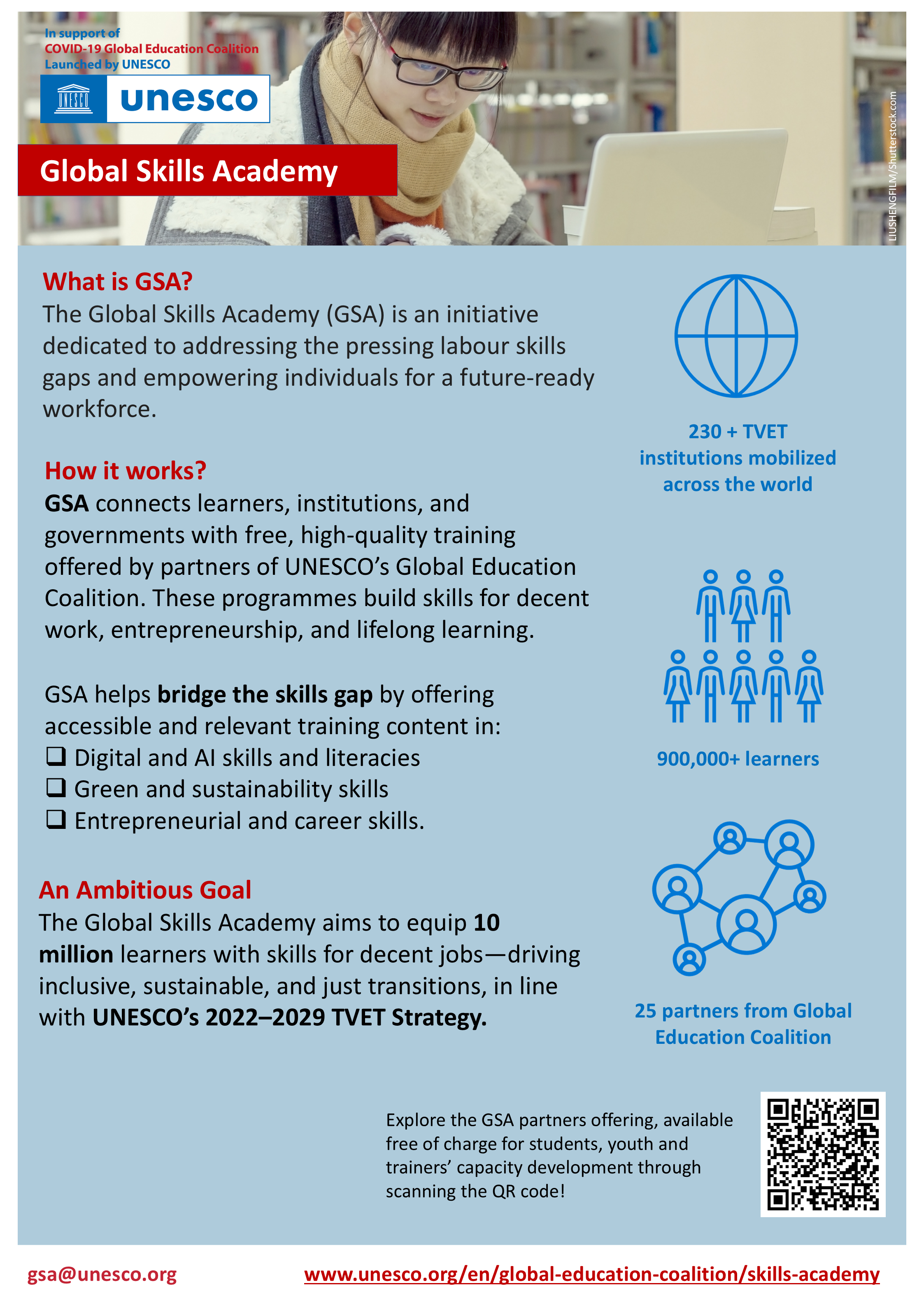
A mission of UNESCO’s Global Education Coalition aimed to support 10 million youth and adults in building skills for better employability and resilience by 2029.
Please subscribe here to receive news updates and invitations to upcoming events. You can also keep up with BILT activities by following us on Twitter: @UNEVOC.


.focus();)

.focus();)
.focus();)
.focus();)
.focus();)
.focus();)
.focus();)
.focus();)
.focus();)
.focus();)
.focus();)
.focus();)
.focus();)
.focus();)
.focus();)
.focus();)
.focus();)
.focus();)
 Facebook
 Twitter