
Skills incubators
Submitted by the French Agency for Adult Vocational Training (AFPA), France
Afpa is the leading provider of vocational training in France. As part of the public employment service, it works alongside a wide range of national and local employment stakeholders. Since 1949, Afpa has operated as an association before becoming a State-Owned Industrial and Commercial Institution under the joint supervision of both Ministries of Labour and Budget.
Afpa is structured around three key economic sectors: Construction, Tertiary, and Industry. Throughout its history, Afpa has consistently adapted to major economic transformations and major society shifts, ensuring its relevance and impact across the evolving labour market.
Since 2018, Afpa has been transforming its services by modernizing its training offer, integrating its centers into local ecosystems, adapting its educational model to new learning practices, and developing industry-specific training programs. It continues to support job seekers and employees in gaining qualifications, changing careers, and accessing employment.
Afpa is mandated by the Ministry of Labour to carry out national public service missions based on four key pillars:
- Professional qualification development: managing professional titles, training juries, for exams, and the Validation of Prior Learning.
- Training for emerging skills: anticipating labour market needs and accelerating training for new professions.
- Labour market foresight: analyzing and aligning workforce skills with market demands at national and regional levels.
- Support for vulnerable groups: designing tailored programs for job seekers, youth, refugees, and disadvantaged individuals.
Contact: cooperation-internationale @ afpa.fr,
Website
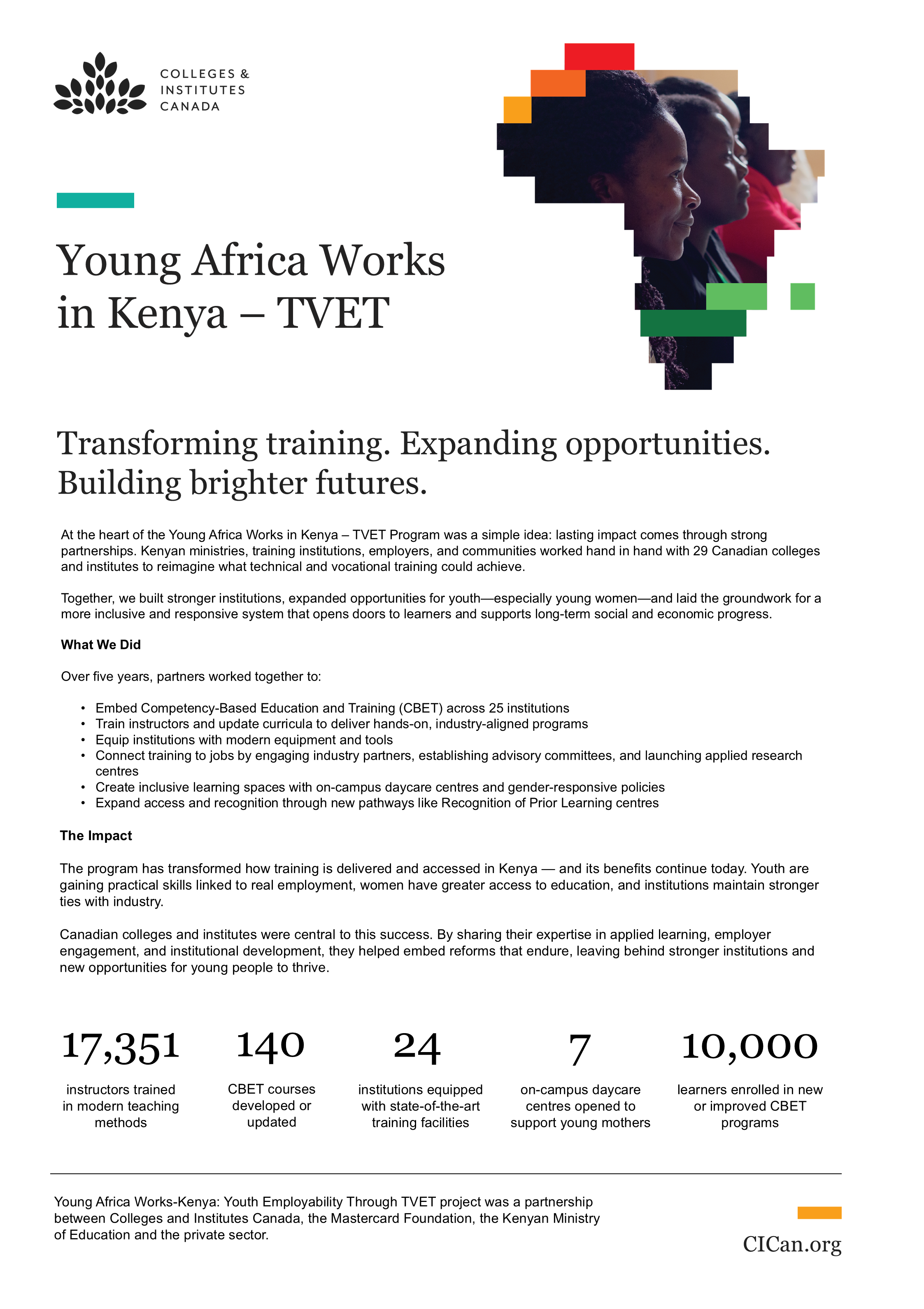
Young Africa Works in Kenya – TVET
Submitted by Colleges and Institutes Canada (CICan), Canada
Colleges and Institutes Canada (CICan) is the national voice of Canada’s dynamic network of public colleges, institutes, CEGEPs, and polytechnics. By convening, connecting and championing the sector, we amplify the value and impact of our members to advance priorities that matter most to Canadians. With more than 95% of Canadians living within 50 km of a member institution, and thanks to its extensive reach around the globe, CICan works to position colleges and institutes as key partners in meeting Canada’s – and the world’s – biggest challenges.
Contact: Website
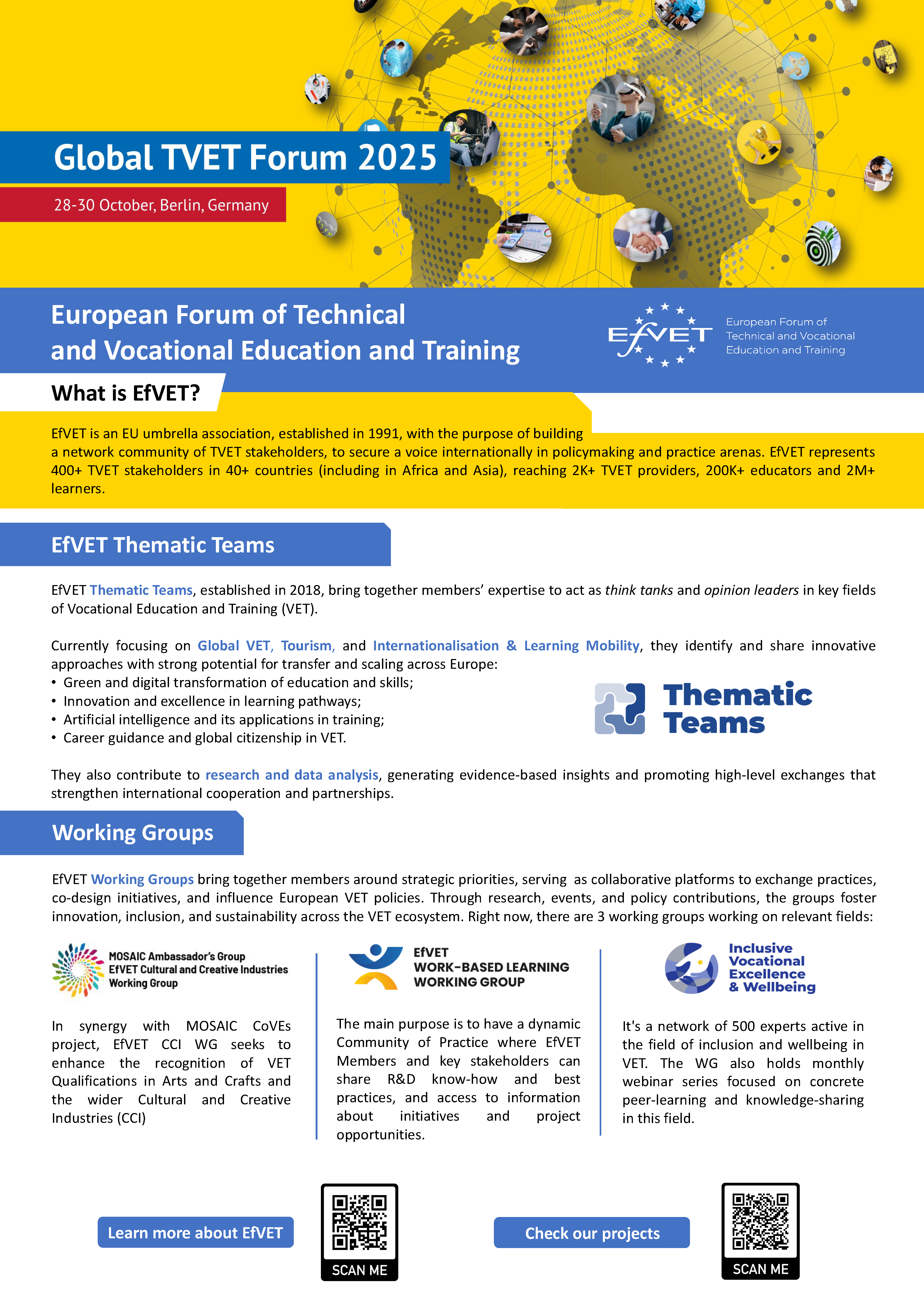
What is EfVET?
Submitted by European Forum of Technical and Vocational Education and Training
EfVET is an EU umbrella association, established in 1991, with the purpose of building a network community of TVET stakeholders, to secure a voice internationally in policymaking and practice arenas. EfVET represents 400+ TVET stakeholders in 40+ countries (including in Africa and Asia), reaching 2K+ TVET providers, 200K+ educators and 2M+ learners.
Key activities:
- Promotion of networking opportunities among its Members, facilitating access to knowledge resources, tools, projects, partnerships and initiatives (thematic teams, working groups, other);
- Acting as a key dissemination and stakeholder engagement partner in projects and initiatives carried out by both EfVET and by its Members;
- Representation at institutional level, with the main purpose of influencing policies and decisions directly and indirectly affecting TVET systems in Europe (by taking part in the working groups set up by the European Commission and other European Agencies whose work is directly related to TVET).
Contact: enrique.blanco @ efvet.org,
Website
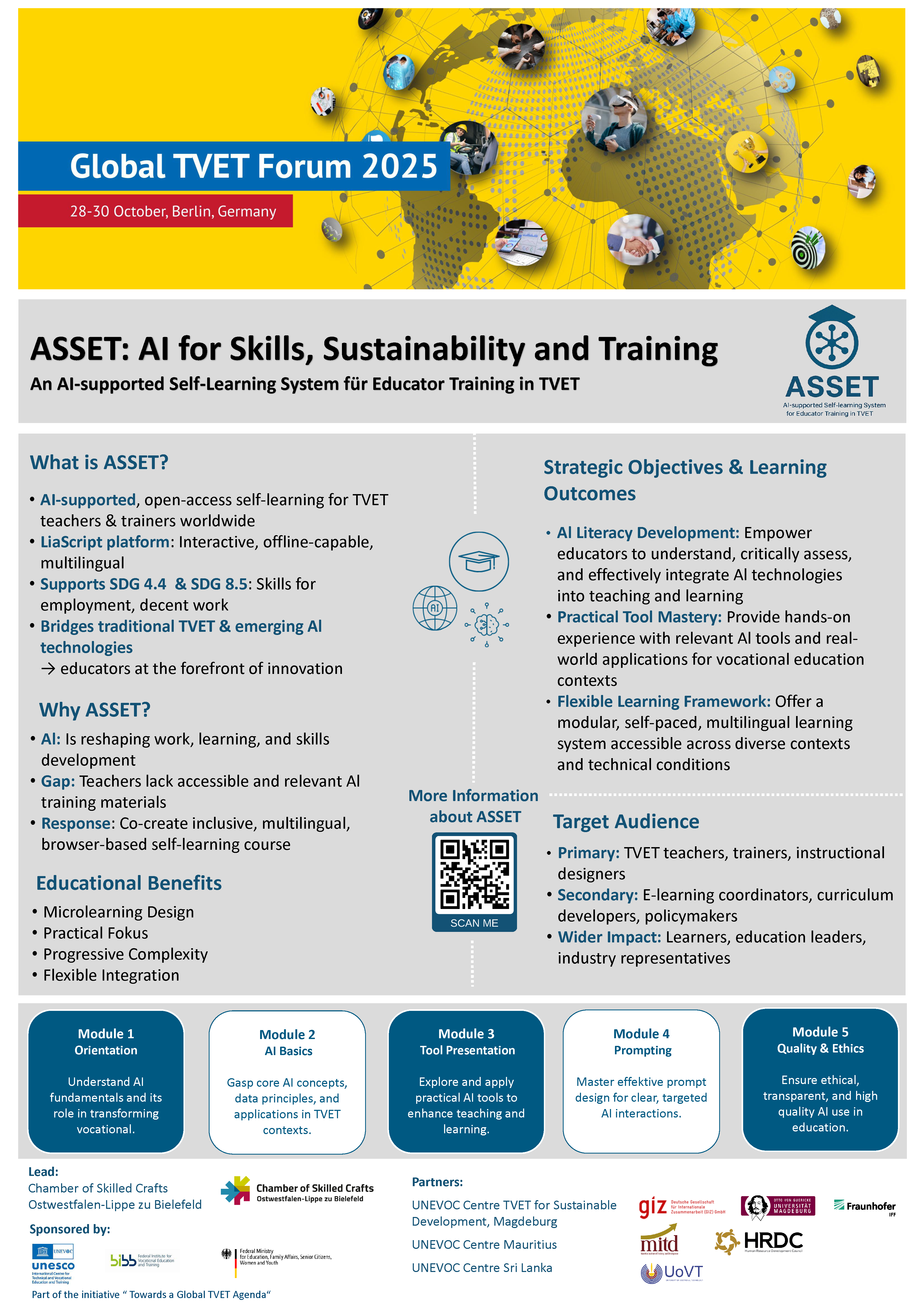
ASSET: AI for Skills, Sustainability and Training
Submitted by Chamber of Skilled Crafts
Ostwestfalen-Lippe zu Bielefeld, Germany
Contact: Website
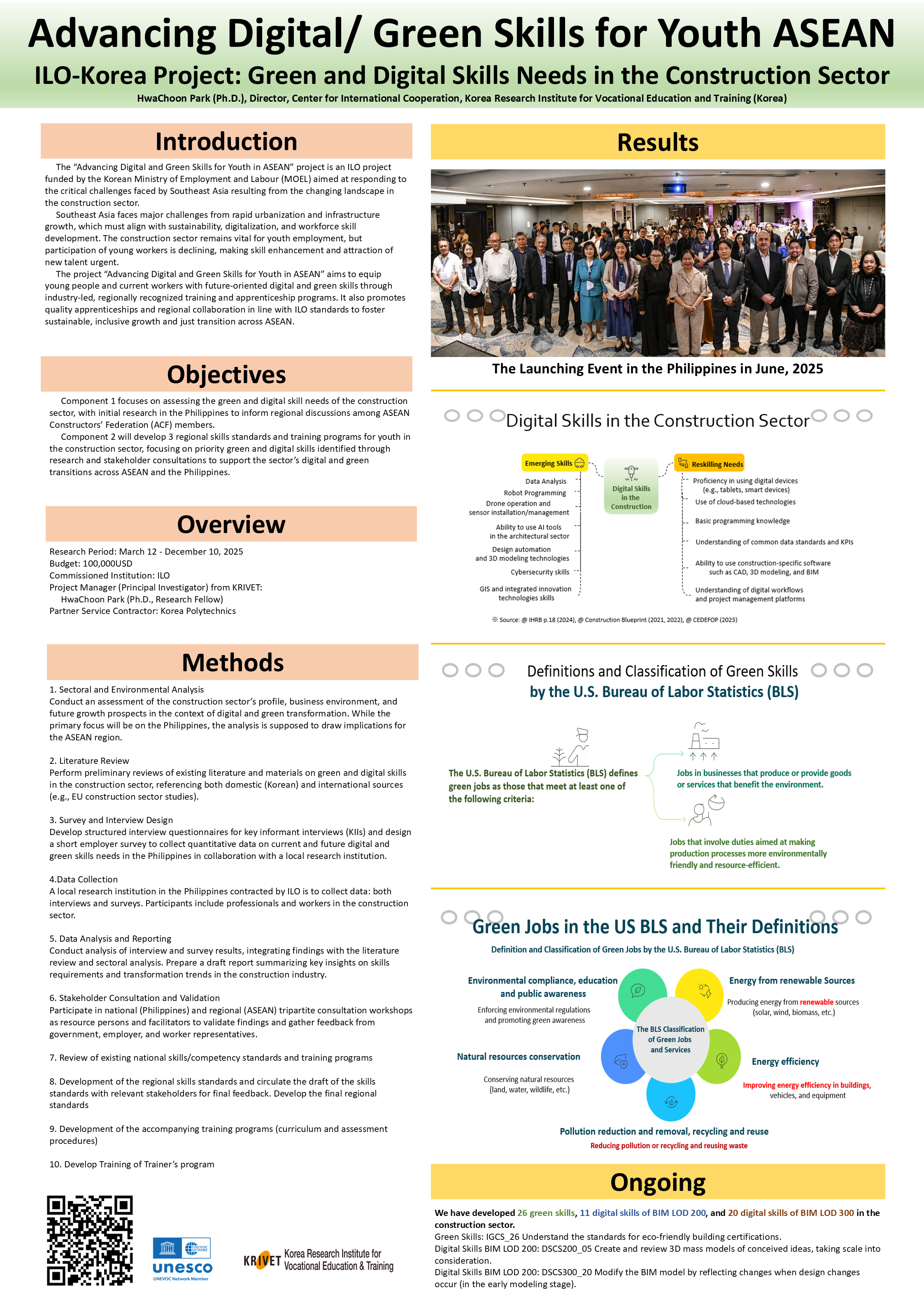
Advancing Digital/Green Skills for Youth ASEAN
Submitted by Korea Research Institute for Vocational Education and Training (KRIVET), Republic of Korea
The Korea Research Institute for Vocational Education and Training (KRIVET) is a government-funded research institute under the Prime Minister’s Office. Since its foundation in 1997, KRIVET has greatly contributed to improving the public’s vocational skills through its research in Technical and Vocational Education and Training (TVET) and Human Resource Development (HRD).
Since then, the KRIVET has carried out more than 3,700 studies within the broad field of TVET and HRD domains: national human resources development; vocational education and training; qualification systems; education and training program development; evaluation of vocational training institutes and training programs; management of nationally recognized private qualifications; provision of the job; and career information and counseling service.
The KRIVET has been actively building the global network with 53 partners from international organizations, such as the World Bank, Asian Development Bank, UNESCO, to the public and private sectors to identify the global trends and present policy directions. Furthermore, the KRIVET continuously dedicates itself to sharing insights on how the TVET plays a key role for sustainable economic and social development across less economically developed countries.
Contact: hcpark @ krivet.re.kr Website
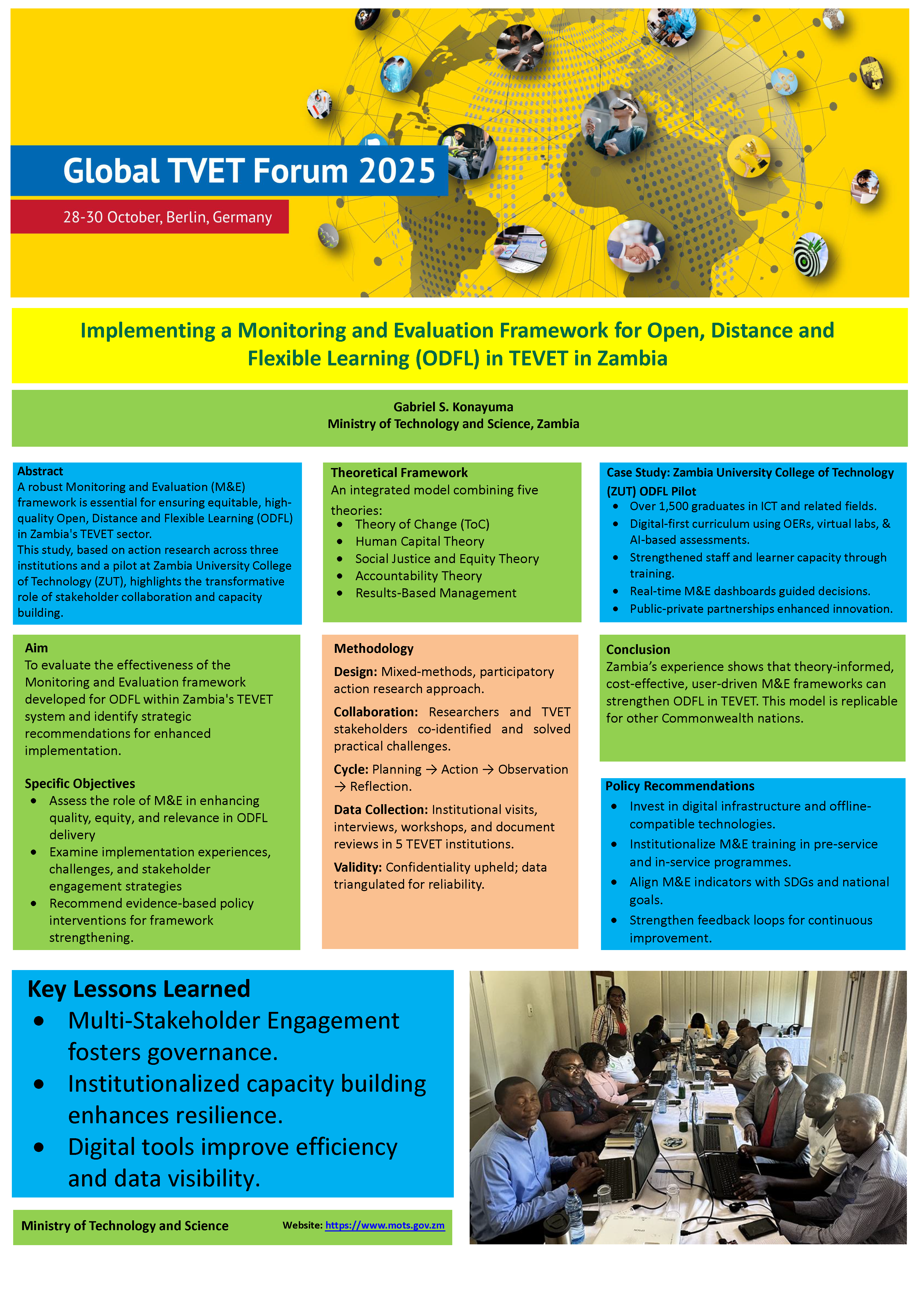
Implementing a Monitoring and Evaluation Framework for Open, Distance and Flexible Learning (ODFL) in TEVET in Zambia
Submitted by the Ministry of Technology and Science, Zambia
The Ministry of Technology and Science is responsible for formulating and reviewing Technology and Science policies in order to contribute to economic growth. It collaborates with industry and the wider private sector in developing relevant innovations; coordinates Research to promote investment in science and technology; and promotes advancement of knowledge and skills in science and technology in order to accelerate transformation into digital economy. Furthermore, the Ministry conducts science, technology and innovation as well as technical education, vocational and entrepreneurship training impact assessment and monitoring and evaluation.
The Ministry derives its mandate from Government Gazette Notice 1123 of 2021 that outlines its portfolio functions as among others: Apprenticeship Training, Communications Policy, Competence Based Training, Electronic Government, Technical Education, Vocational and Entrepreneurship Training and Technology Development.
Contact: info @ mots.gov.zm Website
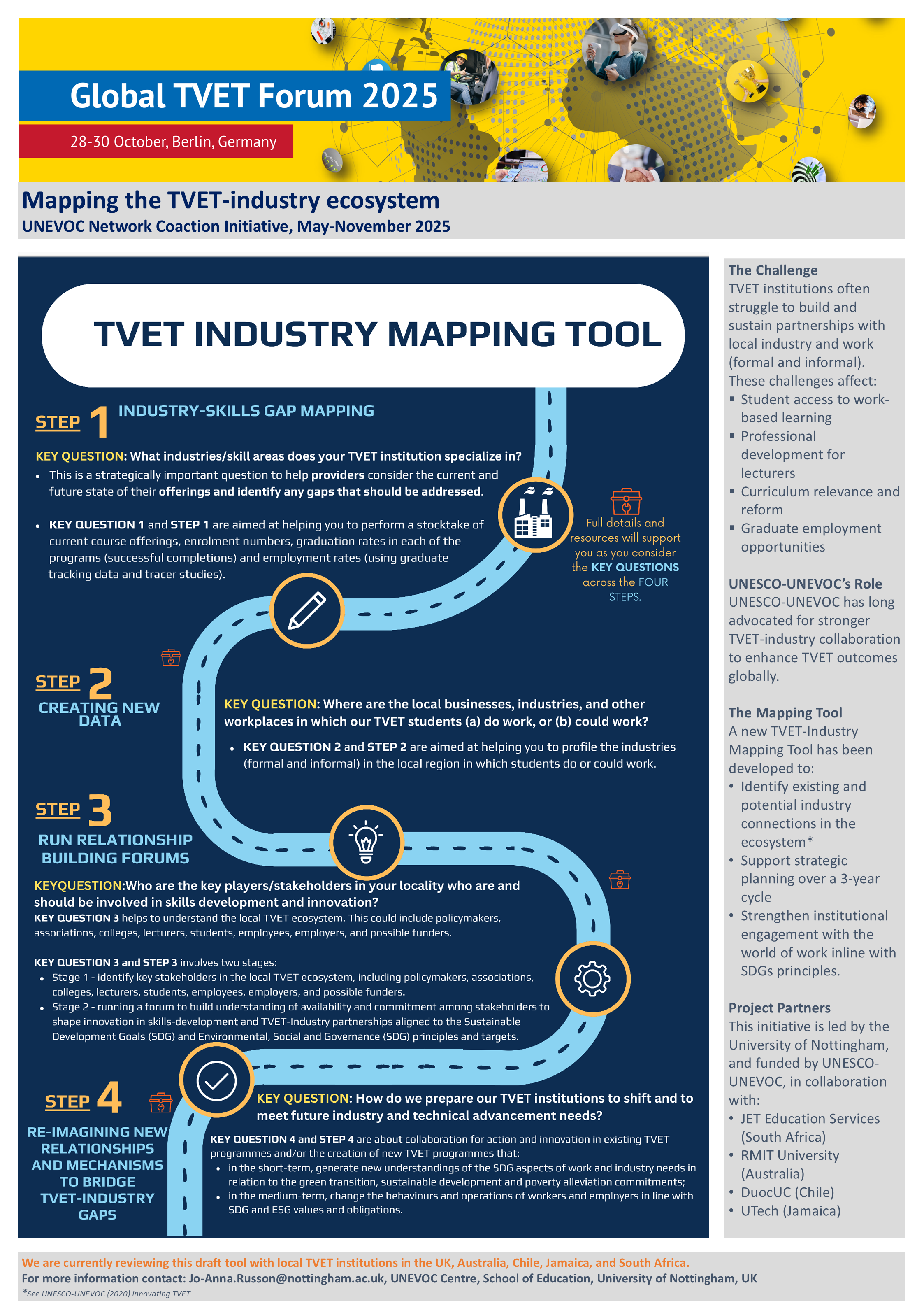
Mapping the TVET-industry ecosystem
Submitted by the University of Nottingham, United Kingdom
The University of Nottingham is a world-leading, research-intensive institution committed to excellence, innovation, and global impact. With campuses in the UK, China, and Malaysia, it fosters a vibrant, international research community across disciplines. Our researchers tackle pressing global challenges—from sustainability and health to digital futures and social justice—through interdisciplinary collaboration and real-world engagement.
The School of Education, University of Nottingham has a formal relationship with UNESCO through two programmes: the UNESCO Chair on International Education and Development, led by Professor Juliet Thondlhana, with a focus on the key role of higher education in the field of international education and development; and the UNEVOC Centre, led by Professor Volker Wedekind and Dr Jo-Anna Russon, with a focus on the gap between TVET and jobs, work and industry in various formal and informal TVET settings.
Contact: Website
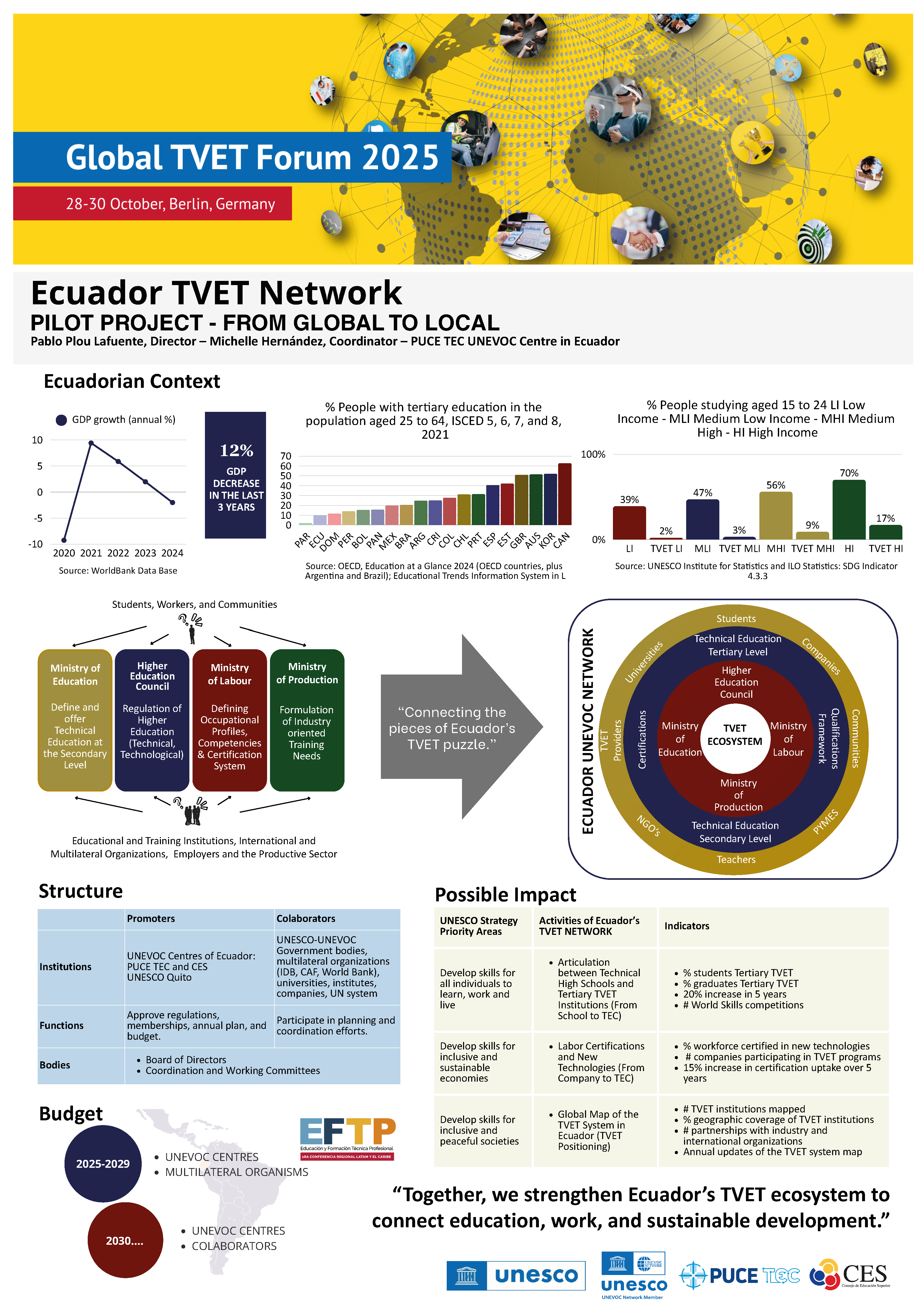
Ecuador TVET Network
Submitted by PUCE TEC, Ecuador
Contact: Website
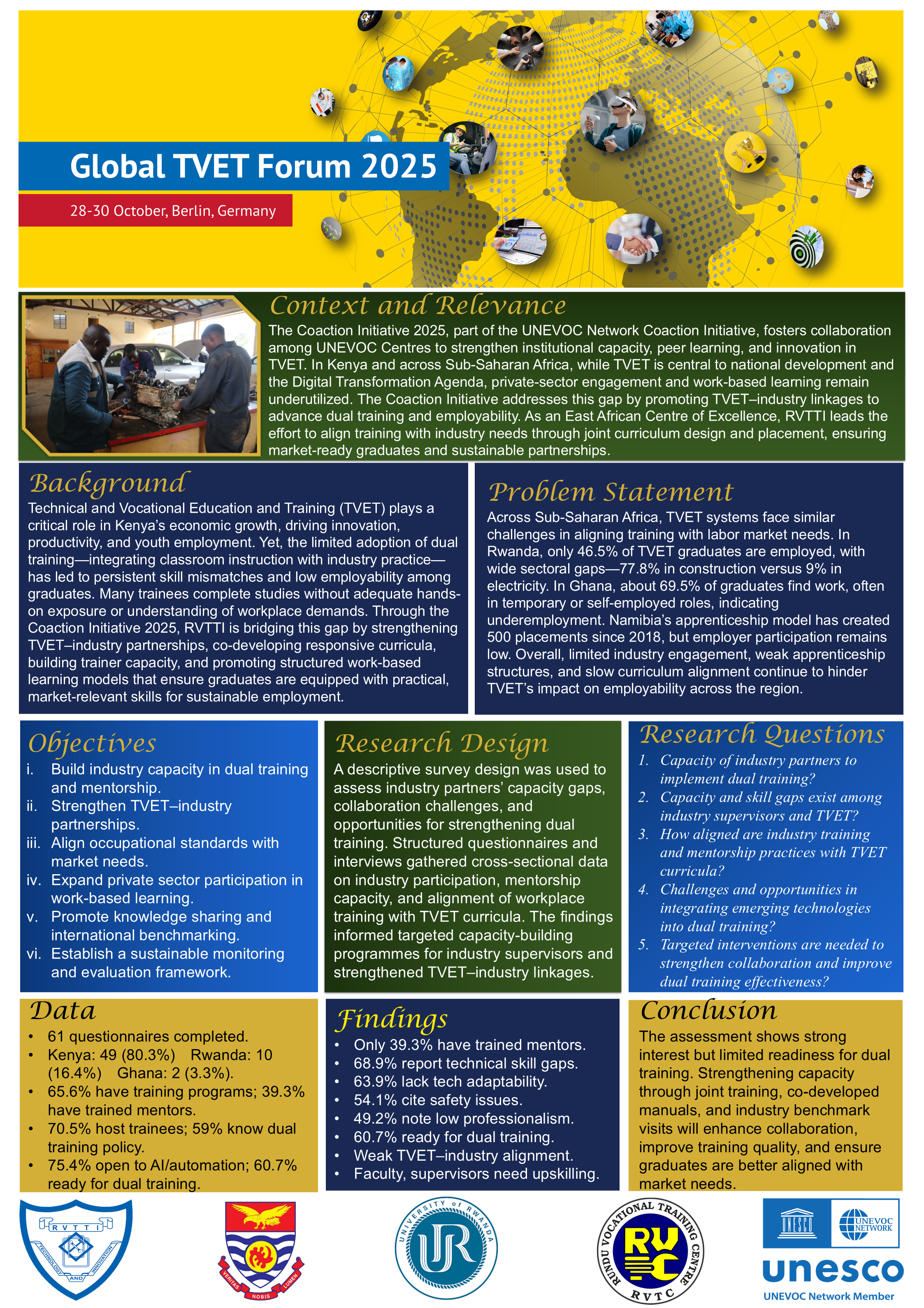
UNEVOC Network Coaction Initiative
Submitted by the Rift Valley Technical Training Institute, Kenya
Rift Valley Technical Training Institute (RVTTI) is a pioneer government Technical and Vocational Education and Training (TVET) college in Eldoret, Uasin Gishu County in Kenya. It was established in 1962 and has grown to become a national technical and entrepreneurship training excellence, innovation, and research center. RVTTI is under the Ministry of Education State Department for Technical, Vocational Education and Training (TVET) and is accredited by the Technical and Vocational Education and Training Authority (TVETA).
RVTTI is keen on providing quality vocational, technical, industrial, and entrepreneurial training and education that addresses new needs of society and industry. Professionalism, innovation, integrity, teamwork, and excellence values have seen the institution constantly provide students with relevant skills for employment and enterprise in modern times.
With its portfolio of institutions in the disciplines of Engineering, Applied Sciences, Business Studies, Information Communication Technology, Hospitality, and Education, RVTTI offers competency-based training and education (CBET) and Kenya's Vision 2030 and Bottom-Up Economic Transformation Agenda (BETA). RVTTI is also leading the digital transformation challenges with innovations like Jitume Digital Programme, smart classrooms, and hybrid learning solutions like Moodle.
RVTTI works in close collaboration with industry, government, and external partners to promote innovation, research, and work-based learning. RVTTI under the Coaction Project promotes TVET institution-industry collaboration to promote employability and technology progress.
As a UNESCO–UNEVOC Centre and an ISO 9001:2015 quality institution, RVTTI follows global institutional training and management quality standards. RVTTI continues to emphasize the production of innovative, ethical, and competent graduates to spearhead Kenya's economic and industrial development.
Contact: info @ rvti.ac.ke, Website
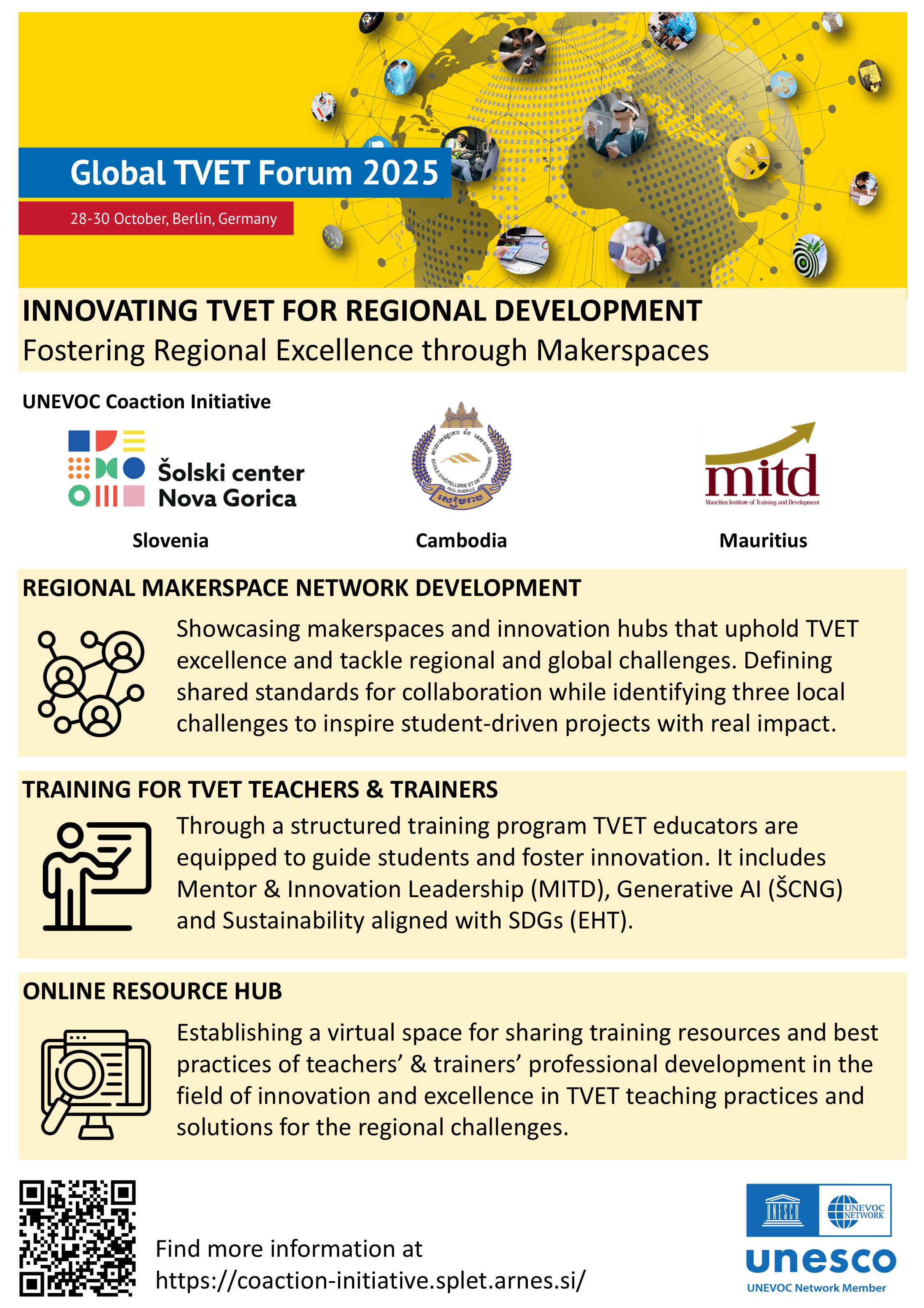
Innovating TVET for regional development
Submitted by School Centre Nova Gorica (SCNG), Slovenia
Contact: Website
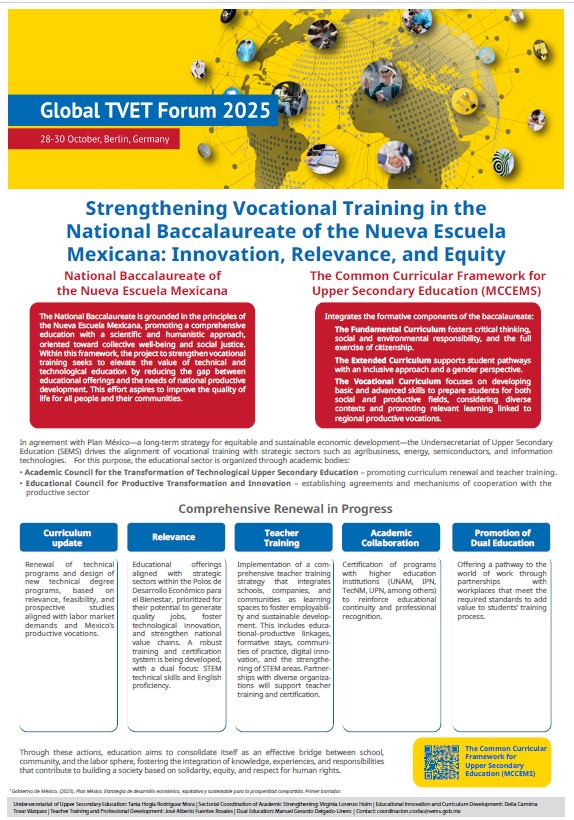
Strengthening vocational training in the national baccalaureate of the Nueva Escuela Mexicana: innovation, relevance and equity
Submitted by the Undersecretariat of Upper Secondary Education (SEMS), Mexico
Responsible Institution: Undersecretariat of Upper Secondary Education (SEMS), Government of Mexico
Coordinating Agency: Sectoral Coordination for Academic Strengthening (COSFAC)
Institutional Authors: Tania Hogla Rodríguez Mora – Undersecretariat of Upper Secondary Education, Virginia Lorenzo Holm – Sectoral Coordination for Academic Strengthening, Delia Carmina Tovar Vázquez – Educational Innovation and Curriculum Development, José Alberto Fuentes Rosales – Teacher Training, Professional Development, and Certification, Manuel Gerardo Delgado-Linero – Dual Education
The poster “Strengthening Labor Training in the National Baccalaureate of the New Mexican School: Innovation, Relevance, and Equity” presents the strategy of the Undersecretariat of Upper Secondary Education (SEMS) to revalue technical and technological education. In alignment with the Plan México, the proposal seeks to align labor training with strategic sectors such as agribusiness, energy, semiconductors, and information
technologies.
The project promotes curriculum updating, teacher training and certification, and educational–productive linkages, while strengthening STEM areas and English proficiency. Its purpose is to consolidate a comprehensive and equitable education that serves as a bridge between school, community, and the productive sector.
This initiative fosters an upper secondary education that is relevant, innovative, and committed to sustainable development, collective well-being, and social justice, within the framework of the principles of the New Mexican School (NEM).
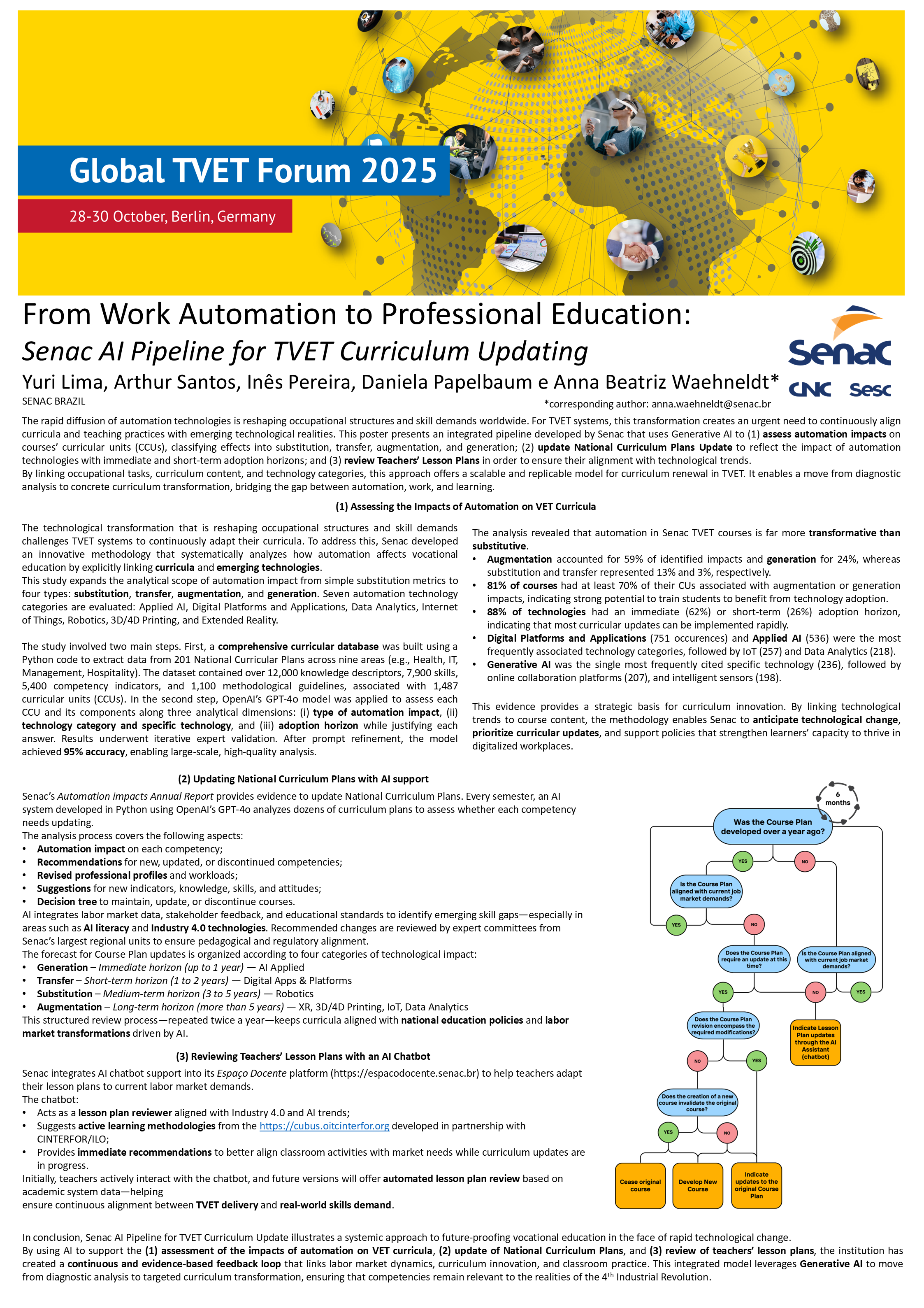
From Work Automation to Professional Education: Senac AI Pipeline for TVET Curriculum Updating
Submitted by the National Service for Commercial Learning (SENAC), Brazil
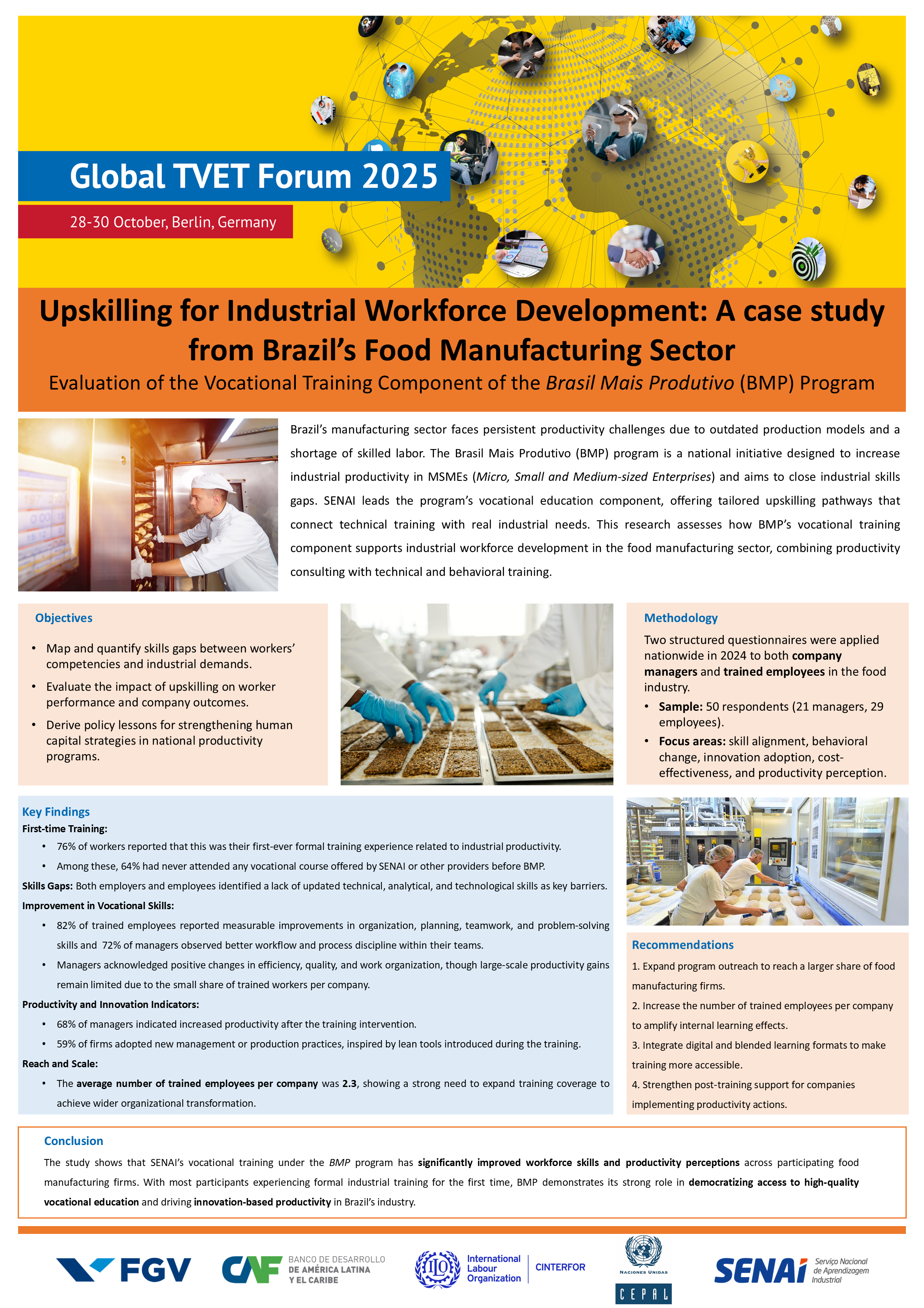
Upskilling for Industrial Workforce Development: A case study from Brazil’s Food Manufacturing Sector
Submitted by the National Service of Industrial Training (SENAI), Brazil
SENAI is a private, not-for-profit institution and Latin America’s largest private network for industry-focused technical and vocational education, technological support, and innovation. Present in all Brazilian states, the institution offers technical, apprenticeship, undergraduate, and postgraduate courses, as well as technological solutions for industry. With over 3.1 million annual enrollments and a network of 1,024 educational units, SENAI has established itself as one of the main pillars of industrial development and professional training in Brazil. Since its creation in 1942, SENAI has trained over 92 million workers and is prepared to operate across various industrial sectors with multidisciplinary teams, proprietary methodologies, and close collaboration with companies, public and private institutions, international organizations, and development agencies.
Contact: Website
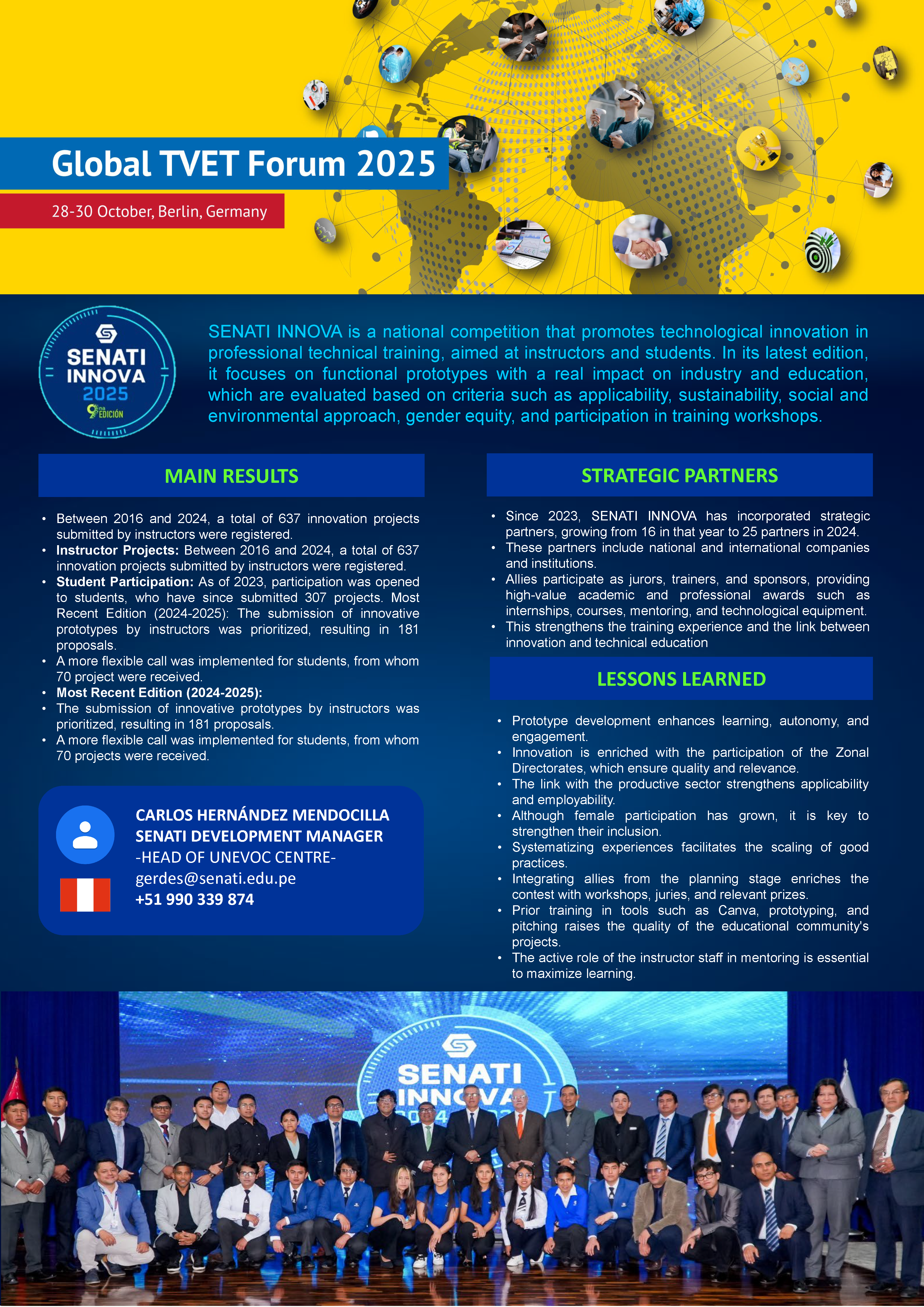
SENATI INNOVA Skills Competition
Submitted by National Training Service of Industrial Work (SENATI), Peru
SENATI is a non -profit institution created by the National Society of Industries of Peru, to provide preparation and vocational education training in industrial activities as well as for work in facilities, repairs, and maintenance for any other economic activity.
Created by law in 1961, SENATI was defined from its beginnings as a legal entity under public law, of private management, with technical, pedagogical, administrative and economic autonomy, and assets so that it could have the flexibility required by the dynamics of industrial development.
We work in coordination with the industry, to provide a relevant academic offer, depending on the labor market requirements. Pioneers and references, recognized in Peru for our educational model of practical learning with dual modality, in conditions that replicate real work situations thanks to the industrial-level equipment in our workshops and laboratories. SENATI was considered the Best Higher Education Institute for 13 consecutive years by Ipsos Peru.
We decentralize professional technical training through our 65 training centers nationwide, localized in the 25 regions of the country.
Contact: gerdes @ senati.edu.pe, Website
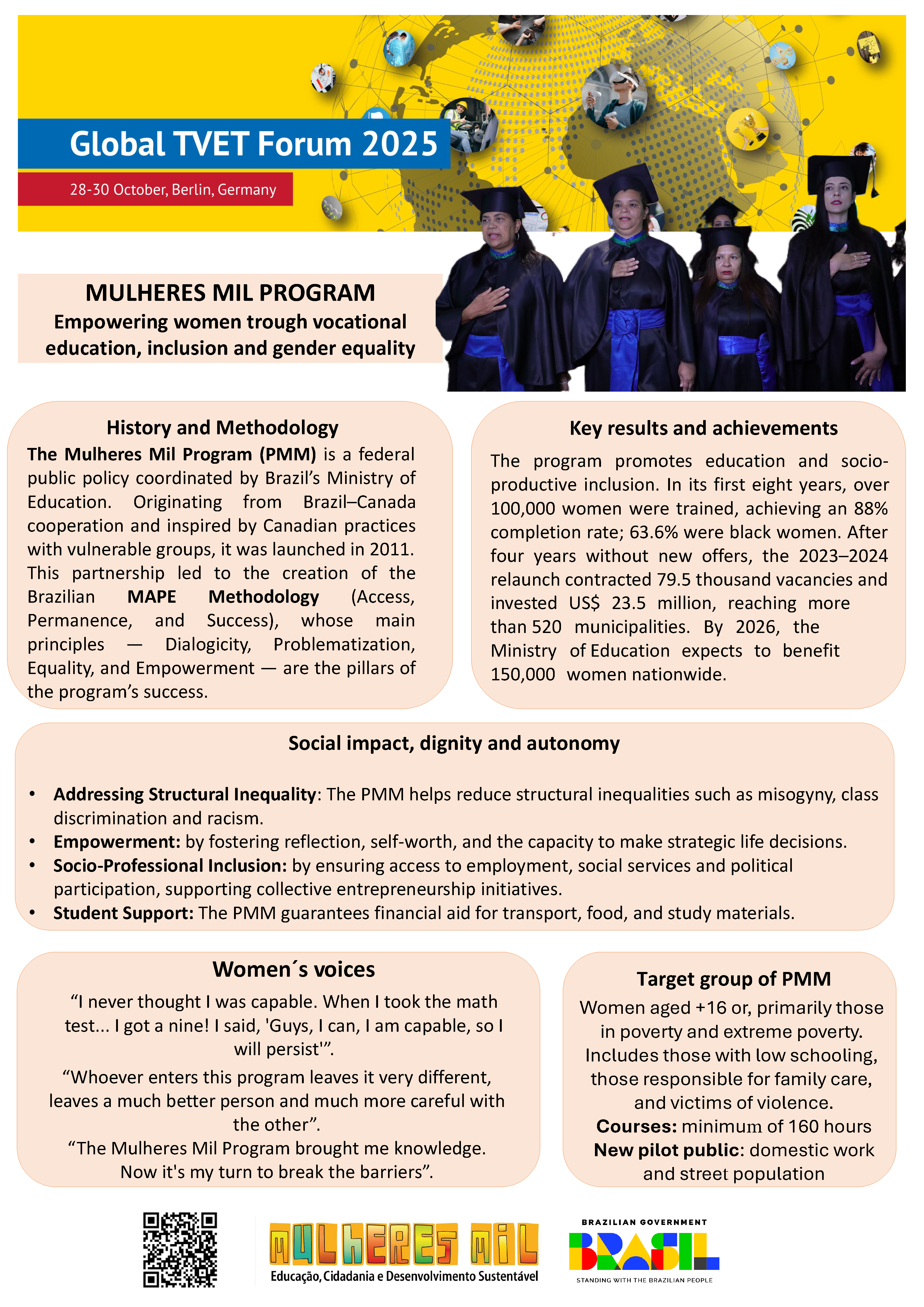
Mulheres mil program
Submitted by the Ministry of Education (MEC), Brazil
The Ministry of Education (MEC) is the federal authority responsible for formulating, implementing, and monitoring Brazil’s national education policies. Its mission is to guarantee the right to inclusive, equitable, and high-quality education for all citizens — from early childhood to higher education — encompassing special, vocational, and distance learning modalities.
MEC works to expand access, improve quality, and promote social inclusion throughout the Brazilian education system. It regulates and supervises educational institutions, ensuring compliance with national standards and fostering innovation, excellence, and continuous improvement in teaching and learning.
One of its key roles is to design and coordinate the National Education Plan (PNE), which defines the country’s strategic goals and priorities for educational development. The Ministry also conducts comprehensive national assessments to evaluate the effectiveness of education policies and institutions, generating data to support evidence-based decision-making.
In partnership with states and municipalities, MEC strengthens the governance and efficiency of the education system while directly managing the federal education network — including universities and federal institutes — recognized for their strong academic and technological performance.
Additionally, MEC provides financial assistance to low-income families to ensure that all children and young people can access and complete their studies.
Through its programs and international cooperation initiatives, the Ministry of Education contributes to advancing sustainable development, fostering innovation, and creating opportunities for millions of Brazilians to transform their lives through education.
Contact: Website
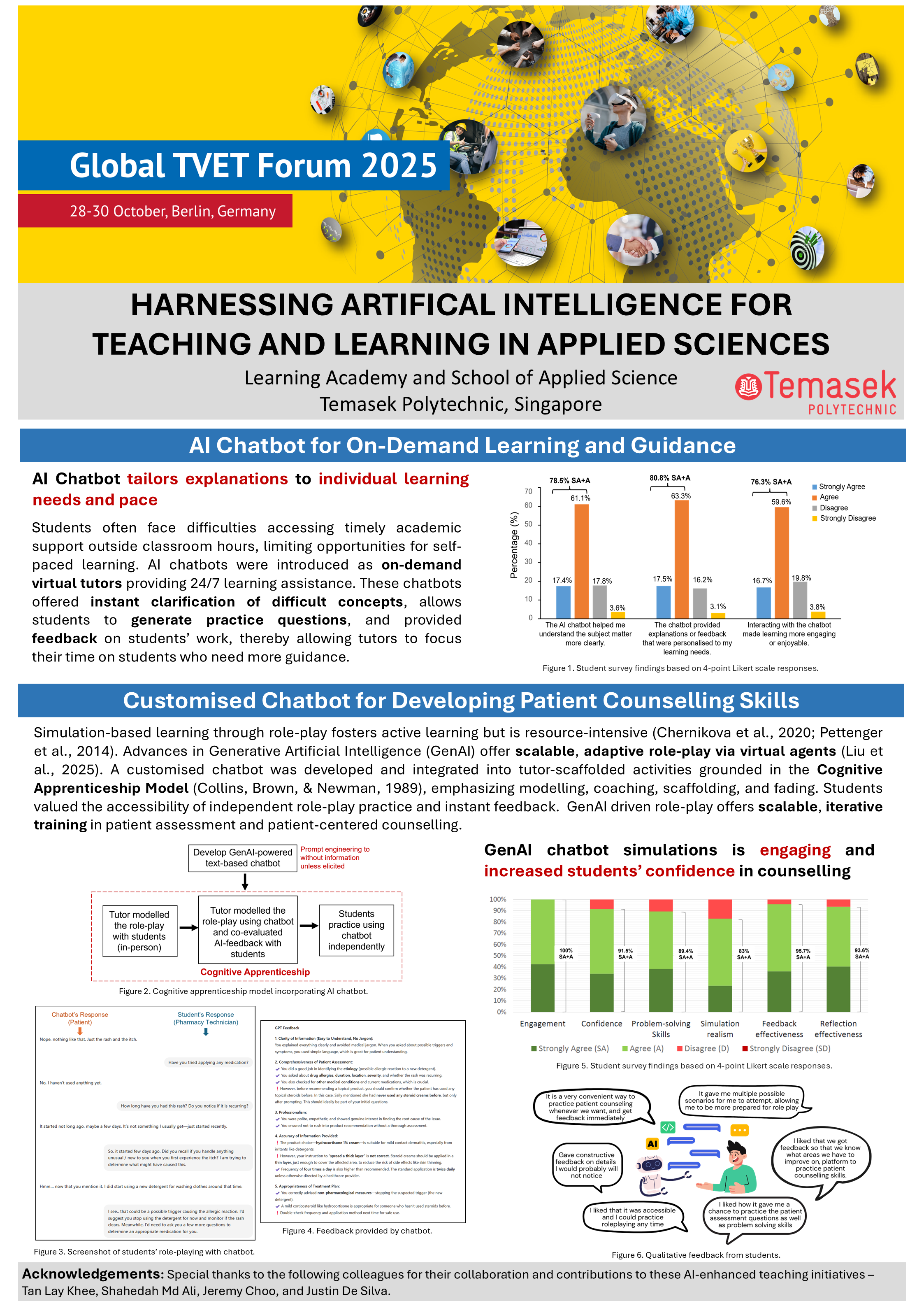
Harnessing AI for teaching and learning in applied sciences
Submitted by Temasek Polytechnic, Singapore
Temasek Polytechnic (TP) is a leading institute of higher learning and one of five polytechnics in Singapore. Established since 1990, TP’s mission is to prepare school-leavers and working adults for a future of dynamic change, with relevant knowledge, life-long skills, character, and a thirst for continuous improvement. TP’s vision is to be a world-class institution in the global education network, reputed for our programmes, applied research, managerial excellence and innovative corporate culture. TP currently offers 36 full-time diploma courses by six academic schools to more than 13, 000 full-time students. TP is also committed to adult education and lifelong learning and offers a wide range of adult learning courses in areas such as digital transformation, sustainability, care and engineering. These programmes are offered across different modalities designed to support upskilling, reskilling, or career transitions for adult learners.
Contact: LIM_Teng_Leng @ tp.edu.sg, Website
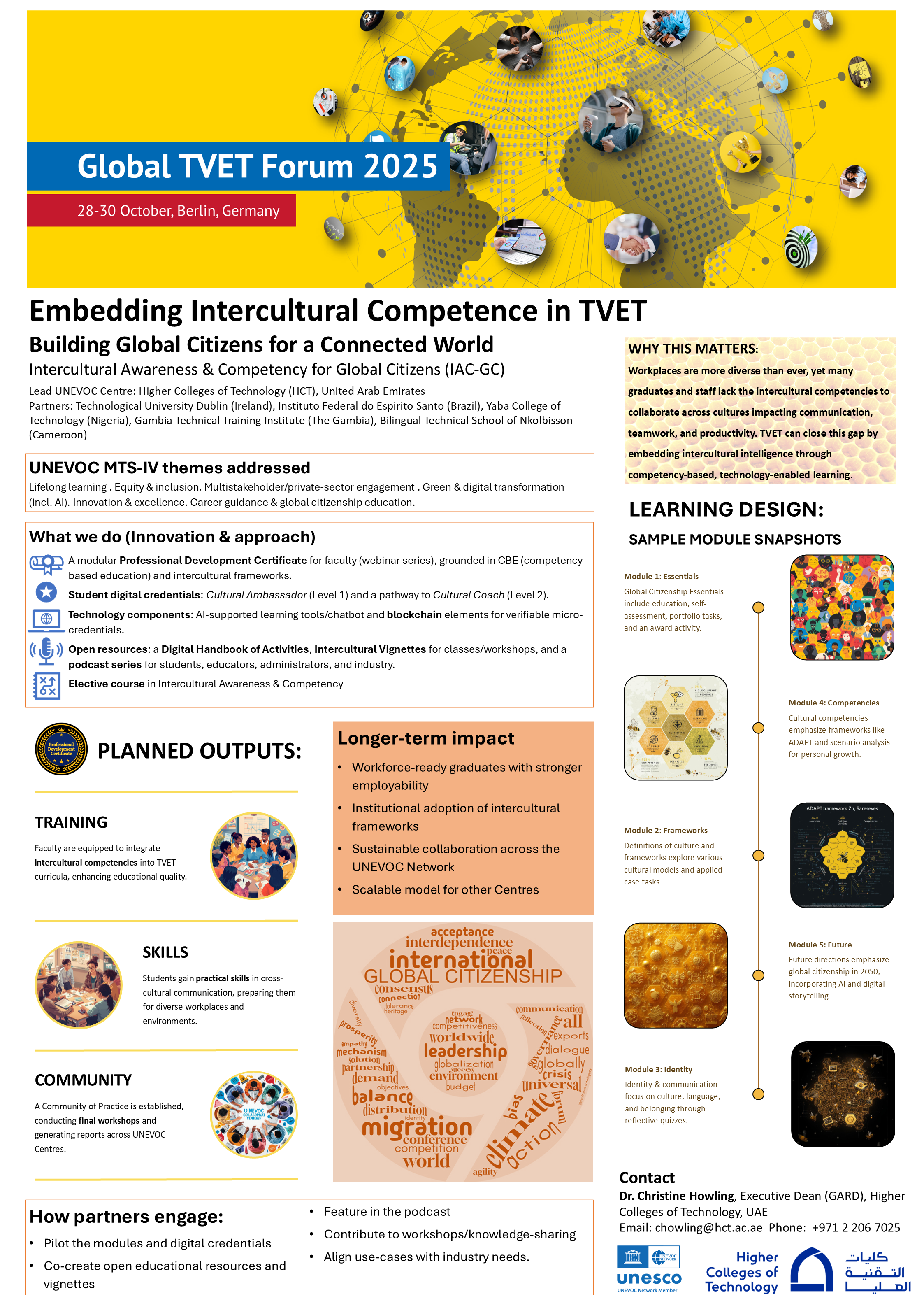
Embedding Intercultural Competence in TVET
Submitted by Higher Colleges of Technology (HCT), United Arab Emirates
Contact: chowling @ hct.ac.ae, Website
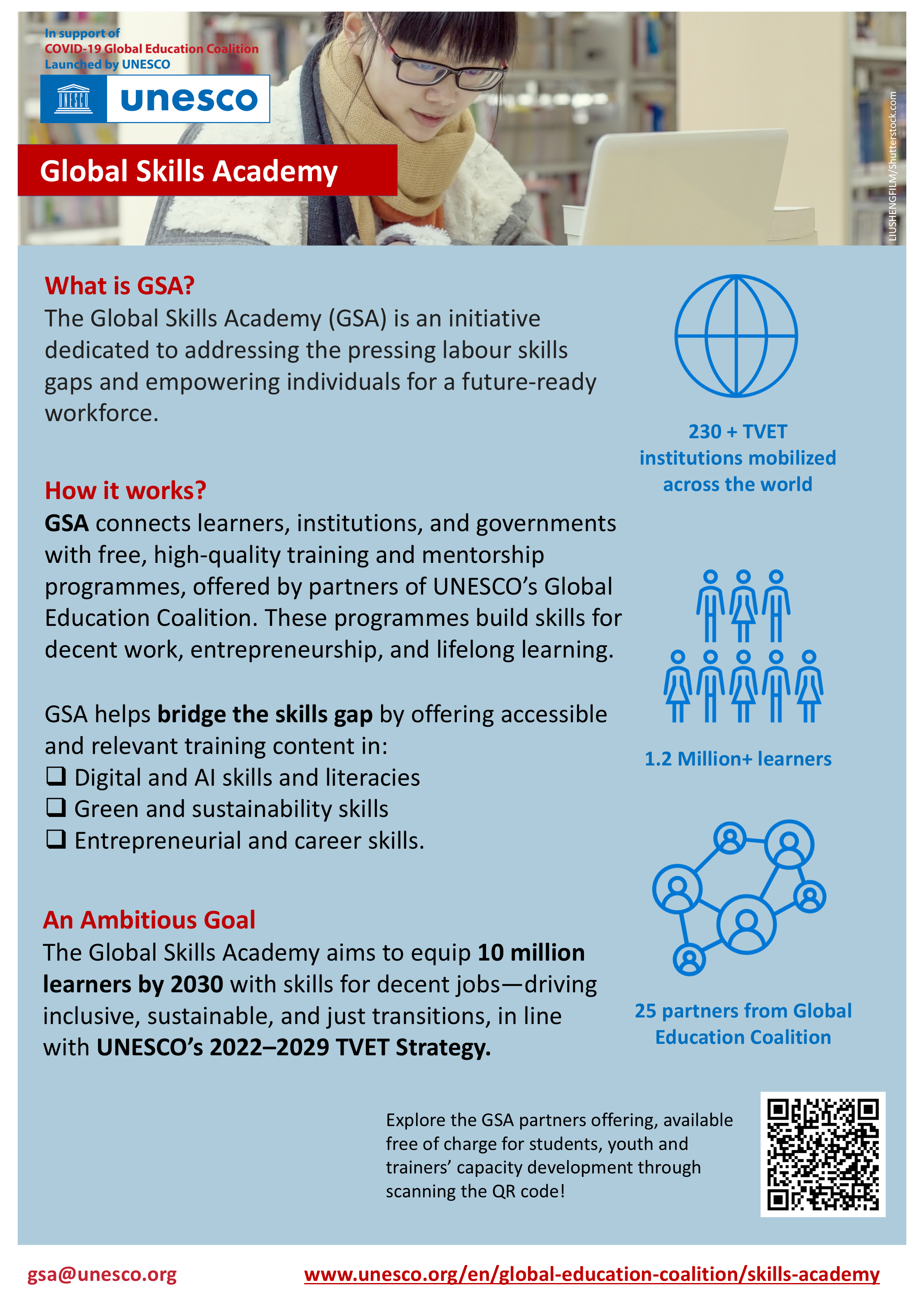
Global Skills Academy
Submitted by UNESCO
A mission of UNESCO’s Global Education Coalition aimed to support 10 million youth and adults in building skills for better employability and resilience by 2029.
Contact: gsa @ unesco.org, Website


.focus();)
.focus();)
.focus();)
.focus();)
.focus();)
.focus();)
.focus();)
.focus();)
.focus();)
.focus();)
.focus();)
.focus();)
.focus();)
.focus();)
.focus();)
.focus();)
.focus();)
 Facebook
 Twitter


