


Prácticas innovadoras y prometedoras en la EFTP
UNESCO-UNEVOC actúa como centro de intercambio de información sobre prácticas innovadoras y prometedoras en el ámbito de la Educación y Formación Técnico y Profesional (ETFP). Cada práctica muestra cómo se puede diseñar e impartir la EFTP para hacer frente a los retos contextuales, presenta las condiciones necesarias para el éxito y ofrece una visión general del impacto positivo en las comunidades. Se pueden realizar búsquedas por palabra clave, región o tema.
 Obtén más información sobre los tres tipos de consultas que figuran en nuestra base de datos
 Obtén más información sobre los tres tipos de consultas que figuran en nuestra base de datos
 Prácticas de innovación y aprendizaje –
 Prácticas innovadoras de los i-hubs – Las prácticas de los i-hubs se recopilan en colaboración con los socios del proyecto «Skills for innovation hubs» y se basan en el concepto de innovación tal y como se describe en el documento de la UNESCO-UNEVOC.
 Prácticas prometedoras – Prácticas de EFTP de todo el mundo que se han puesto en marcha para hacer frente a los nuevos retos y contribuir a mejorar la enseñanza y el aprendizaje de la formación profesional de manera inclusiva.

More Women in ICT
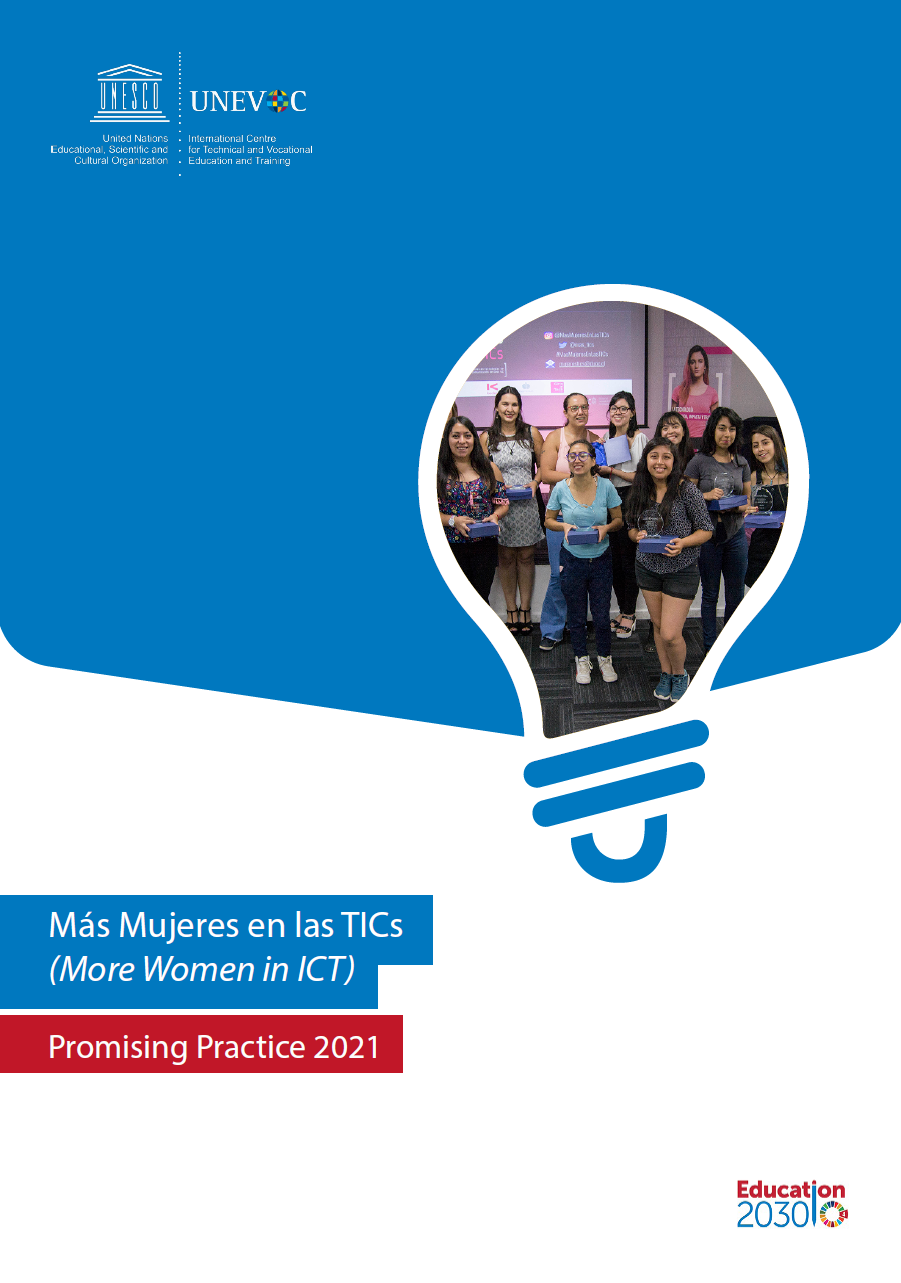
The ICT sector has grown rapidly in recent decades, and with continued expansion forecast, it is an area of high employability and opportunity. In Chile, and indeed globally, however, there is a large gender gap. Just 5% of those working in ICT in Chile are female (compared to 24% globally) and only 10% of those currently in training are female – figures that have not changed in more than 10 years.
Recognizing the stark gender inequality, the ICT School of Duoc UC – with presence in three regions and almost 14,000 students – has focused its efforts on increasing the number of girls and women in ICT. In collaboration with a number of institutions, they are working to reduce this gender gap.
The pandemic forced the implementing team to be flexible in the face of contingencies and to focus on a largely virtual workspace. This was seen as an opportunity to scale-up the initiative to other regions of the country without multiplying implementation costs and subsequently contributed to a large uptake in enrolment of new students in the programme.
| Institution: | Duoc UC |
| Country: | Chile |
| Focus: | COVID-19 response , Digitalization and future of TVET , Equity and inclusion |

*Aviso legal: UNESCO-UNEVOC no se hace responsable de la gestión ni de la puesta en práctica de ninguna de las prácticas incluidas en esta base de datos.


