


Prácticas innovadoras y prometedoras en la EFTP
UNESCO-UNEVOC actúa como centro de intercambio de información sobre prácticas innovadoras y prometedoras en el ámbito de la Educación y Formación Técnico y Profesional (ETFP). Cada práctica muestra cómo se puede diseñar e impartir la EFTP para hacer frente a los retos contextuales, presenta las condiciones necesarias para el éxito y ofrece una visión general del impacto positivo en las comunidades. Se pueden realizar búsquedas por palabra clave, región o tema.
 Obtén más información sobre los tres tipos de consultas que figuran en nuestra base de datos
 Obtén más información sobre los tres tipos de consultas que figuran en nuestra base de datos
 Prácticas de innovación y aprendizaje –
 Prácticas innovadoras de los i-hubs – Las prácticas de los i-hubs se recopilan en colaboración con los socios del proyecto «Skills for innovation hubs» y se basan en el concepto de innovación tal y como se describe en el documento de la UNESCO-UNEVOC.
 Prácticas prometedoras – Prácticas de EFTP de todo el mundo que se han puesto en marcha para hacer frente a los nuevos retos y contribuir a mejorar la enseñanza y el aprendizaje de la formación profesional de manera inclusiva.

The use of augmented reality in offender learning
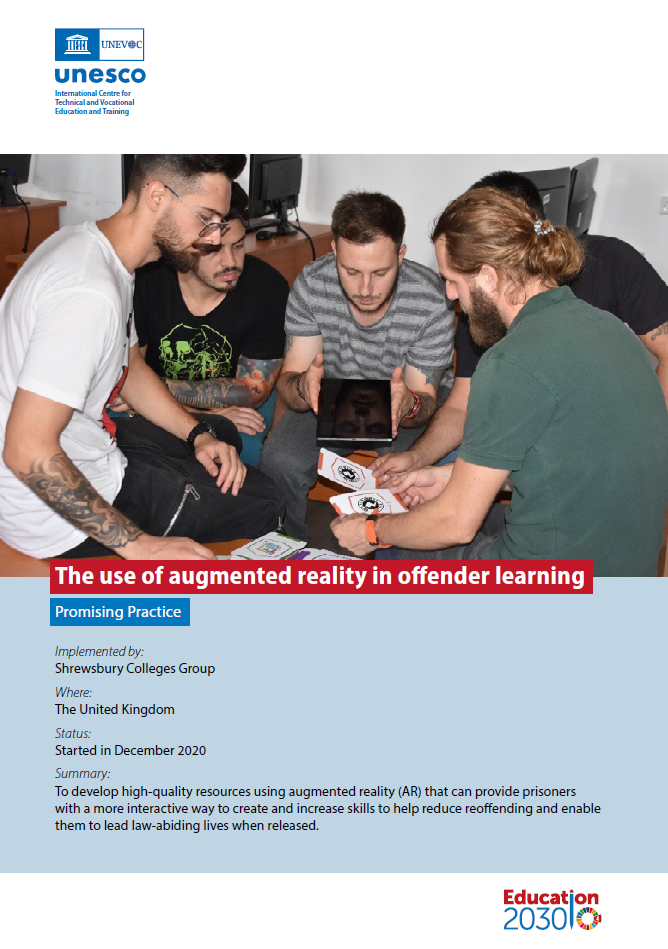
Research in the UK suggests that 81% of prison leavers receive no support in preparing for their release. This is one of the significant challenges that incarcerated individuals face as they try to rebuild their lives on the outside and become an integrated part of society. Post-release employment has been found to reduce the risk of reoffending by between a third and a half. However, most of the prison population has no stable employment experience. Further research recommends that employment programmes be based on strong local partnerships, with vocational training activities linked to real employment prospects.
Digital systems are crucial to enabling the delivery of high-quality education to prisoners. If prisoners are released to secure employment, continue to study, or otherwise contribute to society, they must be allowed to use and improve their digital skills in prison. Augmented reality will play an integral part in the offender learning revolution.
| Institution: | Shrewsbury Colleges Group |
| Country: | United Kingdom of Great Britain and Northern Ireland |
| Focus: | Digitalization and future of TVET , New qualifications and competencies |

*Aviso legal: UNESCO-UNEVOC no se hace responsable de la gestión ni de la puesta en práctica de ninguna de las prácticas incluidas en esta base de datos.


