


Prácticas innovadoras y prometedoras en la EFTP
UNESCO-UNEVOC actúa como centro de intercambio de información sobre prácticas innovadoras y prometedoras en el ámbito de la Educación y Formación Técnico y Profesional (ETFP). Cada práctica muestra cómo se puede diseñar e impartir la EFTP para hacer frente a los retos contextuales, presenta las condiciones necesarias para el éxito y ofrece una visión general del impacto positivo en las comunidades. Se pueden realizar búsquedas por palabra clave, región o tema.
 Obtén más información sobre los tres tipos de consultas que figuran en nuestra base de datos
 Obtén más información sobre los tres tipos de consultas que figuran en nuestra base de datos
 Prácticas de innovación y aprendizaje –
 Prácticas innovadoras de los i-hubs – Las prácticas de los i-hubs se recopilan en colaboración con los socios del proyecto «Skills for innovation hubs» y se basan en el concepto de innovación tal y como se describe en el documento de la UNESCO-UNEVOC.
 Prácticas prometedoras – Prácticas de EFTP de todo el mundo que se han puesto en marcha para hacer frente a los nuevos retos y contribuir a mejorar la enseñanza y el aprendizaje de la formación profesional de manera inclusiva.

Universal Design Principles in Digital Learning for students with disabilities (SUCCESS)
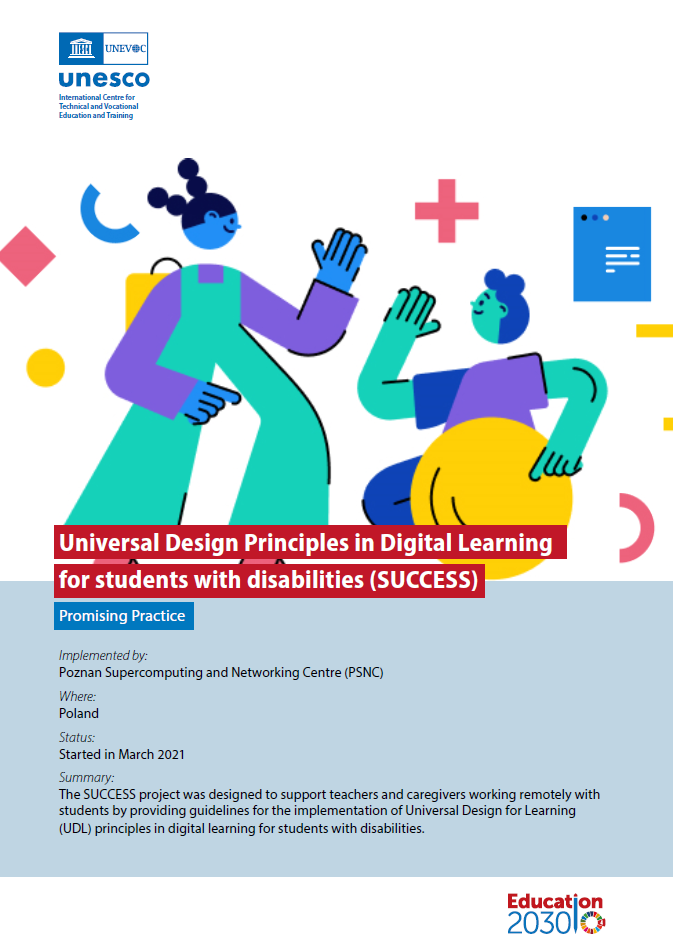
The SUCCESS project was designed to support teachers and caregivers working remotely with students by providing guidelines for the implementation of Universal Design for Learning (UDL) principles in digital learning for students with disabilities.
The main aim of SUCCESS was to support teachers and caregivers working with students during lockdowns when digital tools and distance learning were the only media available for attending classes and interacting with peers. Considering different characteristics and conditions, adopting the UDL principles helped all teachers improve the quality of educational materials created for digital learning.
The SUCCESS platform is considered an innovative practice as it enhanced the open-source, EC-recommended Up2U platform, focusing on accessibility for users with special educational needs and disabilities. The guidelines and self-paced online courses summarize much-needed knowledge regarding creating accessible educational content in remote and face-to-face teaching.
| Institution: | Poznan Supercomputing and Networking Centre (PSNC) |
| Country: | Poland |
| Focus: | Digitalization and future of TVET , Equity and inclusion |

*Aviso legal: UNESCO-UNEVOC no se hace responsable de la gestión ni de la puesta en práctica de ninguna de las prácticas incluidas en esta base de datos.


