


Prácticas innovadoras y prometedoras en la EFTP
UNESCO-UNEVOC actúa como centro de intercambio de información sobre prácticas innovadoras y prometedoras en el ámbito de la Educación y Formación Técnico y Profesional (ETFP). Cada práctica muestra cómo se puede diseñar e impartir la EFTP para hacer frente a los retos contextuales, presenta las condiciones necesarias para el éxito y ofrece una visión general del impacto positivo en las comunidades. Se pueden realizar búsquedas por palabra clave, región o tema.
 Obtén más información sobre los tres tipos de consultas que figuran en nuestra base de datos
 Obtén más información sobre los tres tipos de consultas que figuran en nuestra base de datos
 Prácticas de innovación y aprendizaje –
 Prácticas innovadoras de los i-hubs – Las prácticas de los i-hubs se recopilan en colaboración con los socios del proyecto «Skills for innovation hubs» y se basan en el concepto de innovación tal y como se describe en el documento de la UNESCO-UNEVOC.
 Prácticas prometedoras – Prácticas de EFTP de todo el mundo que se han puesto en marcha para hacer frente a los nuevos retos y contribuir a mejorar la enseñanza y el aprendizaje de la formación profesional de manera inclusiva.

Qualification of vocational training specialists in energy-efficient building automation
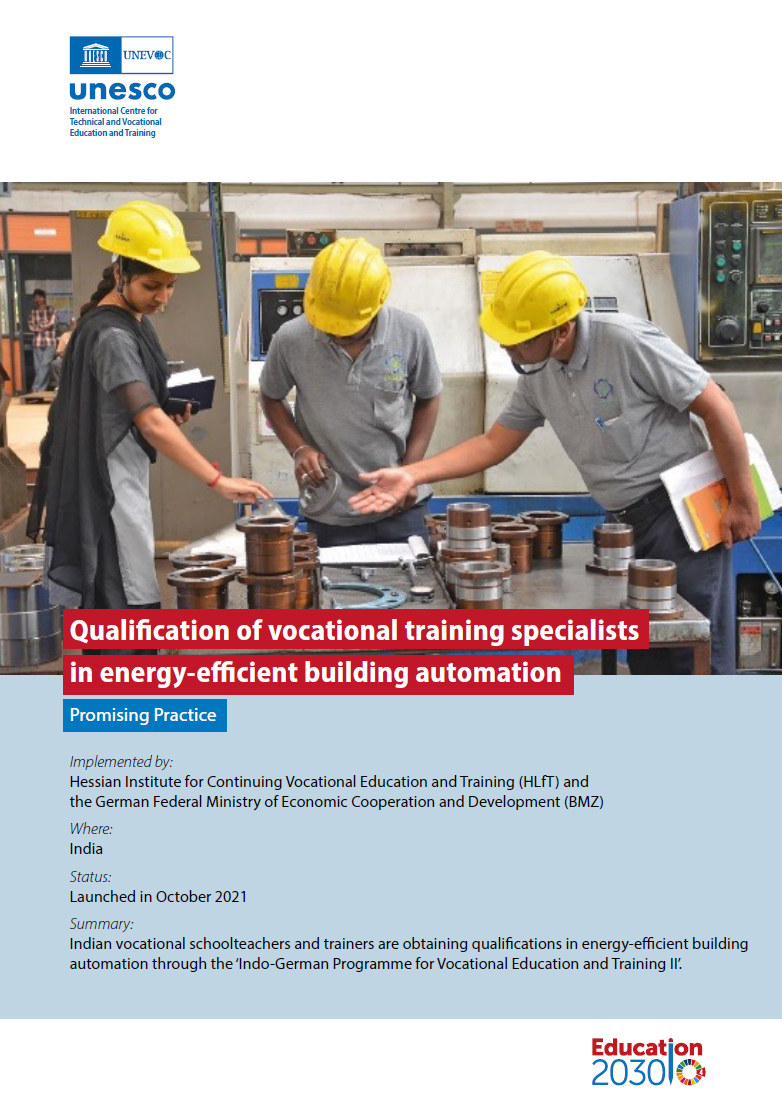
The ‘Indo-German Programme for Vocational Education and Training II’, implemented by the German Federal Ministry of Economic Cooperation and Development (BMZ), with the Hessian Institute for Continuing Vocational Education and Training (HLfT) as the technical partner, supports Indian partners in developing and improving cooperative in-company vocational training opportunities.
As the world moves towards sustainable living, energy-efficient technologies have become integral to the building automation industry. Professionals in this field are now required to have comprehensive knowledge and training on these technologies to ensure that buildings are designed, constructed and operated in an environmentally-friendly and energy-efficient manner. Incorporating these technologies not only helps reduce energy consumption and carbon footprint but also leads to cost savings for building owners and occupants.
| Institution: | Hessian Institute for Continuing Vocational Education and Training (HLfT) and the German Federal Ministry of Economic Cooperation and Development (BMZ) |
| Country: | India |
| Focus: | Greening TVET |

*Aviso legal: UNESCO-UNEVOC no se hace responsable de la gestión ni de la puesta en práctica de ninguna de las prácticas incluidas en esta base de datos.


