


Bibliothèque en ligne de l'UNEVOC
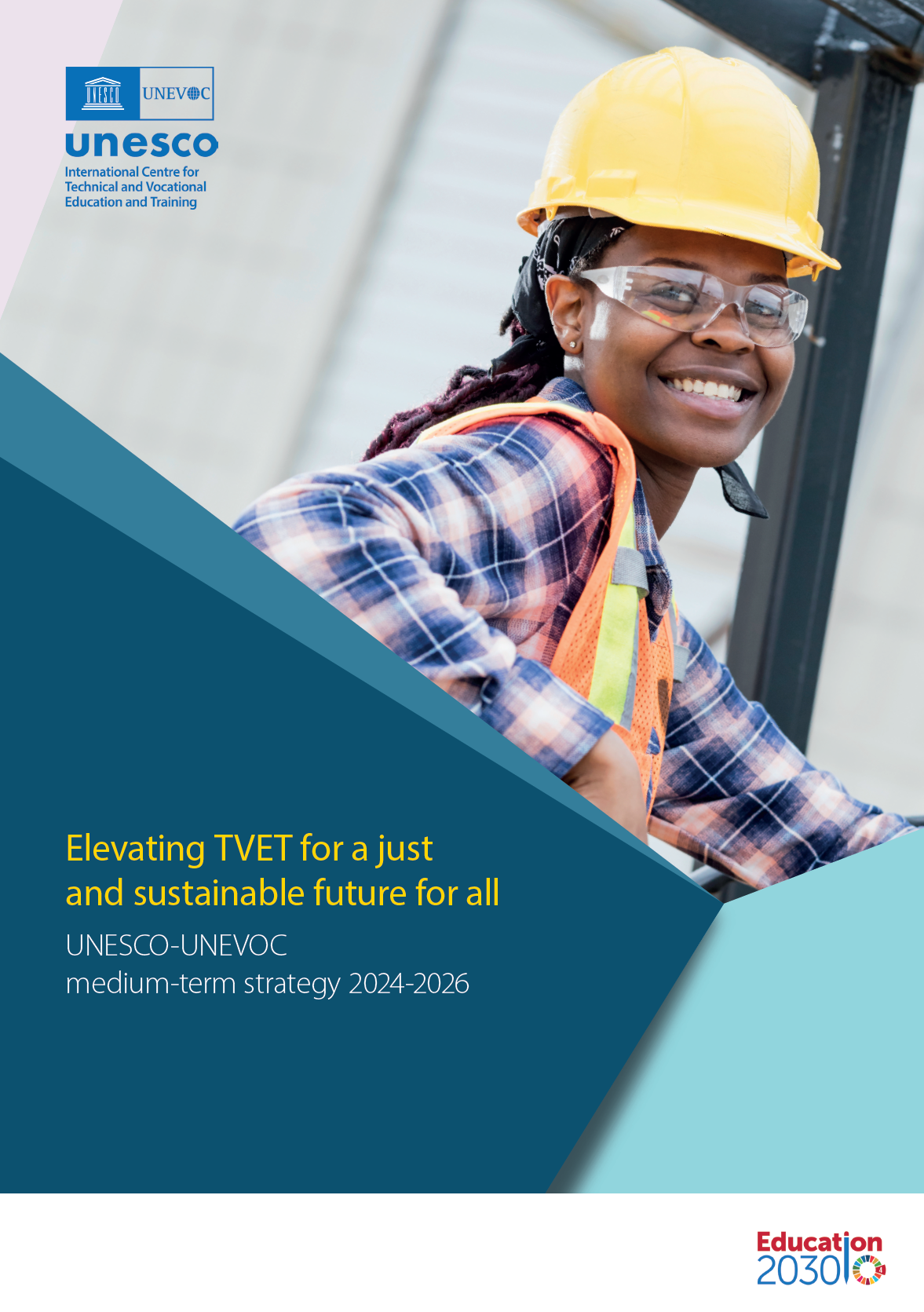

Elevating TVET for a just and sustainable future for all
UNESCO-UNEVOC medium-term strategy 2024-2026
The UNESCO-UNEVOC medium-term strategy for 2024 to 2026 (MTS IV) sets out a roadmap to elevate technical and vocational education and training (TVET) for a just and sustainable future and empower TVET institutions to address the demands of digital, g ...
 télécharger
  en savoir plus
UNESCO-UNEVOC Stratégie à moyen terme pour 2021–2023
Cette Stratégie à moyen terme pour 2021-2023 (MTS-III) vise à maîtriser les enjeux émergents dans l’enseignement et la formation techniques et professionnels (EFTP) au cours des trois années à venir.
télécharger en savoir plus 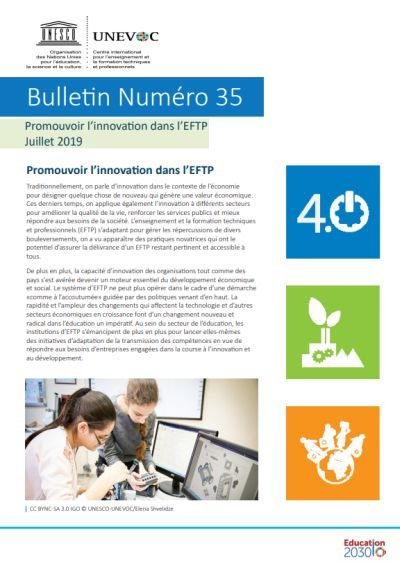
Bulletin UNESCO-UNEVOC Numéro 35
Le Bulletin UNEVOC est la lettre d’information du Centre international UNESCO-UNEVOC. Il représente à la fois un vecteur par lequel le Centre communique avec tous les experts et institutions d’EFTP et une plate-forme permettant au Réseau UNEVO ...
télécharger en savoir plus 
Handbook for Community Skills Development Centres in Malawi
The following Handbook is a practical guide for managers of Community Skills Development Centres in Malawi, comprised of semi-autonomous and autonomous centres supported by the Government, and other non-governmental organizations and financial instit ...
télécharger en savoir plus 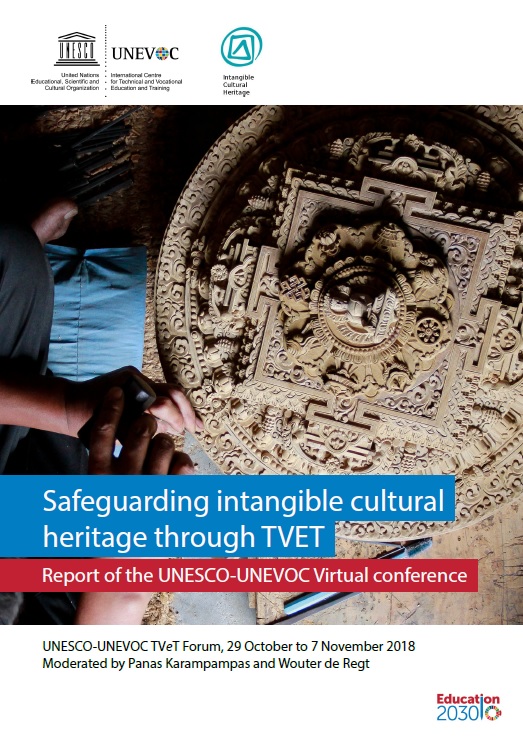
UNESCO-UNEVOC Virtual Conference: Safeguarding intangible cultural heritage through TVET
29 October to 7 November 2018
Technical and vocational education and training (TVET) can play a valuable role in safeguarding intangible cultural heritage (ICH). At the same time, ICH can be an incredibly rich resource for TVET programmes.
Yet, the interface between ICH and TV ...
télécharger en savoir plus 
Bulletin UNESCO-UNEVOC Numéro 34
Renforcement des capacités des meneurs régionaux de la transformation de l’EFTP - December 2018
Le Bulletin UNEVOC est la lettre d’information du Centre international UNESCO-UNEVOC. Il représente à la fois un vecteur par lequel le Centre communique avec tous les experts et institutions d’EFTP et une plate-forme permettant au Réseau UNEVO ...
télécharger en savoir plus 
Bulletin UNESCO-UNEVOC Numéro 33
Le Bulletin UNEVOC est la lettre d’information du Centre international UNESCO-UNEVOC. Il représente à la fois un vecteur par lequel le Centre communique avec tous les experts et institutions d’EFTP et une plate-forme permettant au Réseau UNEVO ...
télécharger en savoir plus 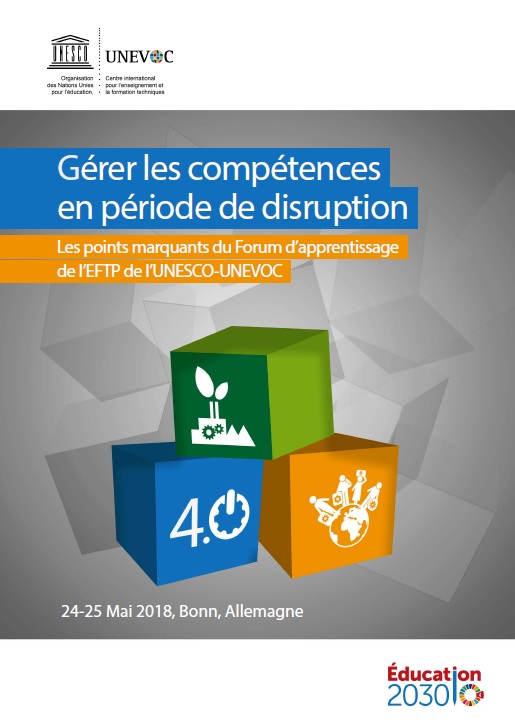
Gérer les compétences en période de disruption
Les points marquants du Forum d’apprentissage de l’EFTP de l’UNESCO-UNEVOC
À la conférence internationale organisée à Tangshan en 2017 en vue d’évaluer les progrès réalisés depuis le troisième Congrès international sur l’EFTP qui s’est tenu Shanghai (2012), l’UNESCO a mis l’accent sur les facteurs appelà ...
télécharger en savoir plus 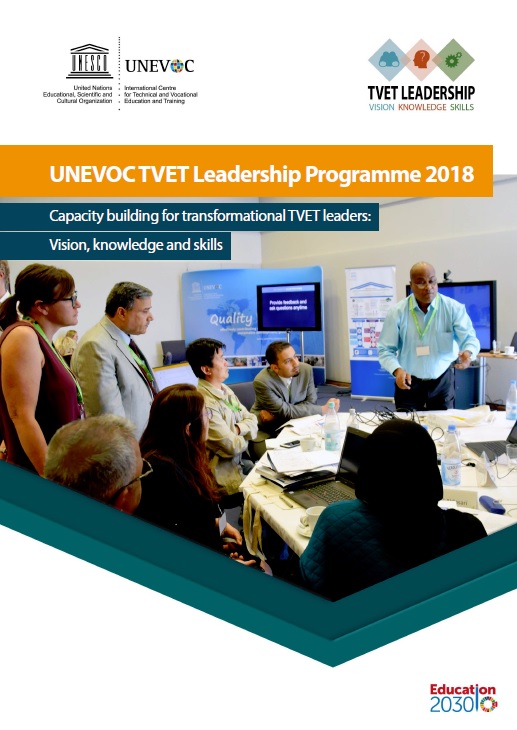
UNEVOC TVET Leadership Programme 2018
Capacity building for transformational TVET leaders: Vision, knowledge and skills
The following report gives an overview of UNESCO-UNEVOC's TVET Leadership Programme 2018, held in Bonn, Germany, from 25 June to 6 July.
télécharger en savoir plus 
UNESCO-UNEVOC Medium Term Strategy II (MTS-II)
Strategic Plan 2018–2020
UNESCO-UNEVOC’s second Medium-Term Strategy for the period 2018-2020 sets out how the International Centre will support governments and institutions to transform their TVET systems and successfully reach the ambitious Sustainable Development Goals. ...
télécharger en savoir plus 
Bulletin UNESCO-UNEVOC Numéro 31
Le Bulletin UNEVOC est la lettre d’information du Centre international UNESCO-UNEVOC. Il représente à la fois un vecteur par lequel le Centre communique avec tous les experts et institutions d’EFTP et une plate-forme permettant au Réseau UNEVO ...
télécharger en savoir plus 
Bulletin UNESCO-UNEVOC Numéro 32
Le Bulletin UNEVOC est la lettre d’information du Centre international UNESCO-UNEVOC. Il représente à la fois un vecteur par lequel le Centre communique avec tous les experts et institutions d’EFTP et une plate-forme permettant au Réseau UNEVO ...
télécharger en savoir plus 
Bulletin UNESCO-UNEVOC Numéro 29
Le Bulletin UNEVOC est la lettre d’information du Centre international UNESCO-UNEVOC. Il représente à la fois un vecteur par lequel le Centre communique avec tous les experts et institutions d’EFTP et une plate-forme permettant au Réseau UNEVO ...
télécharger en savoir plus 
UNESCO-UNEVOC Bulletin 30
The UNEVOC Bulletin is the newsletter of the UNESCO-UNEVOC International Centre.
télécharger en savoir plus 
UNESCO-UNEVOC virtual conference: Greening TVET in the context of climate change policy developments
2 - 13 November 2015
The virtual conference gathered input from the UNESCO-UNEVOC TVeT Forum community over a two-week period prior to UNFCCC COP21, providing engaging insights and shared experiences to reflect on and carry into the future.
A hundred and thirty partic ...
télécharger en savoir plus 
UNESCO-UNEVOC virtual conference: UNESCO TVET Strategy 2016-2021
28 September to 3 October 2015
The virtual conference provided stakeholders an opportunity to inform UNESCO’s strategy for technical and vocational education and training (TVET) for the period 2016 to 2021. The questions addressed at the conference included: i) What should be th ...
télécharger en savoir plus 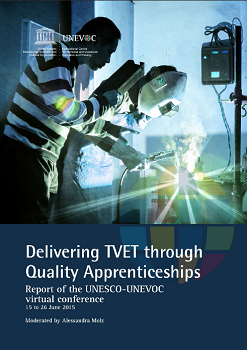
UNESCO-UNEVOC virtual conference: Delivering TVET through Quality Apprenticeships
15 to 26 June 2015
To further our understanding of apprenticeships, UNESCO-UNEVOC organized a virtual conference from 15 to 26 June 2015 on UNESCO-UNEVOC’s e-forum. Moderated by Alessandra Molz, a researcher in the area of workplace learning and skills development, i ...
télécharger en savoir plus 

UNESCO-UNEVOC virtual conference: Skills for the creative industries
Report of the UNESCO-UNEVOC virtual conference, 29 September - 10 October 2014
To further our understanding of skills for creative industries, UNESCO-UNEVOC organized a virtual conference from 29 September to 10 October 2014 on the UNEVOC e-Forum. Moderated by Paul Collard, Chief Executive at Creativity, Culture and Education ( ...
télécharger en savoir plus 
UNESCO-UNEVOC virtual conference: Greening TVET: Qualifications and implementation strategies
Report of the e-Forum online conference in November 2013
The discussions highlighted the importance of systematically integrating green competencies into TVET systems. According to the participants, green skills and attitudes should be part of curricula, training regulations and training programmes. Green ...
télécharger en savoir plus 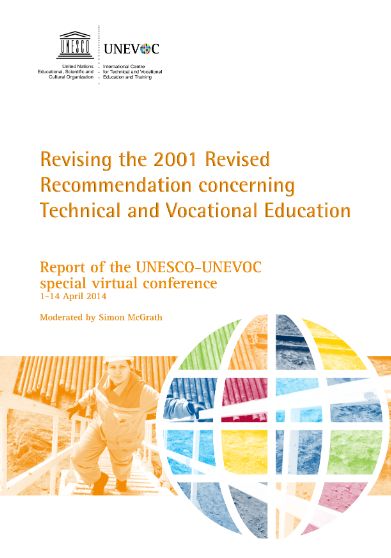
UNESCO-UNEVOC virtual conference: Revising the 2001 Revised Recommendation concerning Technical and Vocational Education
Report of the UNESCO-UNEVOC special virtual conference, 1-14 April 2014
As part of a rigorous process involving a number of high level consultations with UNESCO Member States, UNESCO-UNEVOC and the UNESCO TVET Section jointly organized a Special Virtual Conference on the UNEVOC e-Forum. Held from 1 to 14 April 2014 and m ...
télécharger en savoir plus 
Vocational Pedagogy: what it is, why it matters and how to put it into practice
Report of the UNESCO-UNEVOC online conference, 12-26 May 2014
To further our understanding of vocational pedagogy, UNESCO-UNEVOC organized a virtual conference from 12 to 26 May 2014 on the UNEVOC e-Forum. Moderated by Professor Bill Lucas, Director of the Centre for Real-World Learning, Professor of Learning a ...
télécharger en savoir plus 
UNESCO-UNEVOC virtual conference: Tackling youth unemployment through TVET
25 June to 9 July 2013
From 25 June to 9 July 2013, over 300 participants from 80 countries gathered on the UNEVOC e-Forum to discuss how TVET can address growing numbers of youth unemployment. TVET experts, policy makers, researchers, practitioners and most importantly yo ...
télécharger en savoir plus 
UNESCO-UNEVOC virtual conference: Greening TVET for sustainable development
Report of the UNESCO-UNEVOC online conference 22 October to 2 November 2012
From 22 October to 2 November 2012, a moderator-driven discussion was held on the topic of greening TVET for sustainable development. Moderated by Mr Kai Gleissner from the Otto von Guericke University, Magdeburg, Germany, a UNEVOC Centre, the virtua ...
télécharger en savoir plus 
UNESCO-UNEVOC virtual conference: ICTs for TVET
14 - 28 May 2013
This report summarizes the discussions that were held in May 2013 during the e-Forum virtual conference on the implications of the ICT revolution for TVET, moderated by Nik Kafka from Teach A Man To Fish.
Information and Communication Technologies ...
télécharger en savoir plus 
UNESCO-UNEVOC virtual conference: Strengthening TVET Teacher Education
25 June to 6 July 2012
The e-Forum discussion held from 25 June to 6 July 2012 and moderated by Prof. Masriam Bukit) emphasized that the quality of TVET teachers is key in determining the skills of future workers. Qualified, trained and motivated teachers and trainers are ...
télécharger en savoir plus 
