


Participants represented varying disciplines from institutions and have collaborated with peers and mentors, putting green skills into action based on their interdisciplinary and local context. They engaged in projects that sought to make a difference in the agricultural, manufacturing, construction and renewable energy sectors.
For selecting the most innovative green solution, the project proposals were evaluated in two stages as teams worked on refining their ideas, and submitting proof of concept. The criteria for evaluation are:
- Problem and solution
- Green skills application
- Potential impact (individual, economy and society)
- Implementation plan
- Innovation
- Methodology and Evidence
- Potential realization of potential
- Scalability
- Presentation and communication
Innovative agriculture – a closed loop approach
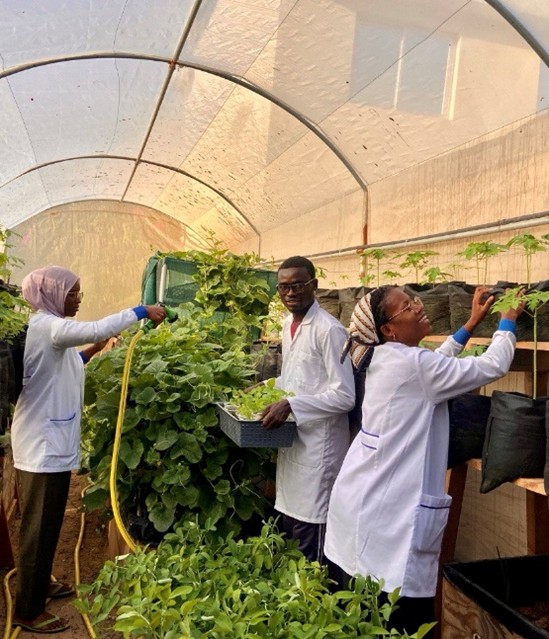
The team addresses the main issue of water scarcity, difficulty accessing arable land, climate change, rapid urbanisation, excessive use of chemical inputs and a lack of recycling infrastructure are weakening agriculture, degrading soils and threatening environmental sustainability in Senegal.
Utilising an adaptable and marketable solution to strengthen the resilience of family farms, reduce waste, and promote circular agriculture the project proposed an integrated system linking several complementary activities to improve production while preserving the environment. These activities included growing hydroponic green fodder for livestock using local cereals, turning horticultural leftovers and household waste into compost, and raising more than a dozen types of vegetables and fruits in containers. All of these is supported by a combination of technical and scientific approach that carefully tracks environmental conditions and the microorganisms involved.
Reducing E-Waste from EV Battery Discards
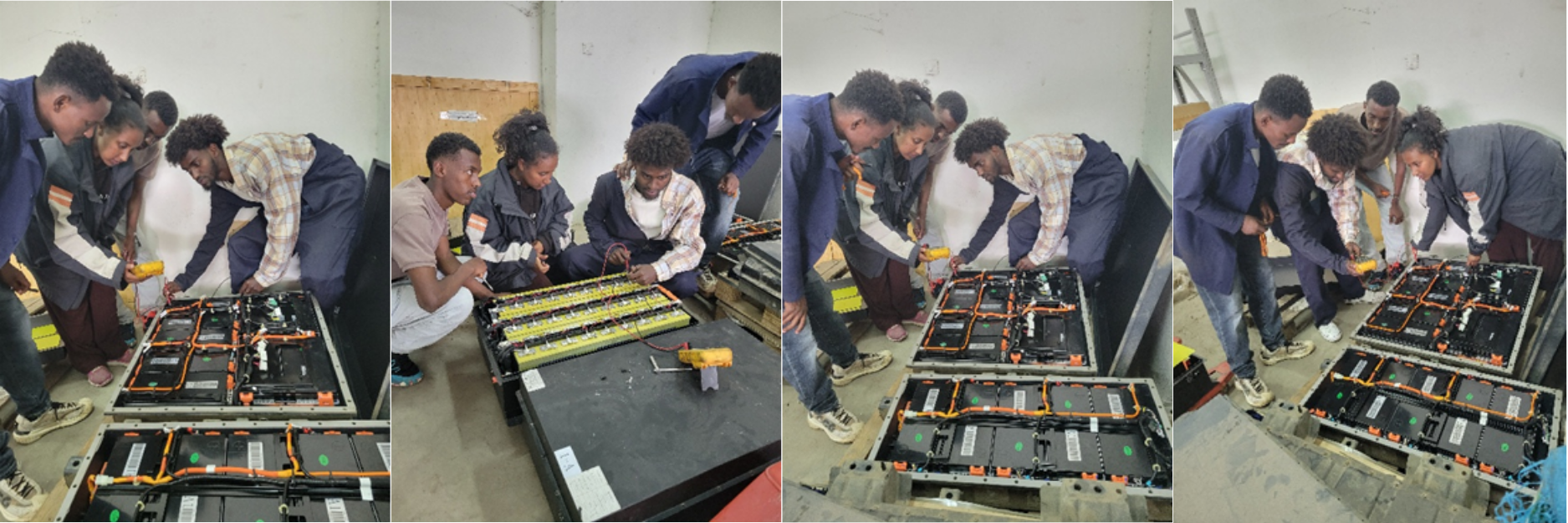
The project team working in Ethiopia assessed that EV battery replacements caused by premature failures and improper use were much too expensive. This challenge also resulted in significant e-waste and high financial burdens, hindering sustainable EV adoption.
To solve this problem, this green project idea sought to establish a specialised cell-level repair and battery balancing service for EV lithium-ion battery packs in Addis Ababa. The solution, serving as a win-win, will repair faulty battery cells thus whilst drastically reducing repair costs (up to 70% savings) and minimise e-waste. The project team utilized a pilot approach to test scalability and replicability of the idea.
Eco-friendly bricks from Agricultural waste
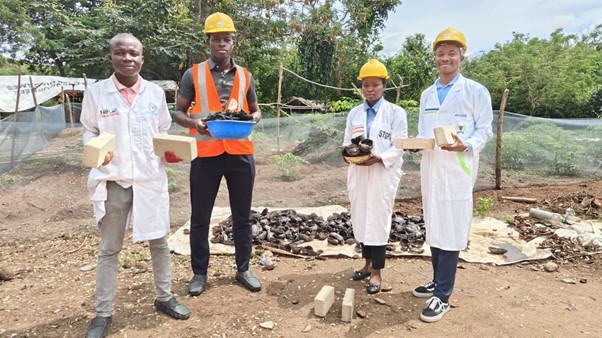
According to the project team, waste production in sub-Saharan Africa is 0.46 kg/day per capita, compared to 0.76 kg/day in the rest of the world. However, waste production in Côte d'Ivoire remains relatively high at 0.64 kg/day per capita (GBN,2020). In addition, the cement industry is responsible for around 8% of global CO2 emissions (TEC, 2025).
Taking inspiration from the need to address the highly polluting cement dependence for brick manufacturing in Côte d'Ivoire, the team developed ecological bricks using bio-sourced and recycled plant materials. This innovation specifically uses agricultural waste like coconut shells, palm kernels, and rice straw—instead of traditional cement. This approach aims to reduce CO2 emissions and energy consumption drastically. The process involves collecting and treating agricultural waste, preparing the mixture, molding it into bricks, and finally drying the bricks to complete production.
Briquette Production from water hyacinth biomass
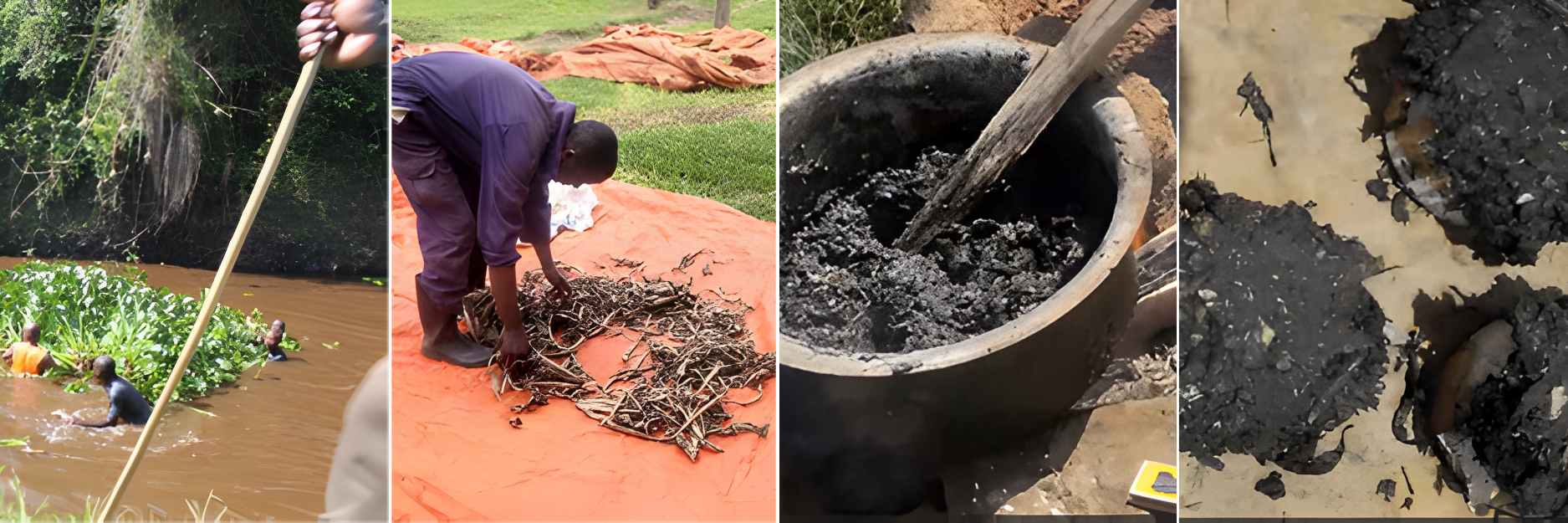
Following an assessment, the project team found that the invasive Water Hyacinth heavily infests River Rwizi in Western Uganda, jeopardising livelihoods, health, and the environment, the team. This proliferation further causes severe ecological and socio-economic damage. At the same time, the community over-relies on expensive charcoal and firewood.
The project derived a sustainable, community-driven solution in an effort to restore river functionality and support local livelihoods through briquette production from water hyacinth biomass. The process involves Water hyacinth being mechanically harvested and transformed into a cleaner, more efficient solid fuel. After the plants are ground, solar-dried, and pressed into briquettes, the result is a denser fuel that burns hotter and cleaner. These briquettes offer a practical alternative to charcoal, helping to ease pressure on forests and reduce indoor air pollution.
Participant feedback
The competition engaged the participants in developing team work and problem-solving skills – as the most common competencies that the students confirmed they valued and gained from the competition process. They lauded the training and the coaching and mentorship that followed, with the support of UNESCO-UNEVOC, working collaboratively with a group of experts from BeChangeMaker alumni, Circulab Academy and Circle Economy, as well as the opportunity it provided to network with their peers.
 Facebook
 Twitter
