


UNESCO Publications
Below you can find a selection of UNESCO publications that are relevant in the context of TVET. For the full catalogue, please use the UNESCO Digital library
 .
.


Strengthening resilience in technical and vocational education and training
A guide for sector planners
In 2024, an estimated 116 million people required humanitarian assistance due to conflicts, climate change and public health emergencies (UN OCHA Annual Report, 2024). Amid escalating global crises, the education and training sector needs to respond ...
 view
view  read more
Inter-Agency Group on TVET Newsletter
Newsletter - December 2025
This edition, the Inter-Agency Group is casting its spotlight on activities implemented in the Asia-Pacific region, as the second IAG-TVET meeting takes place on the 2 December 2025, in Manila, hosted by the Asian Development Bank.
In this Newslet ...
 download read more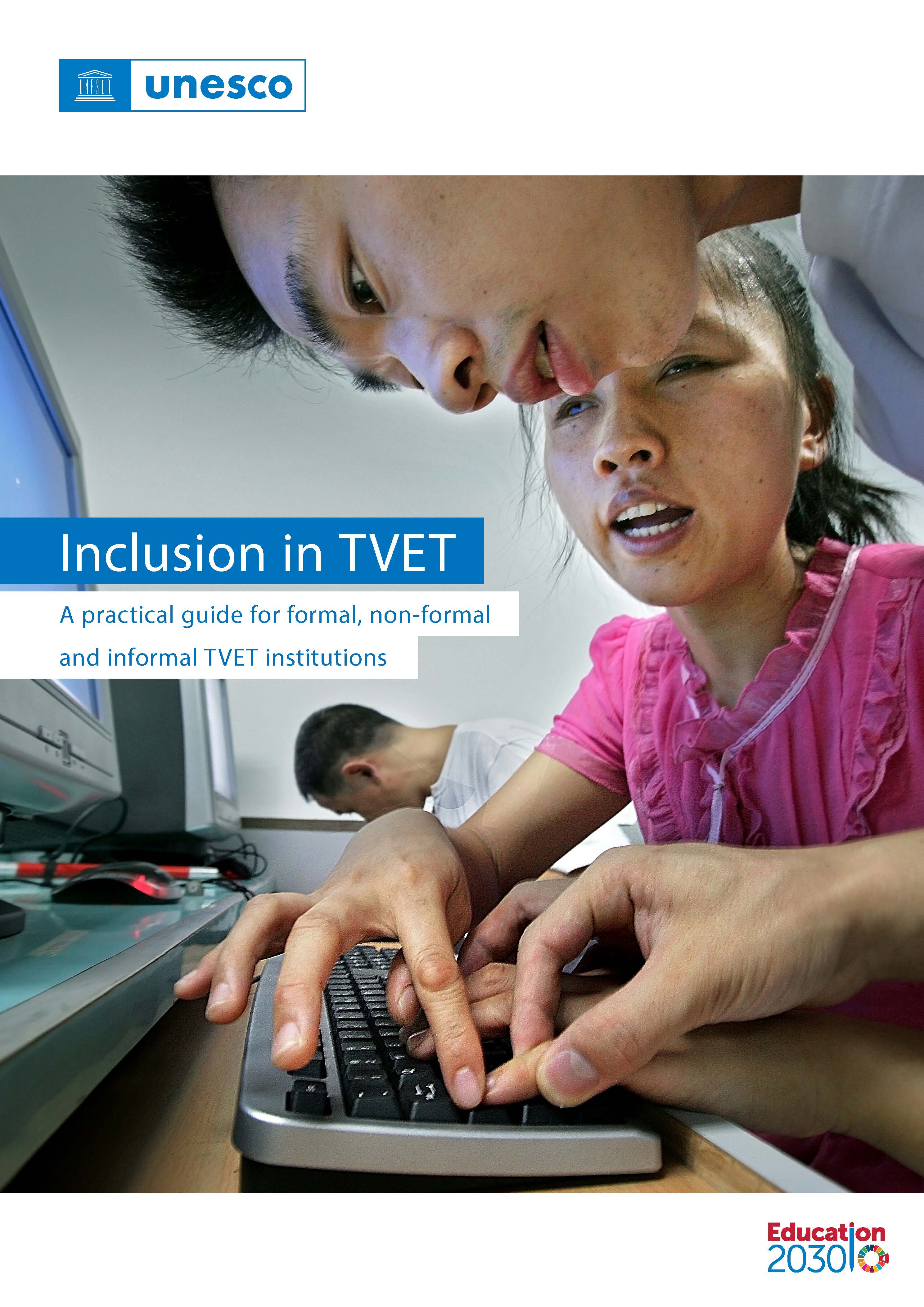
Inclusion in TVET: a practical guide for formal, non-formal and informal TVET institutions
This guide provides actionable strategies for building inclusive TVET systems. It promotes collaboration among NGOs, private sector actors and education providers to ensure no learner is left behind. This hands-on guide shows how to move beyond ident ...
view read more 
Inter-Agency Group on TVET Newsletter - April 2025
The Inter-Agency Group on Technical and Vocational Education and Training (IAG-TVET), originally convened by UNESCO in 2008, aims to ensure a good coordination of activities by the key international organizations involved in the delivery of policy ad ...
download read more 
Transforming education for the future
Education is a basic human right and a global public good with the power to transform individual lives, communities and the planet for the better over generations. UNESCO’s Education Sector provides global and regional leadership to ensure every ch ...
view read more 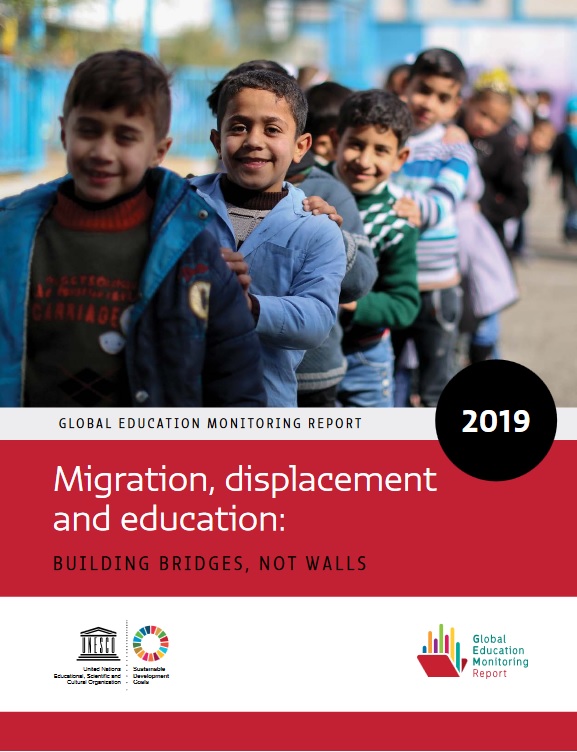
Global Education Monitoring Report 2019
Migration, displacement and education: Building bridges, not walls
The 2019 Global Education Monitoring Report examines the education impact of migration and displacement across all population movements: within and across borders, voluntary and forced, for employment and education. It also reviews progress on educat ...
download read more 
Pathways of progression
Linking technical and vocational education and training with post-secondary education
Until recently, few graduates of technical and vocational education and training (TVET) aspired to further learning, particularly higher education. But higher-level qualifications are now a common expectation among young people, reflecting increased ...
download read more 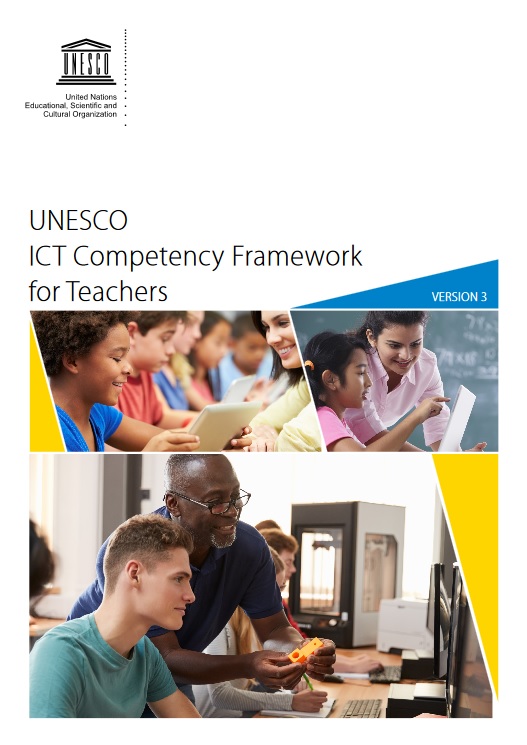
UNESCO ICT Competency Framework for Teachers (ICT-CFT)
Version 3
The ICT Competency Framework for Teachers (ICT CFT) Version 3 is a tool to guide pre- and in- service teacher training on the use of ICTs across the education system. It is intended to be adapted and contextualized to support national and institution ...
download read more 
Digital Credentialing
Implications for the recognition of learning across borders
Digital technologies are creating new opportunities and challenges for skills development and recognition globally. Changes in modalities of access and learning methods, massification and internationalization, are taking place at an increasingly rapi ...
download read more 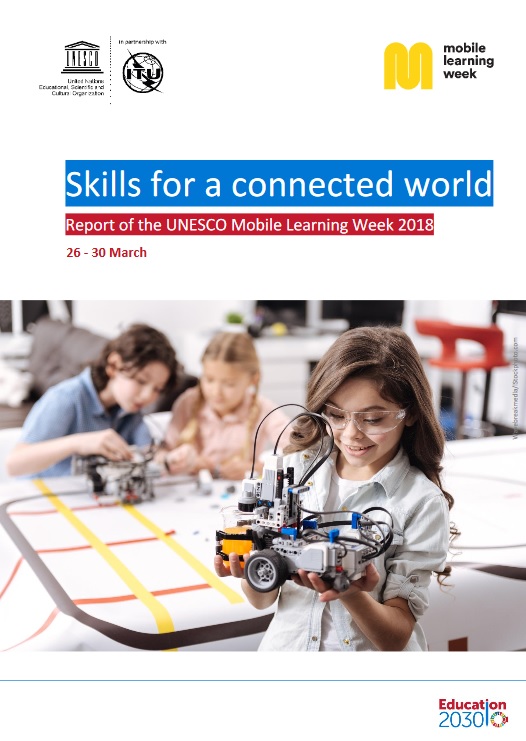
Skills for a connected world
Report of the UNESCO Mobile Learning Week 2018, 26-30 March 2018
All over the world, the way we educate and are educated is changing. New technologies, platforms and ways of reading the world are transforming the philosophies underpinning education pedagogies and modes of delivery. New voices, hitherto unheard, ar ...
download read more 
Taking a whole of government approach to skills development
Today, technical and vocational skills development is considered to be a crucial vehicle for sustainable development. Many ministries of government, the private sector and other stakeholders, have an interest in technical and vocational skills develo ...
download read more 
Building tomorrow’s digital skills
What conclusions can we draw from international comparative indicators?
This report looks at the conditions impacting the development of digital skills based on five international comparative surveys, the results of which reveal a sample group of twelve countries whose population have particularly high levels of digital ...
download read more 
Funding skills development
The private sector contribution
The international community has set an ambitious 2030 Agenda for Sustainable Agenda and education and training are central to its achievement. In this context, the international community also adopted a framework for action “Education 2030 Agenda†...
download read more 
Discussion paper - Making learning visible: Representing skills, competencies and qualifications
This discussion paper concerns recent trends and major challenges in developing effective and trustworthy representation of skills, competencies and qualifications. It starts with the recognition that today’s learning opportunities are limitless, b ...
download read more 
Shanghai Update 8
March 2018
The eighth issue of the Shanghai Update newsletter puts in focus a recent TVET conference and the resulting updated skills agenda, as well as issues related to greening and quality assurance.
download read more 
Global inventory of regional and national qualifications frameworks 2017
The 2017 Global Inventory provides some important insights into the current development and implementation of qualifications frameworks worldwide. It is the result of collaborative work between the European Centre for the Development of Vocation ...
download read more 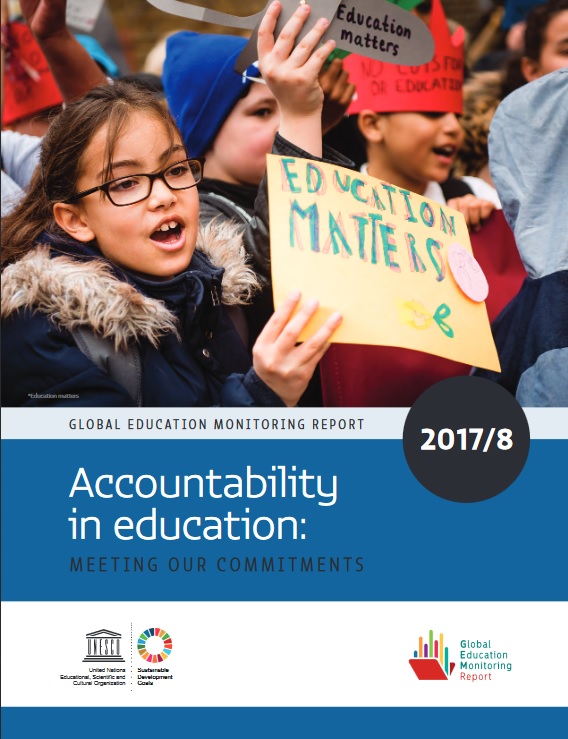
Global Education Monitoring Report - 2017/2018
Accountability in education: meeting our commitments
The second edition of the Global Education Monitoring Report (GEM Report) presents the latest evidence on global progress towards the education targets of the UN Sustainable Development Goals. With hundreds of millions of people still not going to sc ...
download read more 
Using ICTs and Blended Learning in Transforming TVET
The Education for All initiative concluded in 2015, but in many countries, and particularly in the developing countries, secondary education is still the preserve of the privileged few. This means that millions of adults and young people are denied t ...
download read more 
