


UNESCO Publications
Below you can find a selection of UNESCO publications that are relevant in the context of TVET. For the full catalogue, please use the UNESCO Digital library
 .
.


Integrating AI in TVET
A practical guide for institutions
Artificial intelligence (AI) is becoming part of everyday life and the fast-evolving world of work. This is creating a gap between how people already use AI and the formal training required to do so ethically and effectively. Technical and vocational ...
 view
view  read more
Transformative TVET for the building and construction sector
Embracing digitalization, greening and migration trends
There is an urgent need to expand the skilled workforce and promote green practices in the building and construction industry. The sector, currently employing approximately 7 per cent of the global working population, accounts for over a third of glo ...
view read more 
Guidance for generative AI in education and research
Publicly available generative AI (GenAI) tools are rapidly emerging, and the release of iterative versions is outpacing the adaptation of national regulatory frameworks. The absence of national regulations on GenAI in most countries leaves the data p ...
view read more 
Digital Transformation of TVET and Skills Development Systems in Africa
Guidelines for countries to undertake a strategic planning framework
These guidelines follow the publication of Digital Transformation of TVET and Skills Development Systems in Africa - Guidelines for countries to undertake a situational analysis (‘the Situational Analysis Guidelines’).
In concert with the situ ...
 download read more
Digital Transformation of TVET and Skills Development Systems in Africa
Guidelines for countries to undertake a situational analysis
The Pan African Initiative for the Digital Transformation of TVET and Skills Development Systems in Africa (‘the initiative’) was launched on 9 March 2021. The initiative’s overall objective is to create an ecosystem that will enable and accele ...
download read more 
Perspectives on policy and practice. Tapping into the potential of big data for skills policy
This publication has been prepared by the Inter-Agency Group on Technical and Vocational Education and Training on skills mismatch in digitized labour markets, to support experts and policymakers who wish to engage in discussion on the potential of w ...
view read more 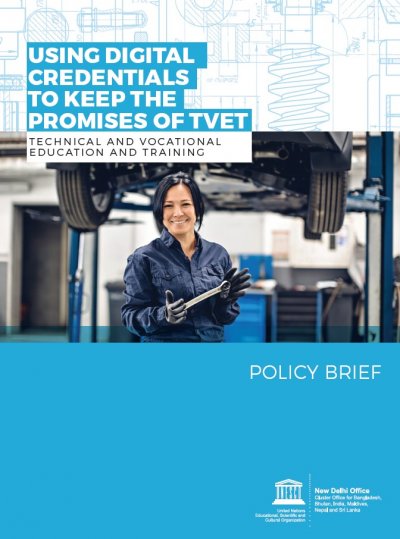
Policy brief: using digital credentials to keep the promises of TVET; Technical and Vocational Education and Training
Today, opportunities abound for greater use of technology in assessment and credentialing to enhance the impact of TVET on economic and social development programmes. In the past, it has often been observed that the impact of TVET on social and econo ...
view read more 
Guidelines on the development of open educational resources policies
UNESCO and the Commonwealth of Learning have been working directly with governmental agencies and institutions to support the development of national and institutional OER policies. This publication is the culmination of this. It is meant to be refer ...
view read more 
Artificial intelligence in education: challenges and opportunities for sustainable development
Artificial Intelligence is a booming technological domain capable of altering every aspect of our social interactions. In education, AI has begun producing new teaching and learning solutions that are now undergoing testing in different contexts. Thi ...
view read more 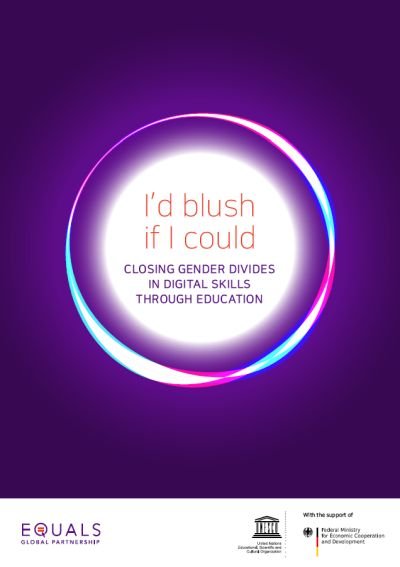
I'd blush if I could
Closing gender divides in digital skills through education
This publication seeks to expose some of these biases and put forward ideas to begin closing a digital skills gender gap that is, in most parts of the world, wide and growing. Today, women and girls are 25 per cent less likely than men to know how to ...
view read more 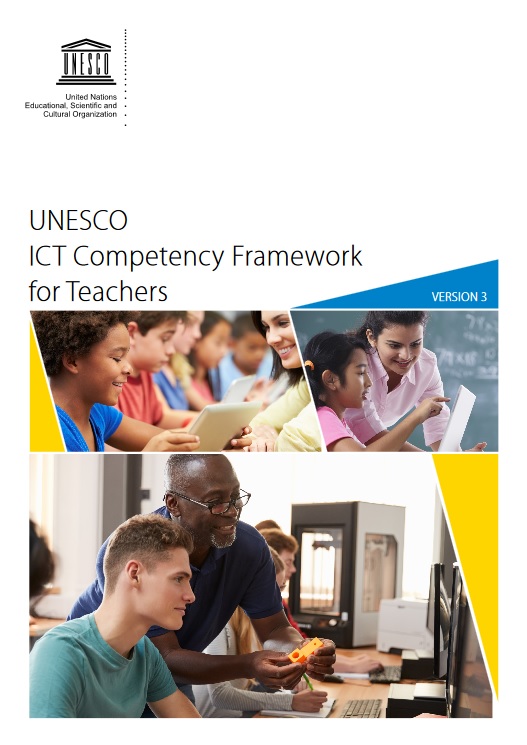
UNESCO ICT Competency Framework for Teachers (ICT-CFT)
Version 3
The ICT Competency Framework for Teachers (ICT CFT) Version 3 is a tool to guide pre- and in- service teacher training on the use of ICTs across the education system. It is intended to be adapted and contextualized to support national and institution ...
download read more 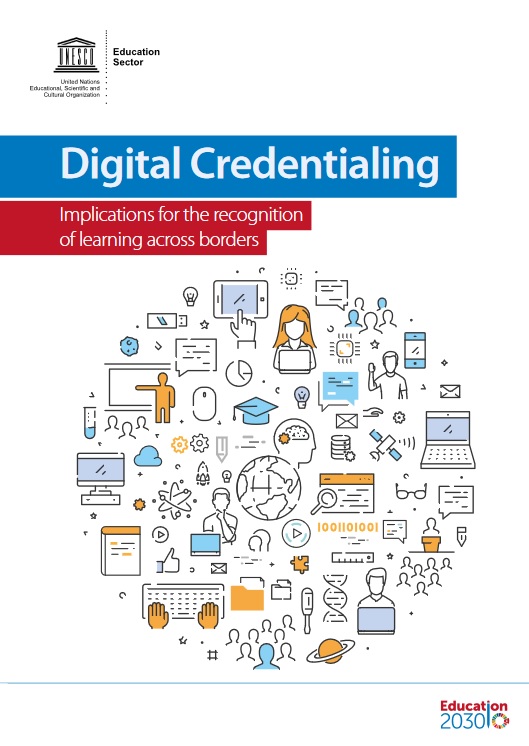
Digital Credentialing
Implications for the recognition of learning across borders
Digital technologies are creating new opportunities and challenges for skills development and recognition globally. Changes in modalities of access and learning methods, massification and internationalization, are taking place at an increasingly rapi ...
download read more 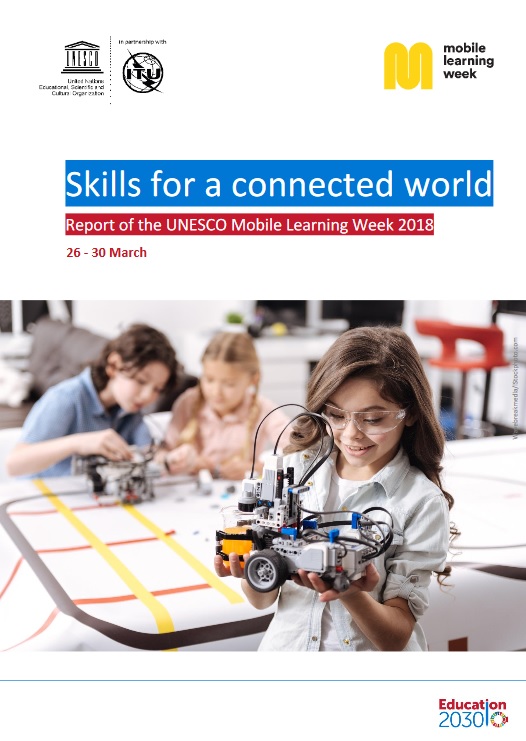
Skills for a connected world
Report of the UNESCO Mobile Learning Week 2018, 26-30 March 2018
All over the world, the way we educate and are educated is changing. New technologies, platforms and ways of reading the world are transforming the philosophies underpinning education pedagogies and modes of delivery. New voices, hitherto unheard, ar ...
download read more 
Building tomorrow’s digital skills
What conclusions can we draw from international comparative indicators?
This report looks at the conditions impacting the development of digital skills based on five international comparative surveys, the results of which reveal a sample group of twelve countries whose population have particularly high levels of digital ...
download read more 
Beyond Access: ICT-enhanced Innovative Pedagogy in TVET in the Asia-Pacific
The Education 2030 Agenda highlights the need to rethink technical and vocational education and training (TVET) and skills development. Out of the seven targets to achieve by 2030, two are directly linked to TVET. They aim to “ensure equal access t ...
download read more 
Using ICTs and Blended Learning in Transforming TVET
The Education for All initiative concluded in 2015, but in many countries, and particularly in the developing countries, secondary education is still the preserve of the privileged few. This means that millions of adults and young people are denied t ...
download read more 
A Basic Guide to Open Educational Resources (OER)
This Guide to OER comprises three sections. The first – a summary of the key issues – is presented in the form of a set of ‘Frequently Asked Questions’. Its purpose is to provide readers with a quick and user-friendly introduction to Open Edu ...
download read more 
