


UNESCO Publications
Below you can find a selection of UNESCO publications that are relevant in the context of TVET. For the full catalogue, please use the UNESCO Digital library
 .
.


Inter-Agency Group on TVET Newsletter
May 2026
The Inter-Agency Group on Technical and Vocational Education and Training (IAG-TVET) was convened by UNESCO in 2008 to ensure a good coordination of activities by the key international organizations involved in the delivery of policy advice, programm ...
 download
  read more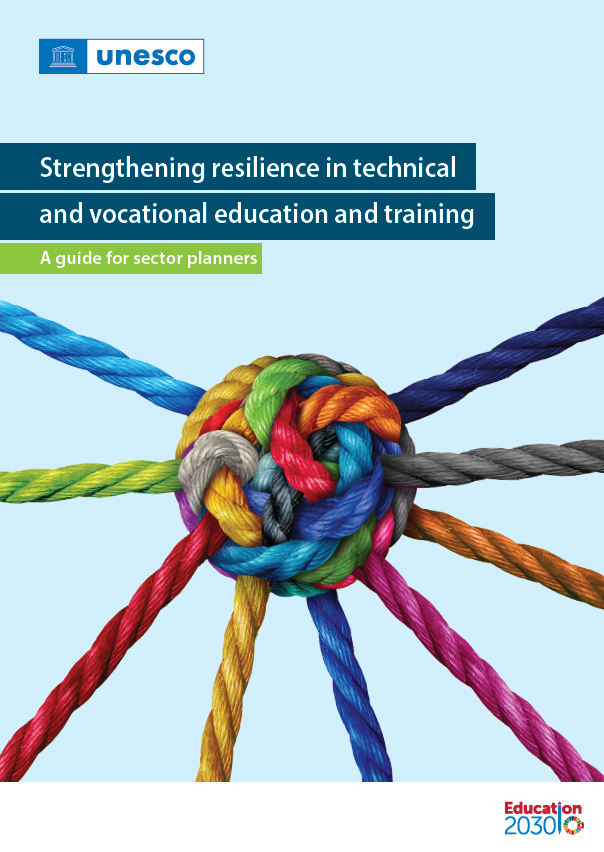
Strengthening resilience in technical and vocational education and training
A guide for sector planners
In 2024, an estimated 116 million people required humanitarian assistance due to conflicts, climate change and public health emergencies (UN OCHA Annual Report, 2024). Amid escalating global crises, the education and training sector needs to respond ...
 view read more
Inter-Agency Group on TVET Newsletter
Newsletter - December 2025
This edition, the Inter-Agency Group is casting its spotlight on activities implemented in the Asia-Pacific region, as the second IAG-TVET meeting takes place on the 2 December 2025, in Manila, hosted by the Asian Development Bank.
In this Newslet ...
download read more 
Transformative TVET for the building and construction sector
Embracing digitalization, greening and migration trends
There is an urgent need to expand the skilled workforce and promote green practices in the building and construction industry. The sector, currently employing approximately 7 per cent of the global working population, accounts for over a third of glo ...
view read more 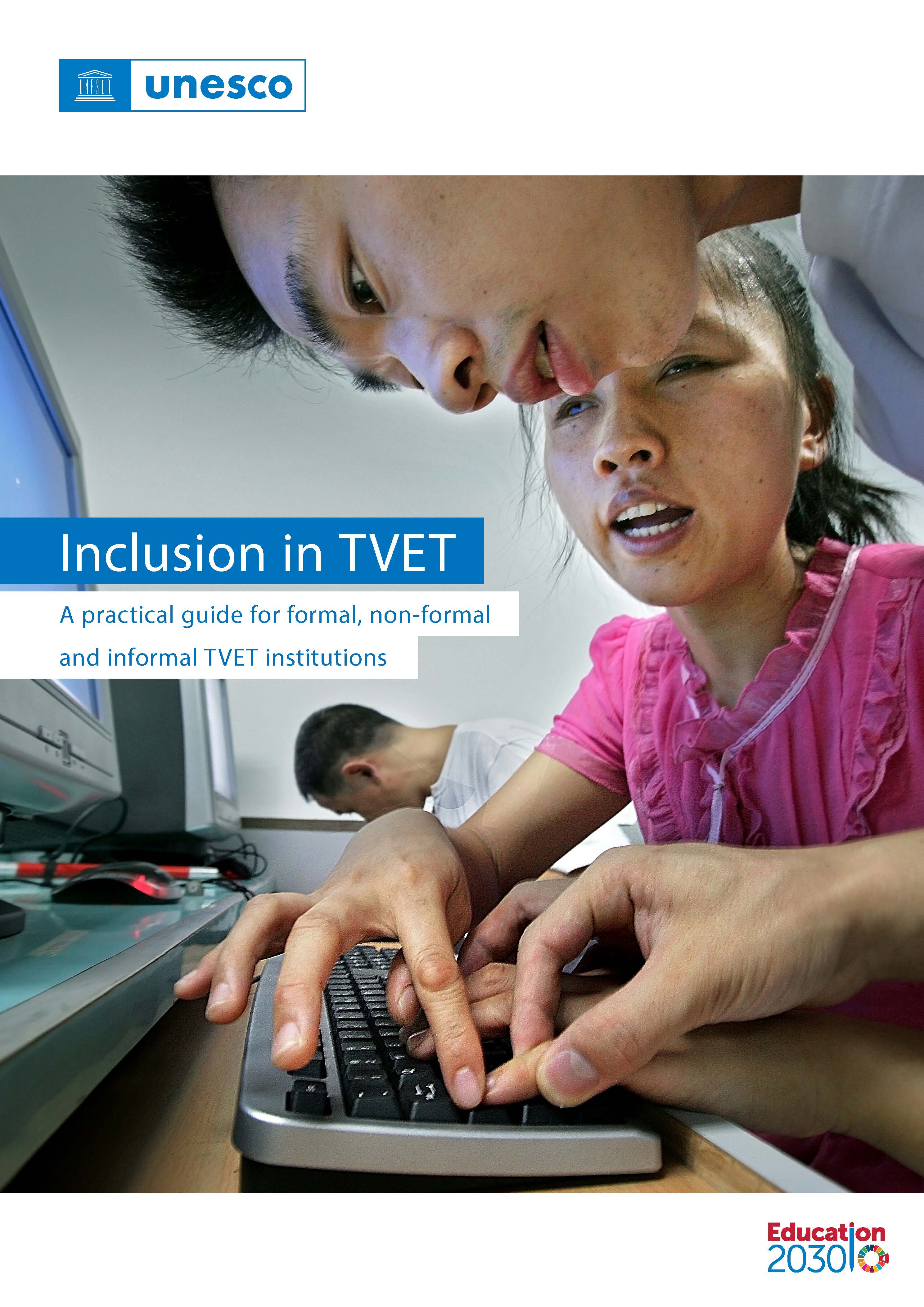
Inclusion in TVET: a practical guide for formal, non-formal and informal TVET institutions
This guide provides actionable strategies for building inclusive TVET systems. It promotes collaboration among NGOs, private sector actors and education providers to ensure no learner is left behind. This hands-on guide shows how to move beyond ident ...
view read more 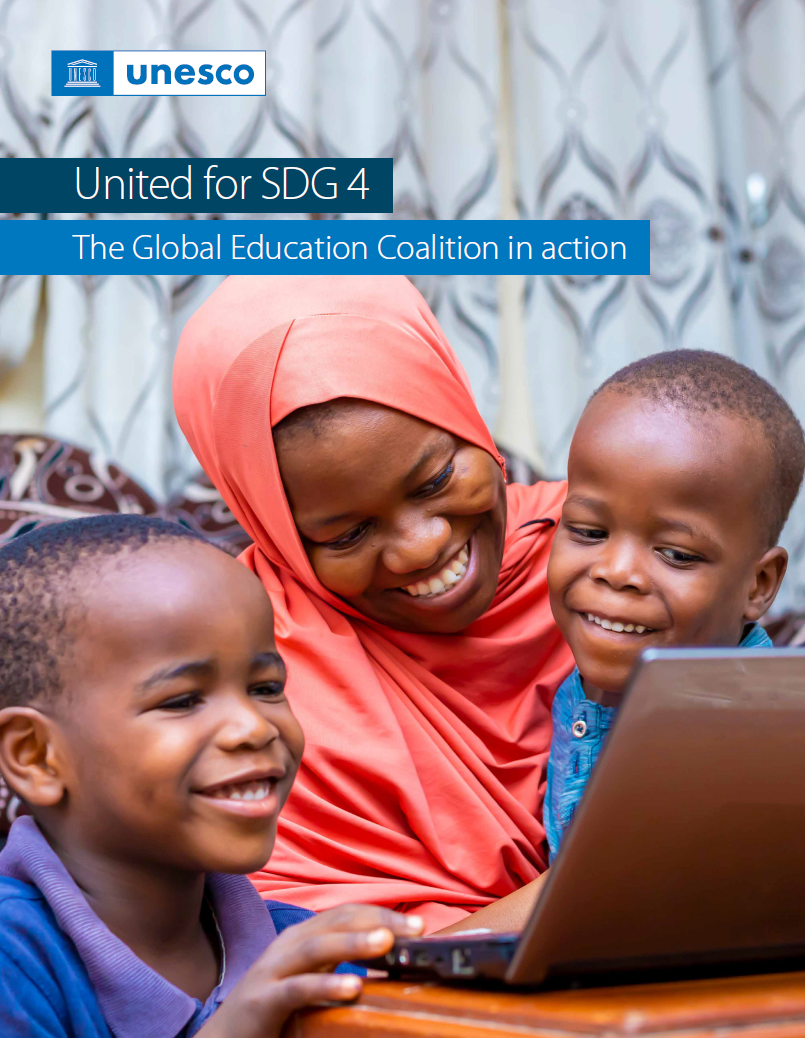
United for SDG4
The Global Education Coalition in action
As we embark on our fifth year, the Global Education Coalition (GEC) continues to work together in support of Sustainable Development Goal 4 (SDG 4). From our four flagship missions in education to successfully launching the Digital Transformation Co ...
view read more 
SDG 4 scorecard progress report on national benchmarks
Focus on teachers
Setting SDG 4 benchmarks is a novel process. It has involved countries specifying their contribution to the achievement of the global targets based on their national plans and policies. Overall, 79% of countries have submitted benchmarks, or national ...
view read more 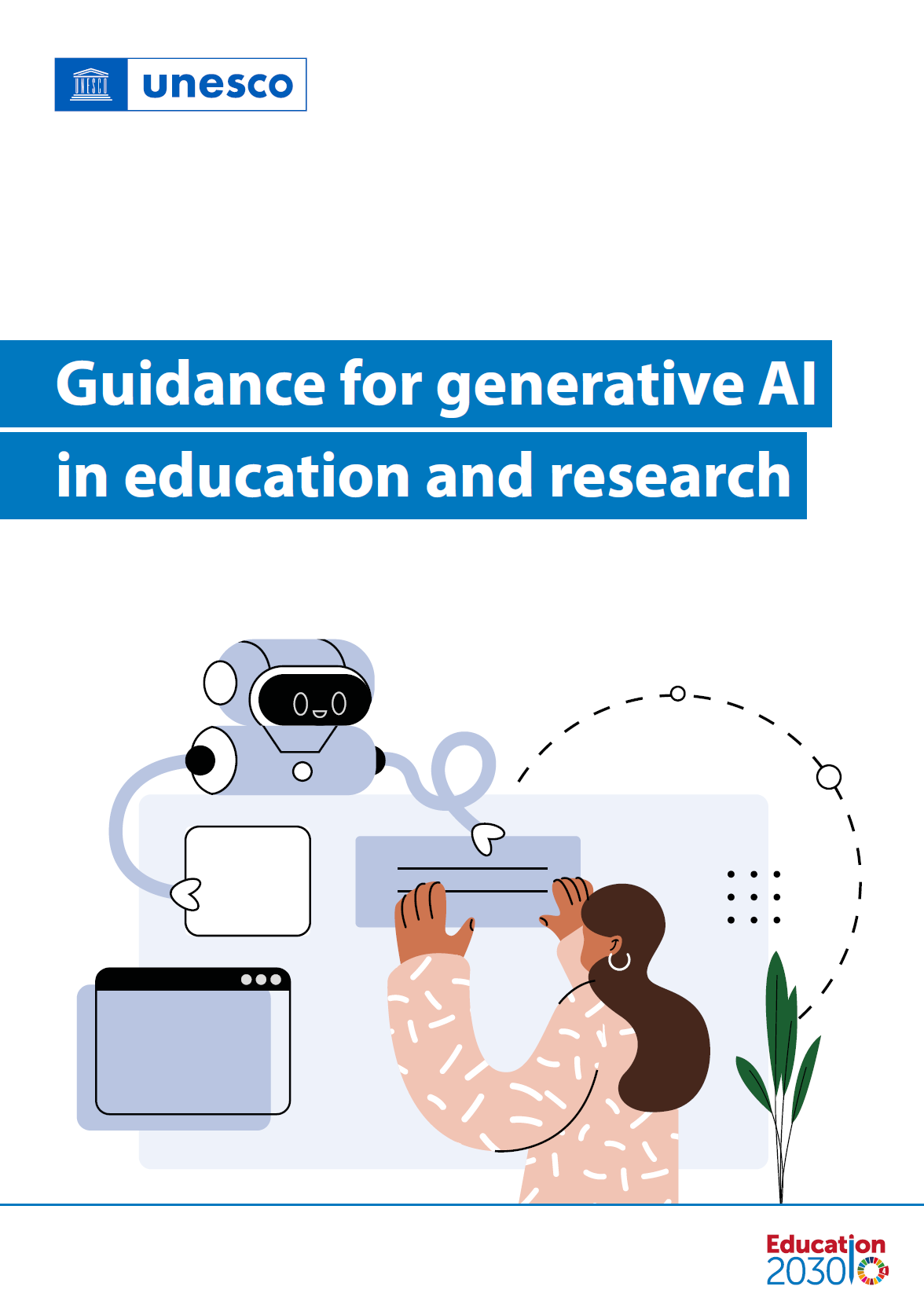
Guidance for generative AI in education and research
Publicly available generative AI (GenAI) tools are rapidly emerging, and the release of iterative versions is outpacing the adaptation of national regulatory frameworks. The absence of national regulations on GenAI in most countries leaves the data p ...
view read more 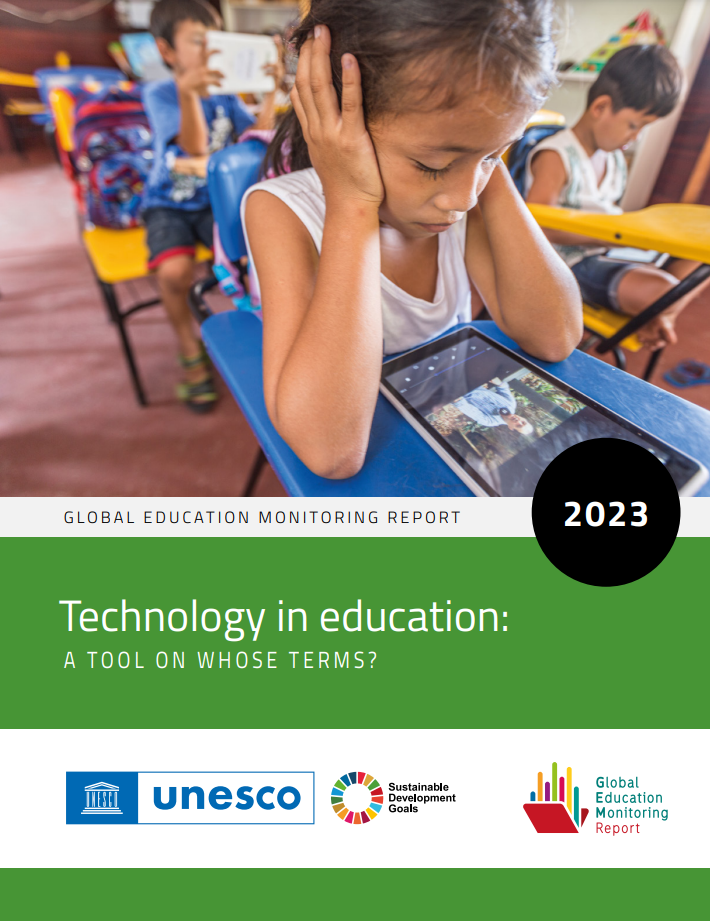
Global education monitoring report 2023
Technology in education: A tool on whose terms?
The adoption of digital technology has resulted in many changes in education and learning, yet it is debatable whether technology has transformed education as many claim. The application of digital technology varies by community and socioeconomic lev ...
view read more 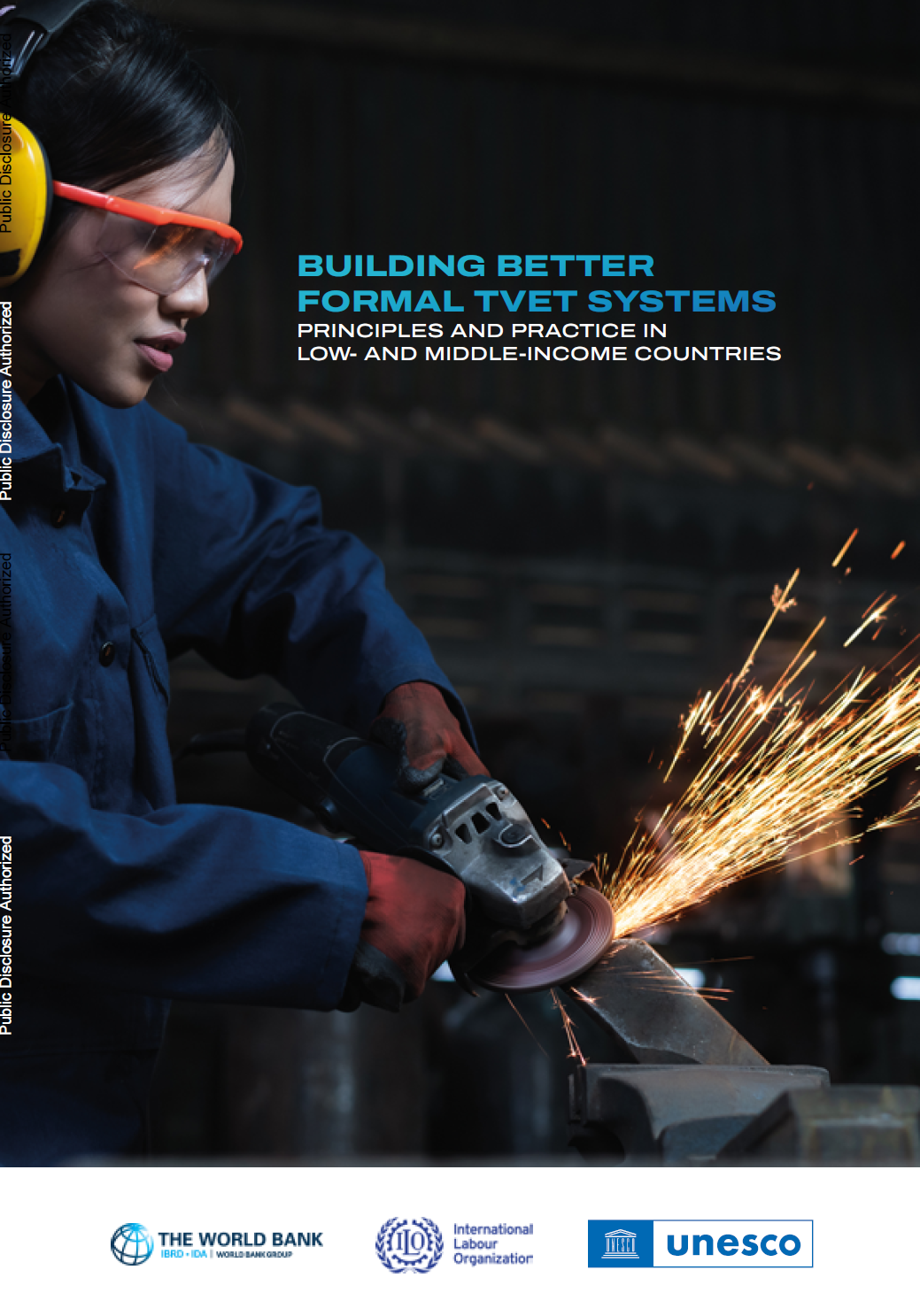
Building better formal TVET systems
Principles and practice in low- and middle- income countries
A broken link between technical and vocational education and training (TVET) systems and labor markets prevents TVET from delivering on its promise in low- and middle-income countries. With its unique focus on workforc ...
view read more 
Enhancing TVET through digital transformation in developing countries
Technological advancements and digitalization are profoundly reshaping our work and lifestyle, business models and operations, and government policy choices. Digital transformation in technical and vocational education and training (TVET) is the plan ...
view read more 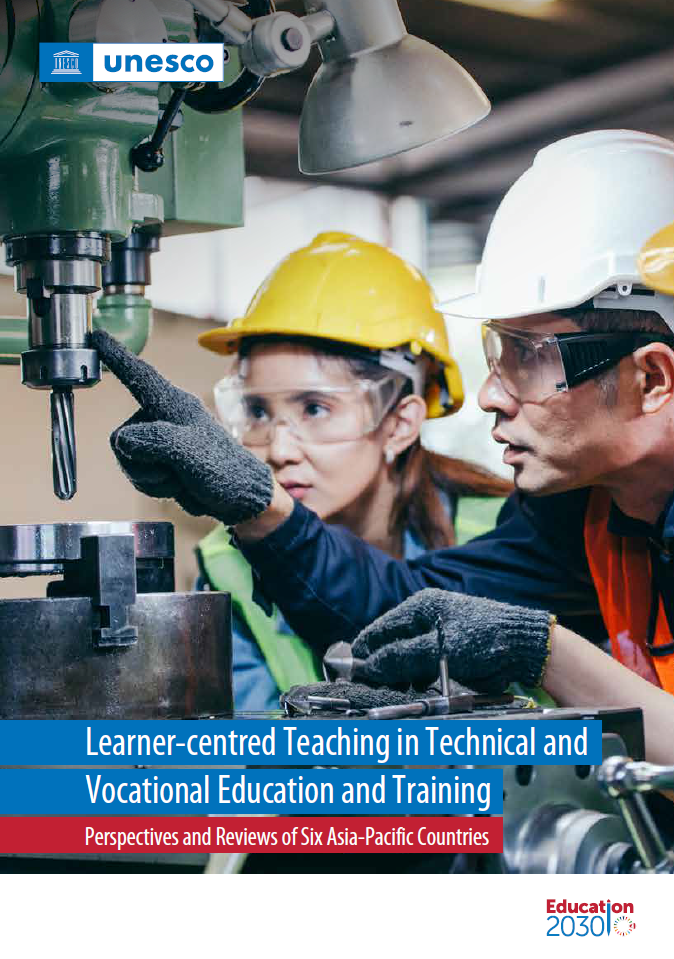
Learner-centred teaching in technical and vocational education and training
Perspectives and reviews of six Asia-Pacific countries
A learner-centred approach to teaching in Technical and Vocational Education and Training (TVET ) is based on learner engagement, autonomy and outcome-based activities to support professional development. This report analyses the status of learner-ce ...
view read more 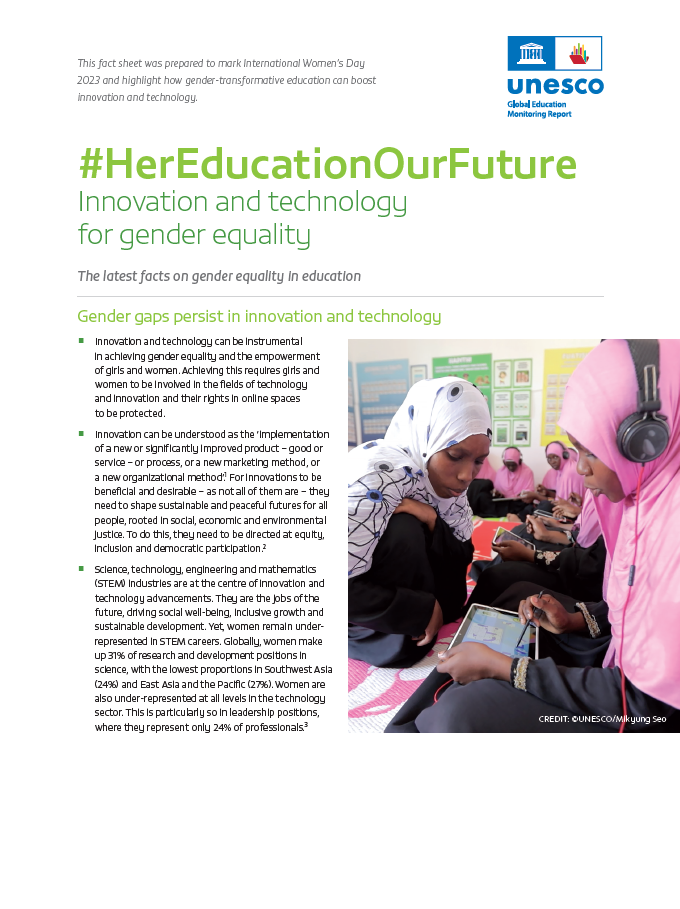
#HerEducationOurFuture: innovation and technology for gender equality
The latest facts on gender equality in education
This fact sheet was prepared to mark International Women’s Day 2023 and highlight how gender-transformative education can boost innovation and technology.
view read more 
Global review of training funds
Spotlight on levy-schemes in 75 countries
The adoption in 2015 by the international community of the Global Agenda for Sustainable Development generated a renewed emphasis on technical and vocational education and training (TVET) as a key component to succeed today’s education challenges. ...
view read more 
Towards a common definition of micro-credentials
Micro-credentials are increasingly promoted as a new and more flexible way of recognizing knowledge, skills and competences. Micro-credentials are flourishing with more new brand names constantly emerging. However, acceptance and recognition of micro ...
view read more 
Transforming Technical and Vocational Education and Training for successful and just transitions
UNESCO strategy 2022-2029
Technical and Vocational Education and Training (TVET) connects education and the world of work, unlocking the potential of young people and adults for a brighter future. Yet, it is estimated that 267 million young people are not in employment, educa ...
view read more 
Work-based learning and the green transition
Climate change is one of the greatest challenges facing today’s society. Changes in our behaviour and in our consumption and production patterns are needed to limit the rise in global temperatures. Transition to a greener economy and society will r ...
download read more 
Transforming education for the future
Education is a basic human right and a global public good with the power to transform individual lives, communities and the planet for the better over generations. UNESCO’s Education Sector provides global and regional leadership to ensure every ch ...
view read more 
Global education monitoring report 2021/2: Non-state actors in education: who chooses? who loses?
Non-state actors’ role extends beyond provision of schooling to interventions at various education levels and influence spheres. Alongside its review of progress towards SDG 4, including emerging evidence on the COVID-19 pandemic’s impact, the 20 ...
view read more 
Final evaluation of UNESCO’s technical and vocational education and training strategy, 2016 - 2021
This evaluation reviewed the implementation of the TVET Strategy 2016-2021 that guided UNESCO’s work in technical and vocational education and training. Based on desk research and consultations with more than 60 peoples, the evaluation concluded th ...
download read more 
Reimagining our futures together: A new social contract for education
Our humanity and planet Earth are under threat. The pandemic has only served to prove our fragility and our interconnectedness. Now urgent action, taken together, is needed to change course and reimagine our futures. This report by the International ...
view read more 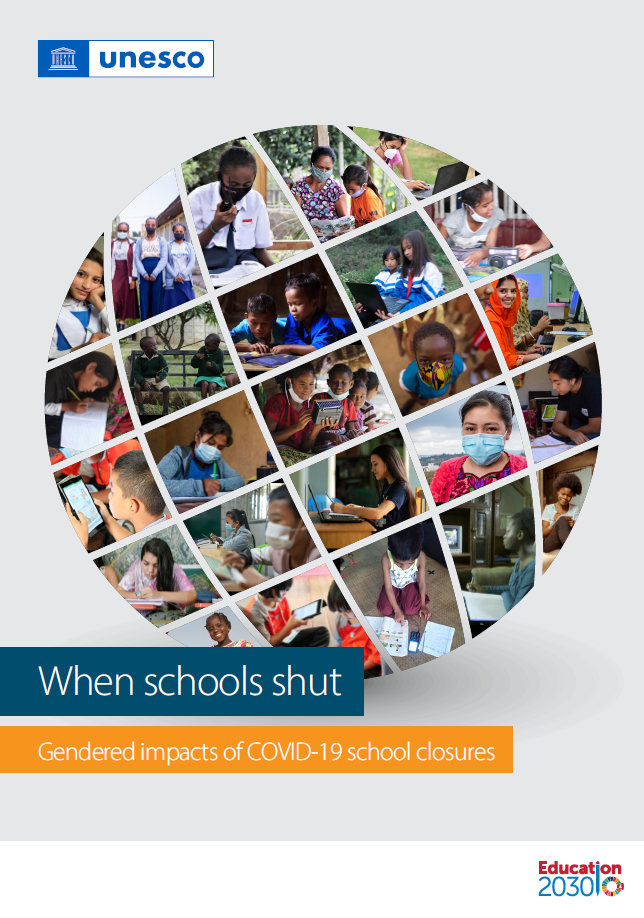
When schools shut: Gendered impacts of COVID-19 school closures
This UNESCO global study exposes failure to factor in gender in COVID-19 education responses and widening gaps in access to quality education following school closures. Citing some 90 countries, the study shows that despite governments' and partn ...
view read more 
