



UNEVOC Network Coaction Initiative 2022-2023
Empowering UNEVOC Centres to shape the future of TVET
What are the current gaps in digital competency among TVET staff, and how can we address them? How can TVET institutions prepare and adapt to future trends and challenges, especially in the post-COVID-19 world? What innovative pedagogical approaches can be employed to integrate the Sustainable Development Goals (SDGs) into TVET curricula? What measures can be taken to promote gender equality and opportunities in STEM fields through mentoring networks in Latin America? These are some of the important questions the projects of the UNEVOC Network Coaction Initiative in 2022 and 2023 have sought to answer.
A Global Response to TVET Needs
 Operational since 1993, the UNEVOC Network is a global platform of leading TVET institutions, known as UNEVOC Centres, working tirelessly to improve the quality and standards of TVET systems and institutions from around the world through capacity building, knowledge sharing and peer learning. The Network currently consists of 233 UNEVOC Centres from over 150 member states and remains the backbone of UNESCO-UNEVOC’s work. Despite the reality of diverse needs on a global scale, UNEVOC Centres embrace a spirit of cooperation, and this is the foundation for successful project implementation that is a key feature of the UNEVOC Network Coaction Initiative.
 Seeking to promote, foster and drive collaborative approaches while managing and mitigating complex problems in the TVET landscape, UNESCO-UNEVOC designed the Coaction Initiative as a response to UNEVOC Centres’ desire to work more closely with each other and target their mutual needs. While acknowledging the urgency of equal and quality education, the Coaction Initiative is a ground-breaking approach dedicated to capacity building and knowledge sharing among UNEVOC Centres in order to drive greater sustainable outcomes in TVET development.
From Proposal to Practice
 Based on a call for proposals, UNEVOC Centres from around the world are encouraged to submit their joint projects for competitive selection. Each project of the Initiative consists of one Lead Centre and several other partner Centres, all of whom act as contributors and beneficiaries to their project’s goals and outcomes. The Lead Centre designs, coordinates, and implements the project with the support of Partner Centres and UNESCO-UNEVOC.
UNESCO-UNEVOC's role is to support these UNEVOC Centres by providing technical and financial assistance for the implementation of the selected joint proposals. Projects take place across a 6-month period. Following the completion of projects, the Lead Centres form an advisory group under UNESCO-UNEVOC’s coordination to share experiences, to help identify new trends in TVET and recommend strategic directions for the Network to further consider.
This global initiative has spanned two editions, supporting a total of seven projects covering a range of priority areas such as the digital transformation, private sector engagement, gender equality and pedagogy innovation to name a few. The 2022 and 2023 editions of the Coaction Initiative has empowered 34 UNEVOC Centers across 28 countries with all five regions of the UNEVOC Network represented, thus shaping the mindset of TVET learners and actions of TVET leaders globally.
Fostering Global TVET Collaboration
 Global disruptions such as climate change, economic inequality, armed conflicts, and technological risks characterise a world in a constant state of change. One significant challenge facing the TVET sector is TVET institutions’ response to a dynamic TVET landscape across different nations and regions. Many TVET institutions struggle to keep pace with rapid economic development while meeting the urgent needs of the labour market. However, peer learning, knowledge sharing and capacity building are some of the most efficient, sustainable approaches to address these challenges.
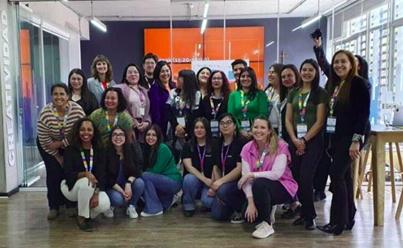 The Coaction Initiative represents a compelling opportunity to tackle these global challenges in TVET while strengthening linkages and creating new bonds among UNEVOC Centres. Since the UNEVOC Network contains a wealth of information, knowledge and expertise, the opportunity to capitalize on these resources is what makes the Coaction Initiative special. It also advocates to promote North-South or South-South collaboration, which is essential for fostering the exchange of expertise, enhancing quality assurance, and supporting mutual learning among TVET institutions globally. This is pivotal for addressing local challenges with a global perspective and advancing technical and vocational education and training. Adhering to sustainable development objectives, the Coaction Initiative contributes substantially to social inclusion, gender equality and greening environment. Through international cooperation, TVET institutions contribute and are benefited through exchanging various narratives, approaches and best practices in different thematic areas and institutional contexts.
Projects 2022 and 2023
Digitalization (2022)
“Adoption of Digital Competency Framework for TVET and its Integration into TVET Staff Capacity Building Programme“
 Lead Centre: University Tun Hussein Onn Malaysia (UTHM)
Partner Centres:
- Maldives Polytechnic (Maldives)
- Universitas Pendidikan Indonesia (Indonesia)
- Technical and Vocational Training Organization of Iran
- Zhejiang Technical Institute of Economics (China)
- Rajamangala University of Technology Thanyaburi (Thailand)
Capacity Building (2022)
“Future Foresight Institutional Capacity for Post COVID-19 World”
 Lead Centre: Higher Colleges of Technology (HCT) of the United Arab Emirates
Partner Centres:
- Waikato Institute of Technology (New Zealand)
- CFL - Halsingland Education Association (Sweden)
- Arusha Technical College (Tanzania)
- The National Higher Engineering School of Tunis (Tunisia)
- National Skills University Islamabad (Pakistan)
- Iloilo Science and Technology University (Philippines)
Pedagogy Innovation (2022)
“Capacity Building for Addressing SDGs through Curriculum and Pedagogy Innovation in TVET”
 Lead Centre: The Education University of Hong Kong (China)
Partner Centres:
- Shenzhen Polytechnic (China)
- VETP Vocational Education and Training Partnership NGO (Mongolia)
- Yaba College of Technology (Nigeria)
- Technical Education and Skills Development Authority (Philippines)
- The Technical and Vocational Training Corporation (Saudi Arabia)
Management (2023)
“Results-Based Management – Strengthening the Responsiveness of TVET institutions in the Post COVID-19 Era”
 Lead Centre: HEART/NSTA Trust (Jamaica)
Partner Centres:
- Grenada National Training Agency
- Technical and Vocational Education and Training Council (Barbados)
- University of Technology (Jamaica)
- The National Training Agency (Trinidad and Tobago)
Digital Transformation (2023)
“Capacity Building on Digital Transformation in TVET”
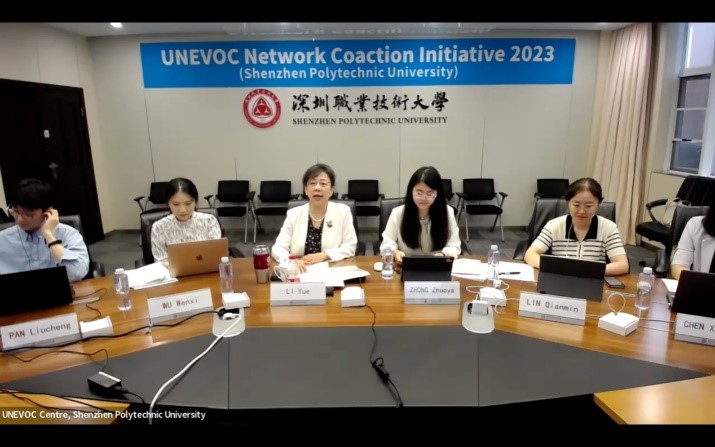
 Lead Centre: Shenzhen Polytechnic University (China)
Partner Centres:
- National Skills University Islamabad (Pakistan)
- Preah Kossomak Polytechnic Institute (Cambodia)
- Temasek Polytechnic (Singapore)
- Universiti Tun Hussein Onn Malaysia (Malaysia)
- Zhejiang Technical Institute of Economics (China)
Private Sector Engagements (2023)
“Guidelines For Sustainable TVET Teachers/Instructors and Private Sector Engagements”
 Lead Organization: University of Nigeria, Nsukka (Nigeria)
Partner Centres:
- Commission for TVET (Ghana)
- Human Resource Development Council (Botswana)
- National Board for Technical Education (Nigeria)
- Yaba College of Technology (Nigeria)
Gender Equality (2023)
“Latin American Network for mentoring in favor of gender equality and opportunities in Science, Technology, Engineering, and Mathematics areas”
 Lead Organization: Duoc UC (Chile)
Partner Centres:
- Fundación Paraguay (Paraguay)
- National Council for the Federal Network of Vocational, Scientific and Technological Education Institutions (Brazil)
- National Institute for Employment and Professional Training (Uruguay)
- Chilean Ministry of Education (Chile)
- Iloilo Science and Technology University (Philippines)
 Facebook
 Twitter
