


UNEVOC Network publications


Learning by your doing: How Tourism Training Australia is creating flexible learning pathways in TVET through micro-credentials
Submitted by Tourism Training Australia
Tourism Training Australia, in collaboration with industry and the Victoria government, launched an online micro-credential platform and AI-based marketing tool to address local labour shortages in the tourism and hospitality sectors during the pande ...
 view
view  read more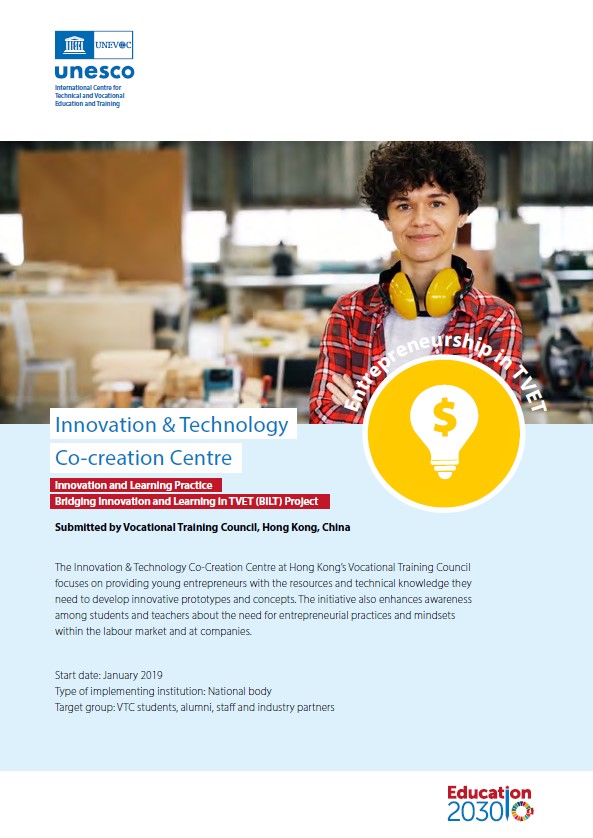
Innovation & Technology Co-creation Centre
Submitted by Vocational Training Council, Hong Kong, China
The Innovation & Technology Co-Creation Centre at Hong Kong’s Vocational Training Council focuses on providing young entrepreneurs with the resources and technical knowledge they need to develop innovative prototypes and concepts. The initiative al ...
 download read more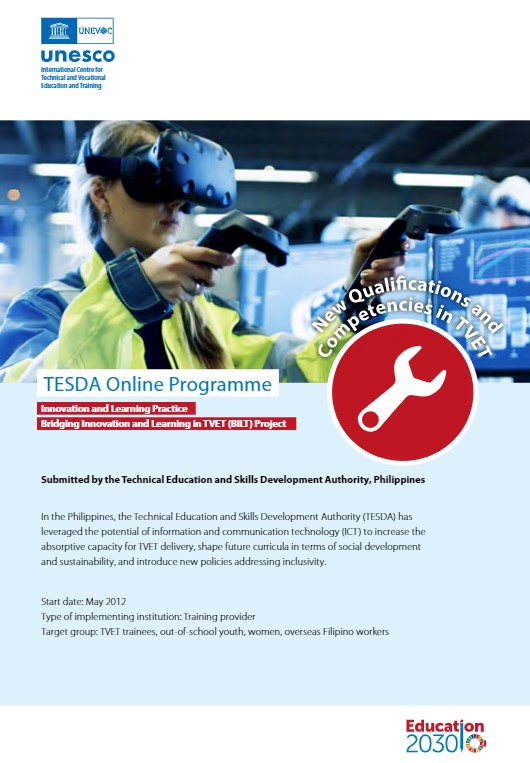
TESDA Online Programme
Submitted by the Technical Education and Skills Development Authority, Philippines
In the Philippines, the Technical Education and Skills Development Authority (TESDA) has leveraged the potential of information and communication technology (ICT) to increase the absorptive capacity for TVET delivery, shape future curricula in terms ...
download read more 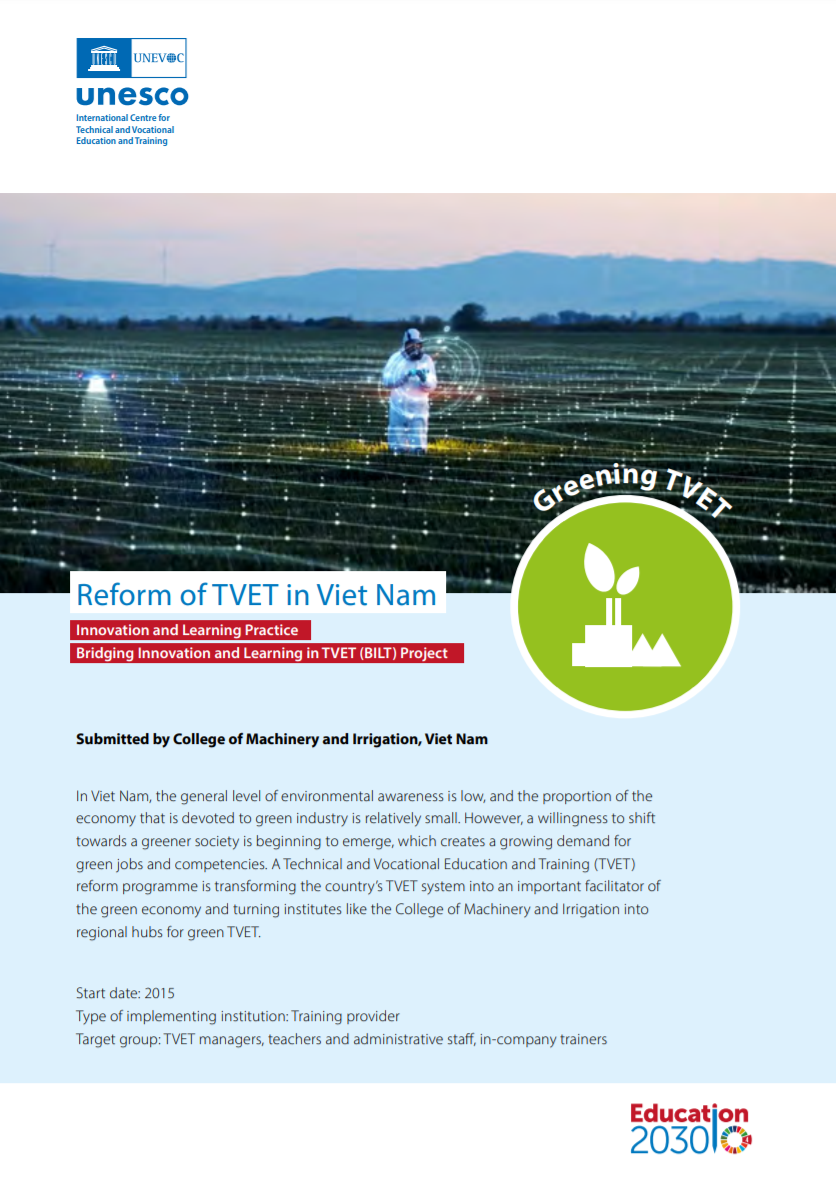
Reform of TVET in Viet Nam
Submitted by College of Machinery and Irrigation, Viet Nam
In Viet Nam, the general level of environmental awareness is low, and the proportion of the economy that is devoted to green industry is relatively small. However, a willingness to shift towards a greener society is beginning to emerge, which creates ...
download read more 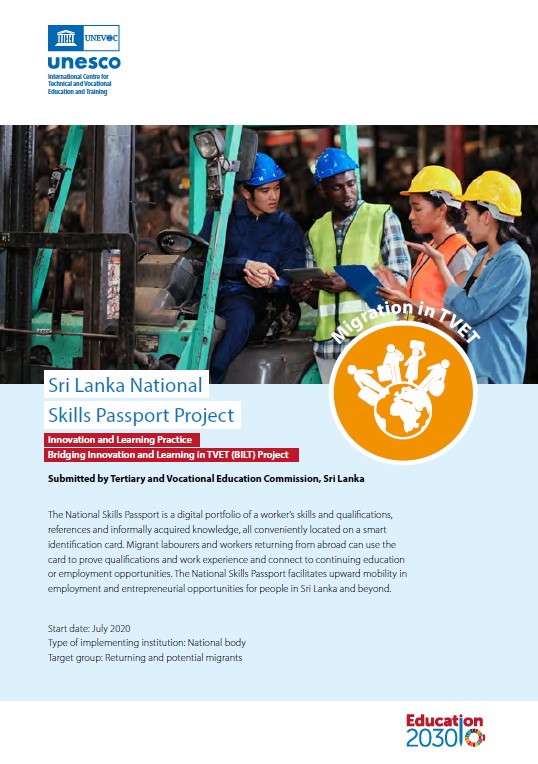
Sri Lanka National Skills Passport Project
Submitted by Tertiary and Vocational Education Commission, Sri Lanka
The National Skills Passport is a digital portfolio of a worker’s skills and qualifications, references and informally acquired knowledge, all conveniently located on a smart identification card. Migrant labourers and workers returning from abroad ...
download read more 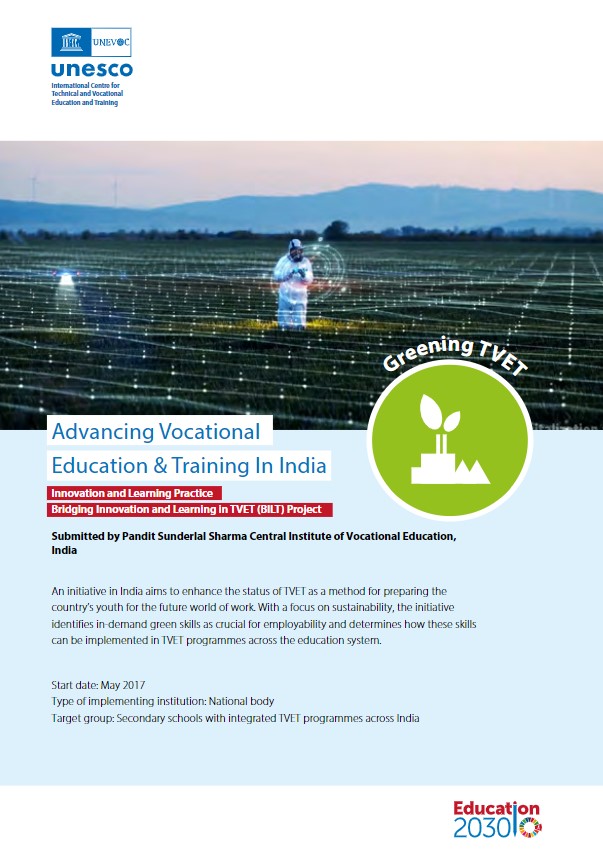
Advancing Vocational Education & Training in India
Submitted by Pandit Sunderlal Sharma Central Institute of Vocational Education, India
An initiative in India aims to enhance the status of TVET as a method for preparing the country’s youth for the future world of work. With a focus on sustainability, the initiative identifies in-demand green skills as crucial for employability and ...
download read more 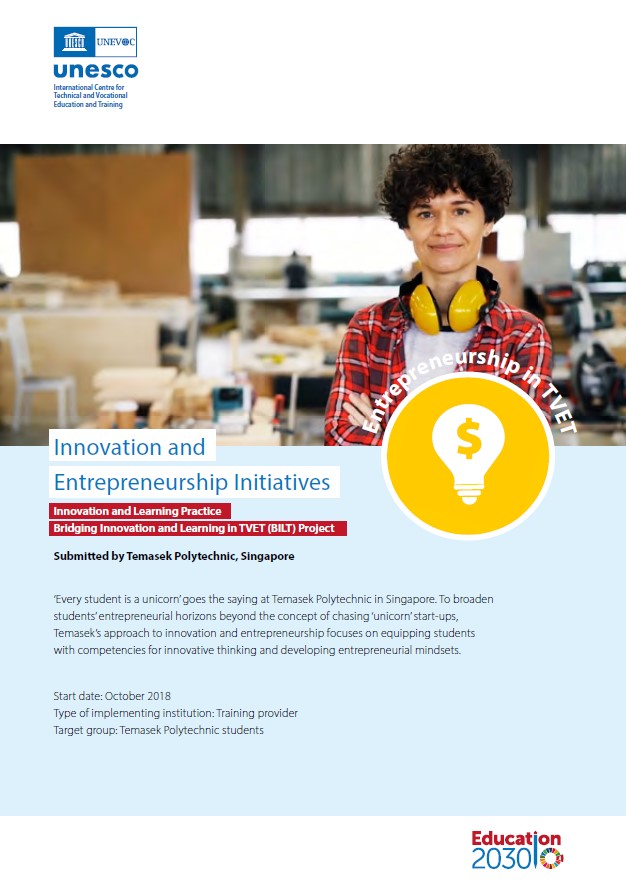
Innovation and Entrepreneurship Initiatives
Submitted by Temasek Polytechnic, Singapore
‘Every student is a unicorn’ goes the saying at Temasek Polytechnic in Singapore. To broaden students’ entrepreneurial horizons beyond the concept of chasing ‘unicorn’ start-ups,
Temasek’s approach to innovation and entrepreneurship focu ...
download read more 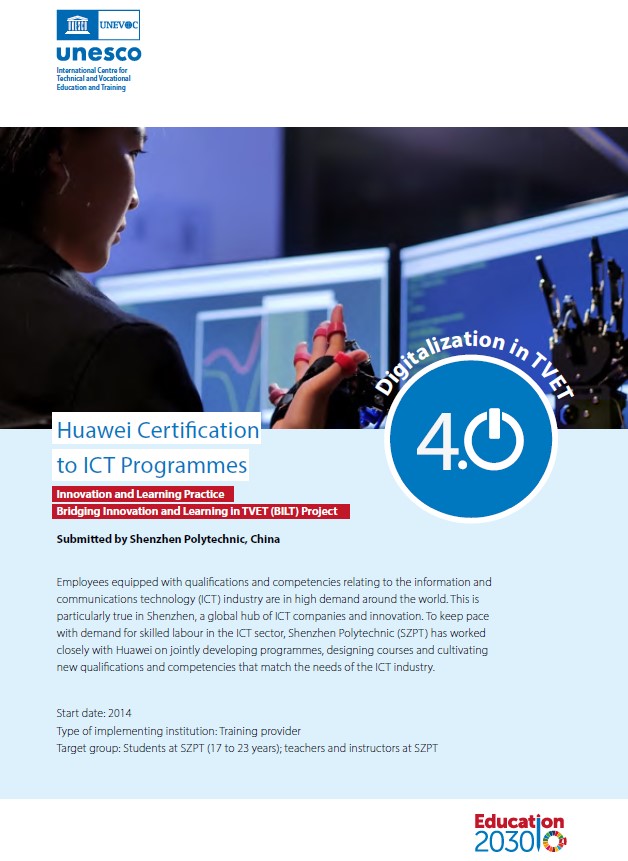
Huawei Certification to ICT Programmes
Submitted by Shenzhen Polytechnic, China
Employees equipped with qualifications and competencies relating to the information and communications technology (ICT) industry are in high demand around the world. This is particularly true in Shenzhen, a global hub of ICT companies and innovation. ...
download read more 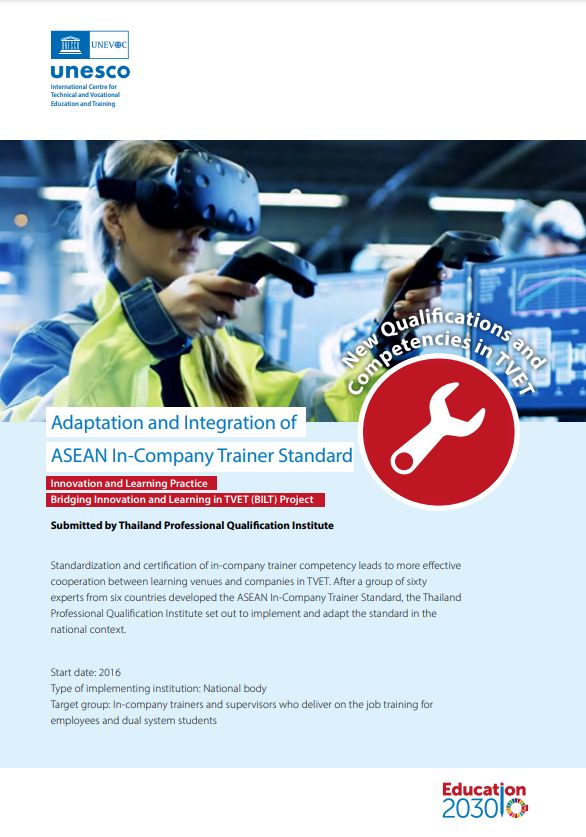
Adaptation and Integration of ASEAN In-Company Trainer Standard
Submitted by TPQI, Thailand
Standardization and certification of in-company trainer competency leads to more effective cooperation between learning venues and companies in TVET. After a group of sixty experts from six countries developed the ASEAN In-Company Trainer Standard, t ...
download read more 
A synthesis of best practices in TVET quality assurance in selected South Asian countries
Technical and vocational education and training (TVET) plays a pivotal role in economies of South Asian countries and needs rational and effective mechanisms to deal with the challenges and provide education and readiness for the world of work in for ...
download read more 

The Australian Apprenticeships Ambassadors Programme
UNESCO-UNEVOC Promising Practice
Australia has a well-established apprenticeship system. However, a steady decline in the enrolment rate has raised concerns. One of the main causes of this decline is the negative public perception of apprenticeships. The Australian Apprenticeships A ...
download read more 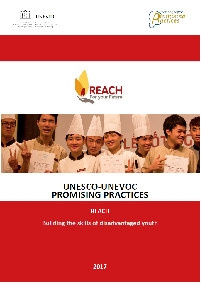
Providing demand-driven skills training to disadvantaged youth
UNESCO-UNEVOC Promising Practice
As Viet Nam’s economy has modernized, demand has increased for skilled labour. This has resulted in diminished prospects for youth in finding formal employment. REACH is a local non-governmental organization that trains young people, particularly t ...
download read more 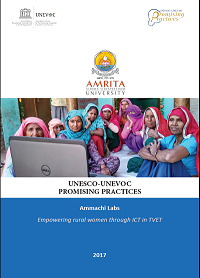
Empowering rural women through ICT in TVET
UNESCO-UNEVOC Promising Practice
In India, women from rural communities often have little say in family and community decision-making. Skills development is a recognized medium of empowerment. However, access to TVET remains a challenge to a majority of those living in rural India. ...
download read more 
UNEVOC Network Collaborative research: A framework to better measure the return on investment from TVET
Understanding the return on investment (ROI) in VET provides governments with information on the performance of the system and justification for public expenditure. It can help enterprises and individuals to measure productivity improvement in firms ...
download read more 
