


UNESCO-UNEVOC periodicals
The UNEVOC Quarterly is the Centre’s newsletter. It is published four times a year in English and French. Subscribe to the UNEVOC Quarterly.
The IAG Newsletter reports about activities of members of the Inter-Agency Group on Technical and Vocational Education and Training (IAG-TVET).

Apprenticeship at Vocational High Schools in the Republic of Korea
The Apprenticeship Programme Project targeting specialized high schools has been jointly conducted by the Ministry of Education and the Ministry of Employment and Labour since 2014. Those schools designated to implement this project operate the cours ...
 download
  read more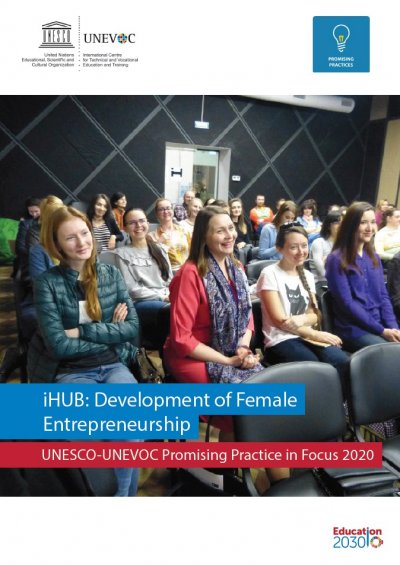

Development of female entrepreneurship
UNESCO-UNEVOC Promising Practice
iHUB’s Programme for the Development of Female Entrepreneurship is the first initiative in Ukraine to support women in business creation, from the initial idea to the set-up of a working business. It covers both knowledge and practical support, inc ...
download read more 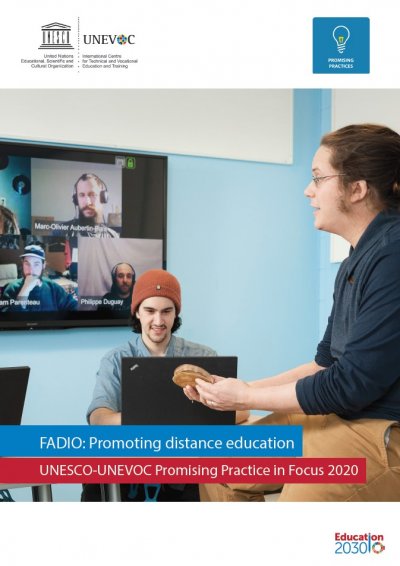
FADIO: promoting distance education
UNESCO-UNEVOC Promising Practice
FADIO represents a unique collaborative initiative that takes full advantage of education in a digital environment. Not all educational institutions have the resources to develop the pedagogical and technical aspects related to distance education on ...
download read more 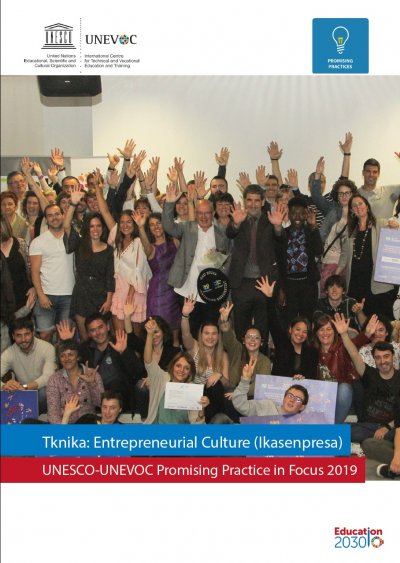
Entrepreneurial culture: Ikasenpresa
UNESCO-UNEVOC Promising Practice
TKNIKA is a centre established by the Basque Deputy Ministry of Vocational Education and Training to promote innovation, creativity, and entrepreneurship in vocational education and training (VET) centres across the region. As part of its mandate, T ...
download read more 
Recognition in Germany
UNESCO-UNEVOC Promising Practice
The German Federal Government launched the “Recognition in Germany” portal to improve labour market access for people from migrant backgrounds. The multilingual portal provides users with information about the procedures for recognition of profes ...
download read more 
Developing innovative solutions to community problems
UNESCO-UNEVOC Promising Practice
Access to technical and higher education along with skills development programmes have become important tools to tackle poverty in Brazil. By recognizing that innovation takes place at the forefront of learning, PICG Innovation Hub enables its studen ...
download read more 
Self-sufficient schools: turning learning into earning and saving
UNESCO-UNEVOC Promising Practice
In Latin America, secondary school drop-out rates are high, partly because many youth feel that the type of education they receive at school does not offer any guarantee of future employment. Recognizing the need for practical training that gives you ...
download read more Contact

