





Discussion forum
Project documents
Network visualization map
Home: The i-hubs initiative | Project timeline | What is the i-hub? | Who are the i-hubs?
Recent developments: General Project News | News from the i-Hubs
Guided Self-Assessment: About | Calendar | Indicative Programme
Innovation Toolbox: The Balanced Scorecard | Skills and Innovation Ecosystem Map
Knowledge resources: Publications | Other useful resources
Networking for innovation: Discussion forum | Project documents | Network visualization map
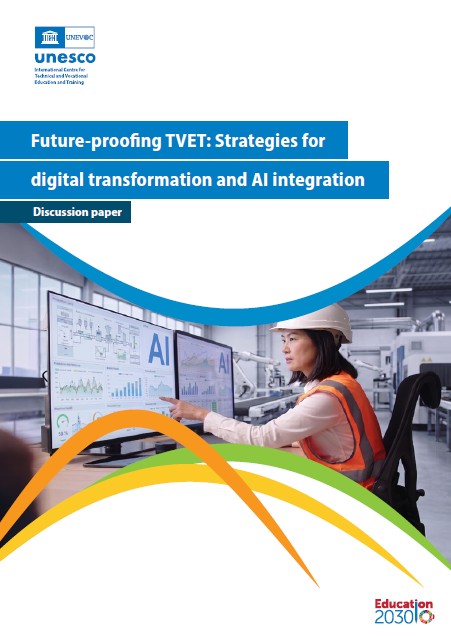

Strategies for digital transformation and AI integration
This discussion paper was developed from the ongoing work of UNESCO-UNEVOC, particularly through its Bridging Innovation and Learning in TVET (BILT) project. It primarily draws from the BILT Bridging Event that took place in May 2025 in Kuala Lumpur, ...
 view
view  read more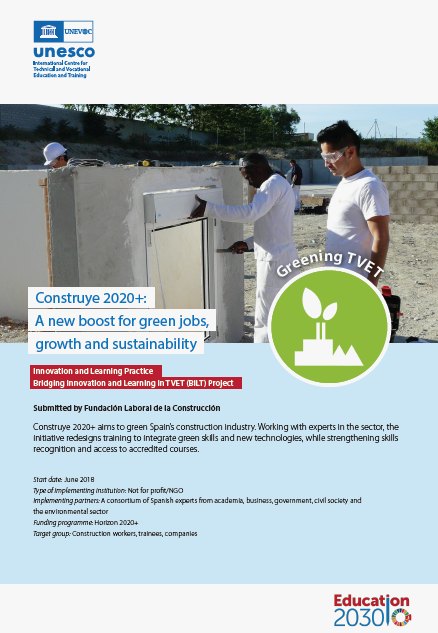
Innovation and Learning Practice Bridging Innovation and Learning in TVET (BILT) Project
Construye 2020+ aims to green Spain’s construction industry. Working with experts in the sector, the initiative redesigns training to integrate green skills and new technologies, while strengthening skills recognition and access to accredited cours ...
 download read more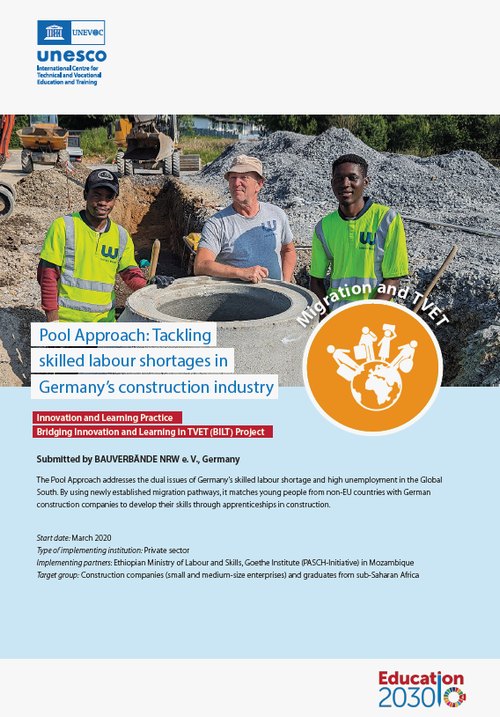
Innovation and Learning Practice Bridging Innovation and Learning in TVET (BILT) Project
The Pool Approach addresses the dual issues of Germany’s skilled labour shortage and high unemployment in the Global South. By using newly established migration pathways, it matches young people from non-EU countries with German construction compan ...
download read more 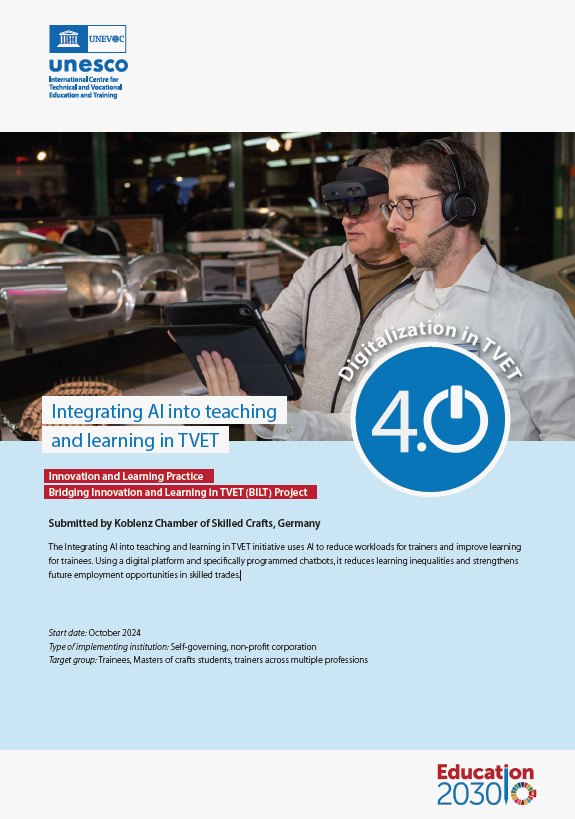
Innovation and Learning Practice Bridging Innovation and Learning in TVET (BILT) Project
The Integrating AI into teaching and learning in TVET initiative uses AI to reduce workloads for trainers and improve learning for trainees. Using a digital platform and specifically programmed chatbots, it reduces learning inequalities and strength ...
download read more 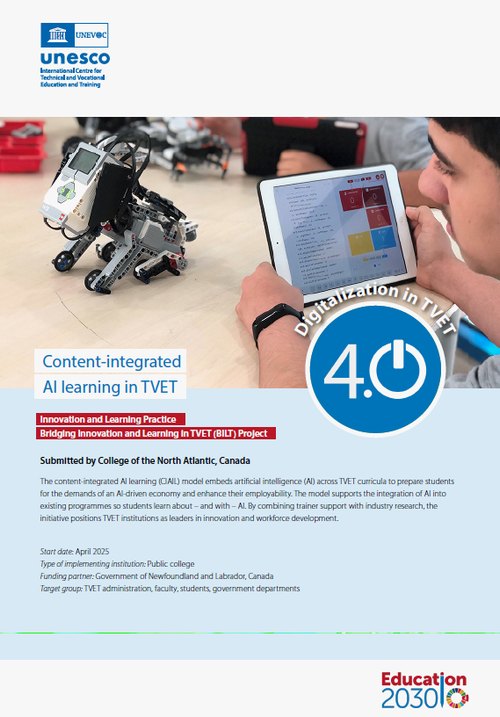
Innovation and Learning Practice Bridging Innovation and Learning in TVET (BILT) Project
The content-integrated AI learning (CIAIL) model embeds artificial intelligence (AI) across TVET curricula to prepare students for the demands of an AI-driven economy and enhance their employability. The model supports the integration of AI intoexist ...
download read more 

Embracing digitalization, greening and migration trends
There is an urgent need to expand the skilled workforce and promote green practices in the building and construction industry. The sector, currently employing approximately 7 per cent of the global working population, accounts for over a third of glo ...
view read more 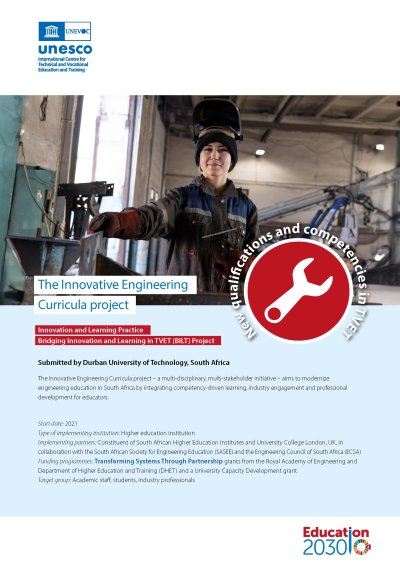
Innovation and Learning Practice Bridging Innovation and Learning in TVET (BILT) Project
The Innovative Engineering Curricula project – a multi-disciplinary, multi-stakeholder initiative – aims to modernize engineering education in South Africa by integrating competency-driven learning, industry engagement and professional developmen ...
download read more 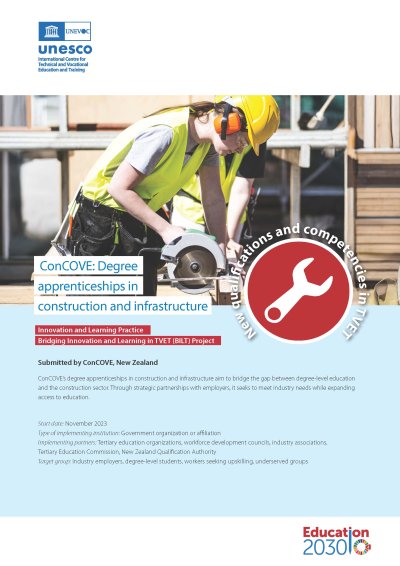
Innovation and Learning Practice Bridging Innovation and Learning in TVET (BILT) Project
ConCOVE’s degree apprenticeships in construction and infrastructure aim to bridge the gap between degree-level education and the construction sector. Through strategic partnerships with employers, it seeks to meet industry needs while expanding acc ...
download read more 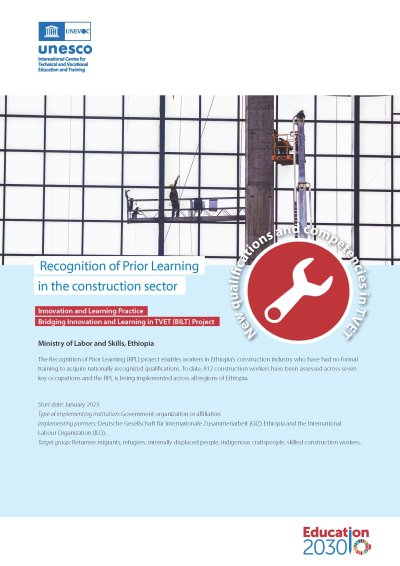
Innovation and Learning Practice Bridging Innovation and Learning in TVET (BILT) Project
The Recognition of Prior Learning (RPL) project enables workers in Ethiopia’s construction industry who have had no formal training to acquire nationally recognized qualifications. To date, 812 construction workers have been assessed across seven k ...
download read more 
Submitted by BiW
BiW’s ViTa programme (Vietnamese Talent for Thüringen) represents a model for international TVET cooperation. In partnership with Vietnamese language and vocational schools, BiW has created a comprehensive system to train and integrate skilled you ...
view read more 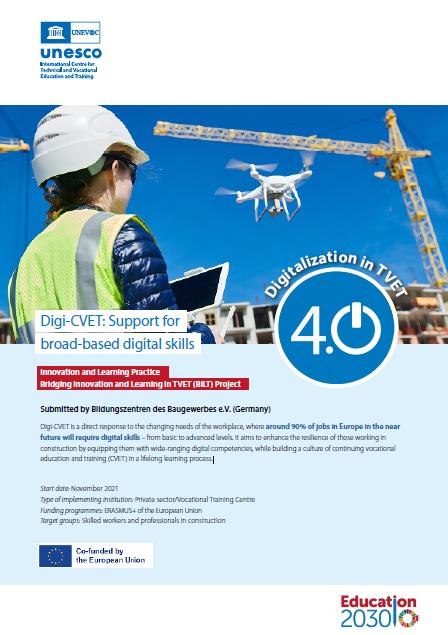
Innovation and Learning Practice, Bridging Innovation and Learning in TVET (BILT) Project
Digi-CVET is a direct response to the changing needs of the workplace, where around 90% of jobs in Europe in the near future will require digital skills – from basic to advanced levels. It aims to enhance the resilience of those working in construc ...
download read more 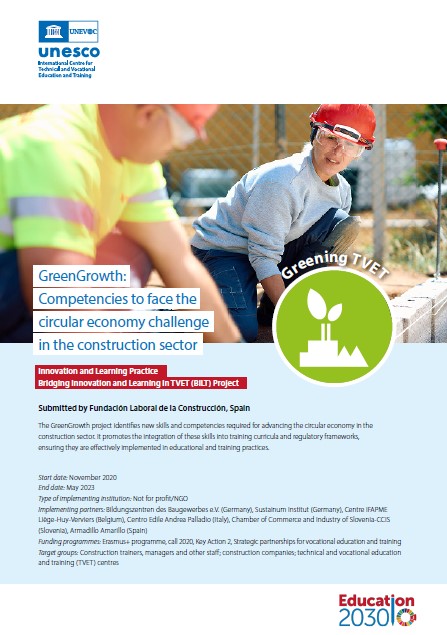
Innovation and Learning Practice, Bridging Innovation and Learning in TVET (BILT) Project
The GreenGrowth project was created to reduce the construction sector’s CO2 emissions by implementing strategies that reinforce the circular economy, particularly in building renovation. The project’s labour market analysis – conducted with com ...
download read more 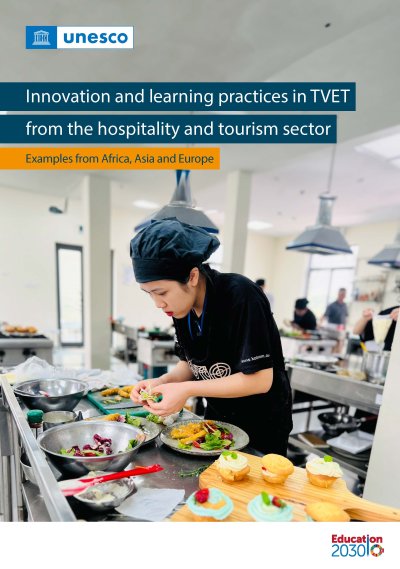
Examples from Africa, Asia and Europe
This publication presents 10 Innovation and Learning Practices that were selected based on their contribution to identifying new qualifications and competencies in an efficient manner, integrating them into appealing curricula and training regulation ...
view read more 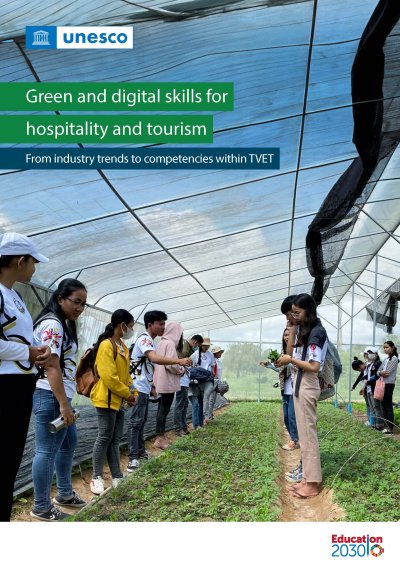
From industry trends to competencies within TVET
This publication proposes approaches to facilitate the dual transition in hospitality and tourism, structured around the identification of emerging green and digital competencies in a timely manner, their integration into future-oriented curricula, a ...
view read more 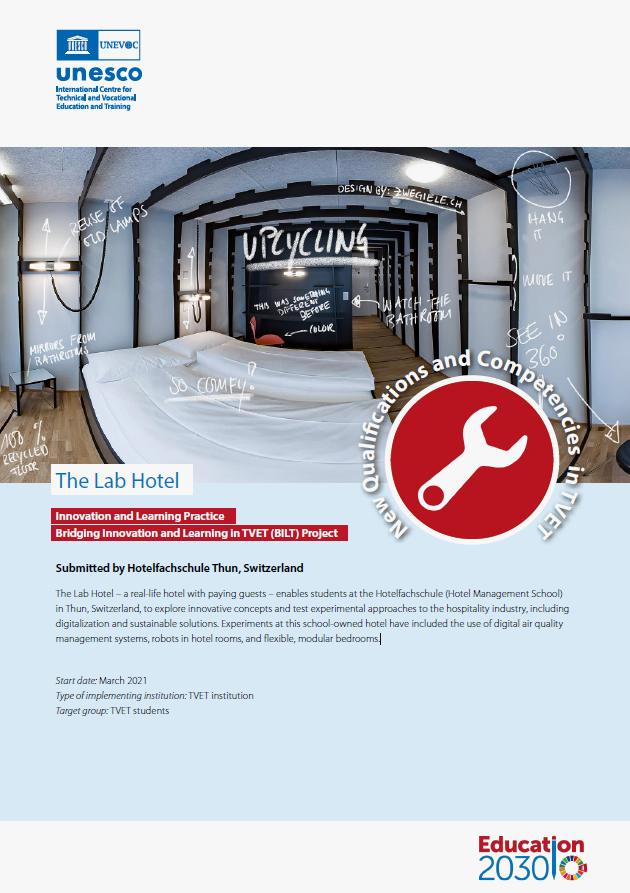
Submitted by Hotelfachschule Thun, Switzerland
The Lab Hotel – a real-life hotel with paying guests – enables students at the Hotelfachschule (Hotel Management School) in Thun, Switzerland, to explore innovative concepts and test experimental approaches to the hospitality industry, including ...
download read more 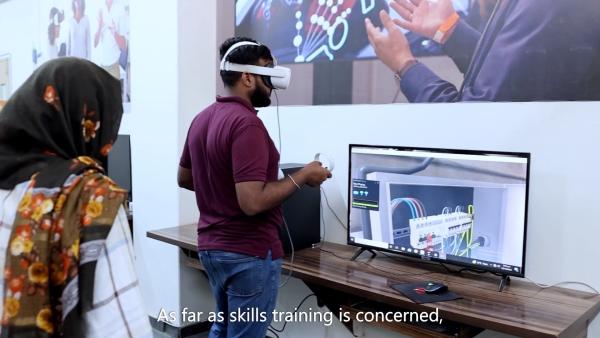
Submitted by MIMBUS and NED University of Engineering and Technology
NED University, in partnership with MIMBUS, has integrated innovative virtual reality training component aimed at mitigating occupational hazards, reducing training costs, and shortening training durations. The virtual reality training component offe ...
view read more 

Submitted by Tourism Training Australia
Tourism Training Australia, in collaboration with industry and the Victoria government, launched an online micro-credential platform and AI-based marketing tool to address local labour shortages in the tourism and hospitality sectors during the pande ...
view read more 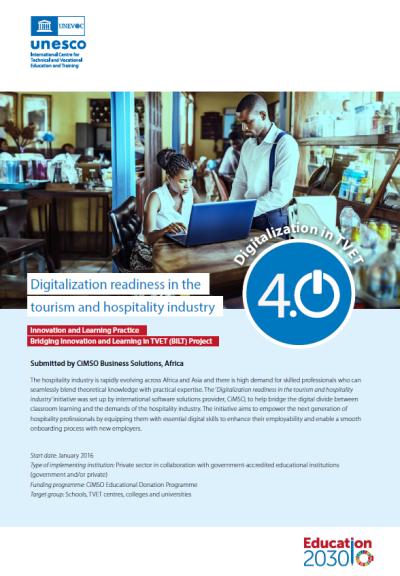
Submitted by CiMSO Business Solutions, Africa
Identifying a gap between the digital skills of graduates and hospitality industry needs, CiMSO set up the ‘Digitalization readiness in the tourism and hospitality industry’ initiative. CiMSO supplies management software to hospitality providers ...
download read more 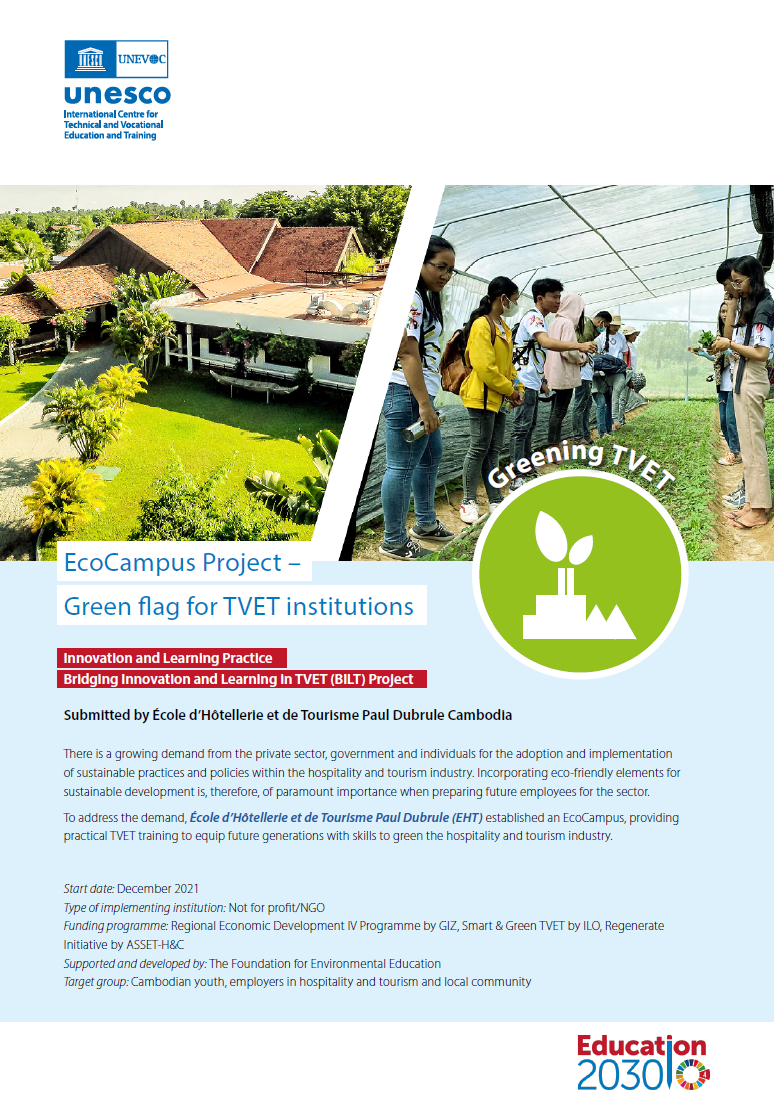
In 2021, through a series of green activities and actions, École d’Hôtellerie et de Tourisme Paul Dubrule (EHT) started to implement the EcoCampus programme from the Foundation of Environmental Education (FEE). The EcoCampus programme is an in ...
download read more 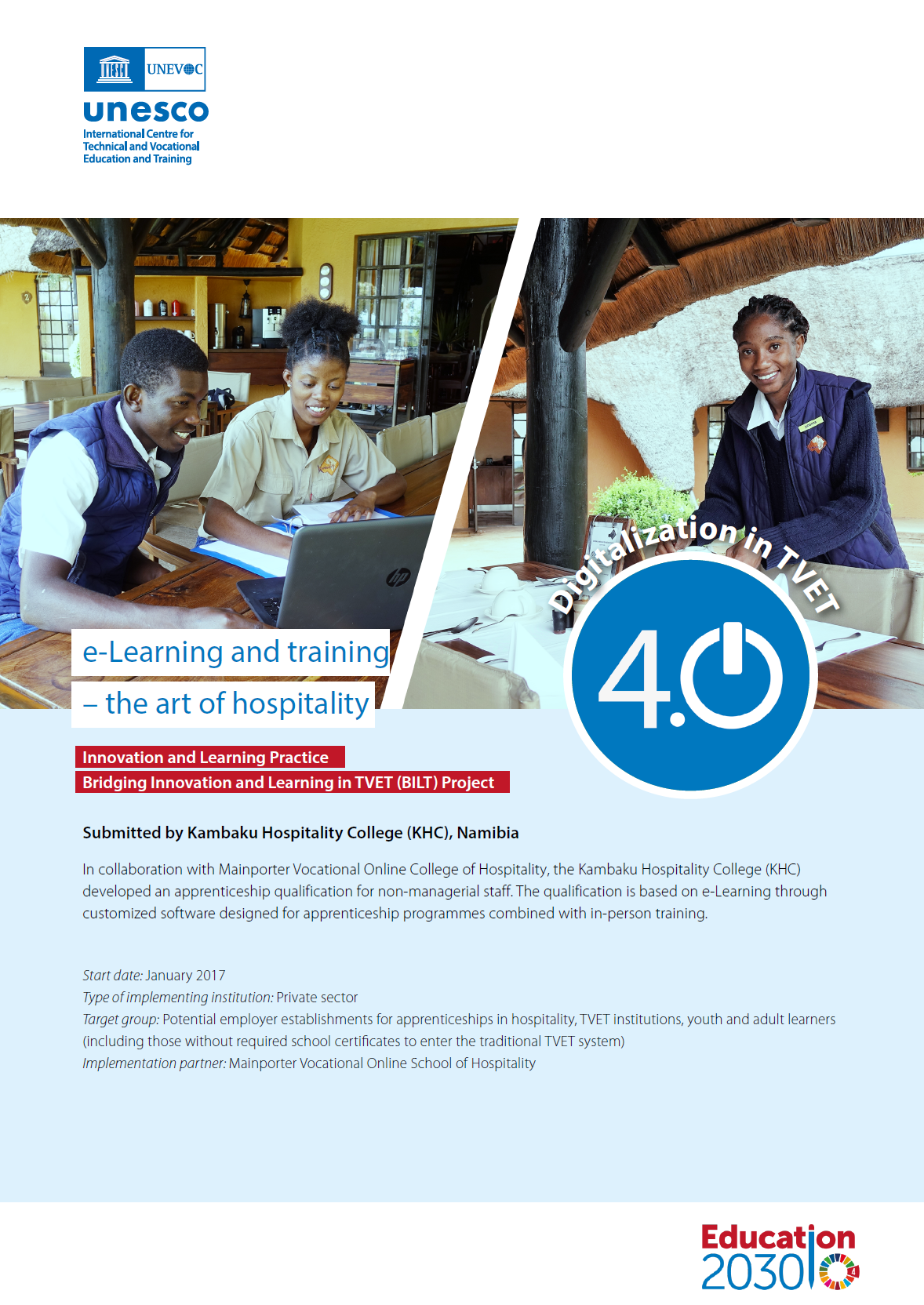
In collaboration with Mainporter Vocational Online College of Hospitality, the Kambaku Hospitality College (KHC) developed an apprenticeship qualification for non-managerial staff. The qualification is based on e-Learning through customized software ...
download read more 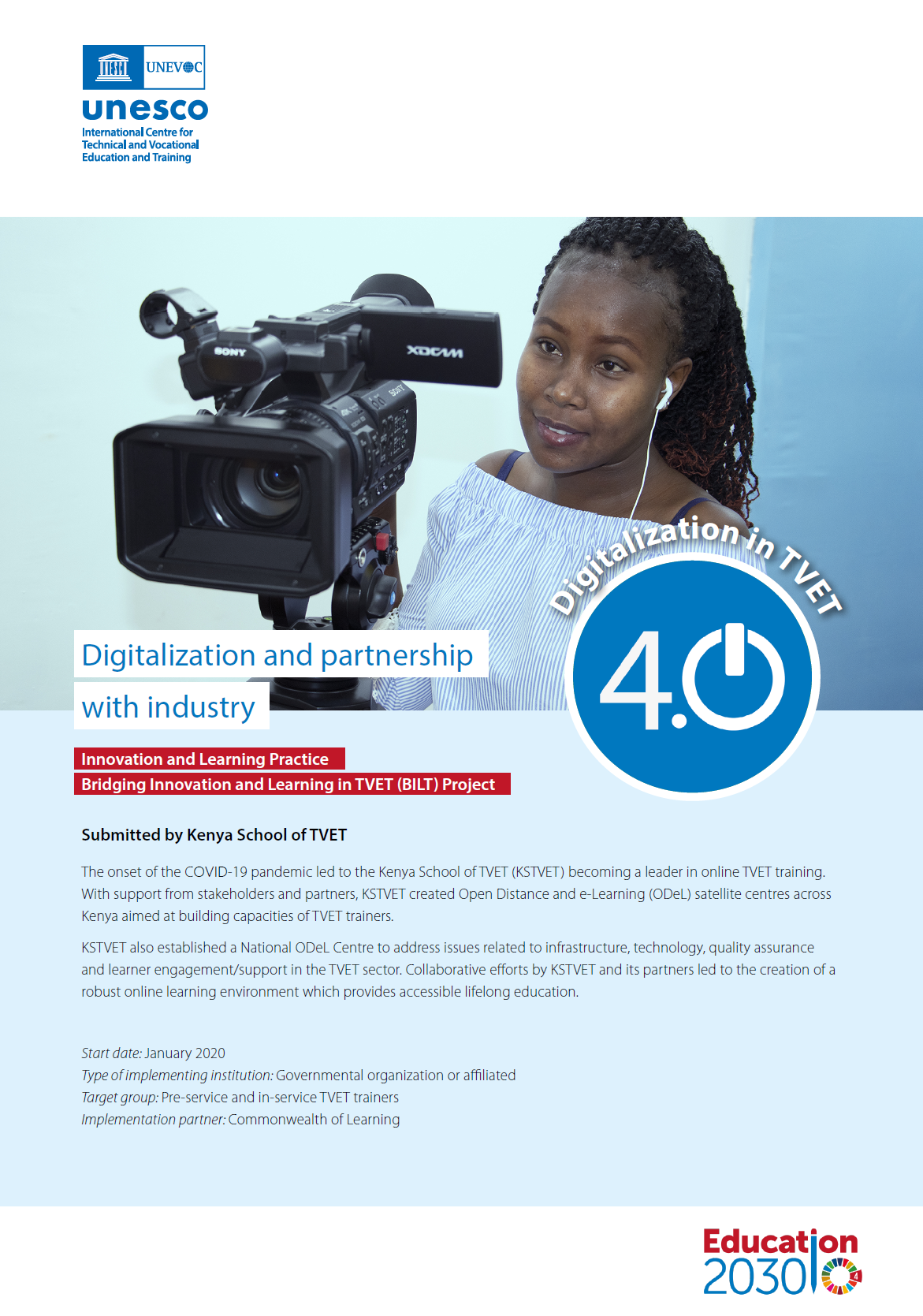
The onset of the COVID-19 pandemic led to the Kenya School of TVET (KSTVET) becoming a leader in online TVET training. With support from stakeholders and partners, KSTVET created Open Distance and e-Learning (ODeL) satellite centres across Kenya aime ...
download read more 
Fifty Shades Greener is a leading educational company for sustainable development. The Fifty Shades Greener hospitality programme became a state-funded project through TVET organizations in Ireland in 2020, with over 270 hotel employees pursuing fund ...
view read more 
Youth unemployment is a huge problem in Africa that demands a bold solution. Young Africa aims to tackle this problem by training as many young people as possible. Young Africa is a confederation of independently and locally registered affiliated ...
view read more 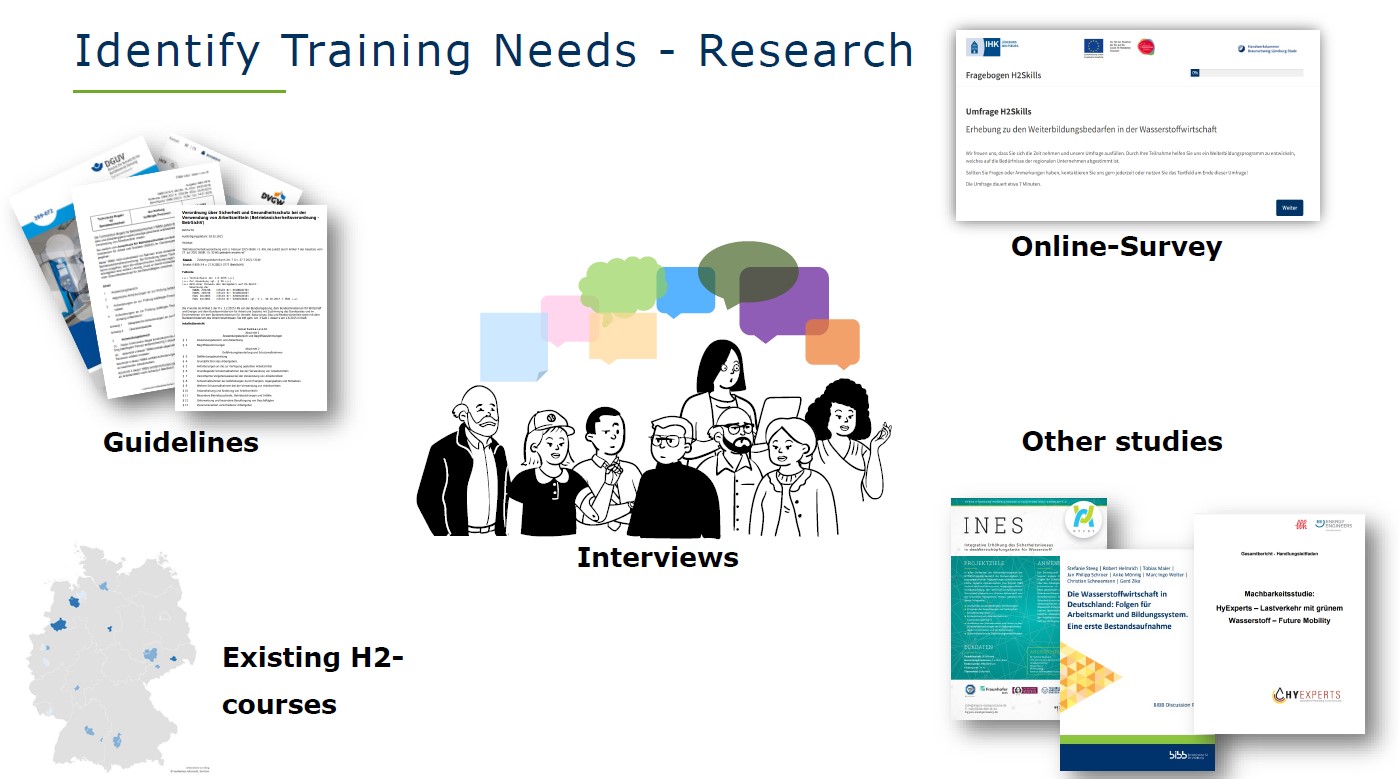
The H2Skills project develops a methodology on how to identify and fill local skills gaps in the field of hydrogen economy. The project is data-driven, and it first seeks to identify current market needs in the sector by gathering data through expert ...
download read more 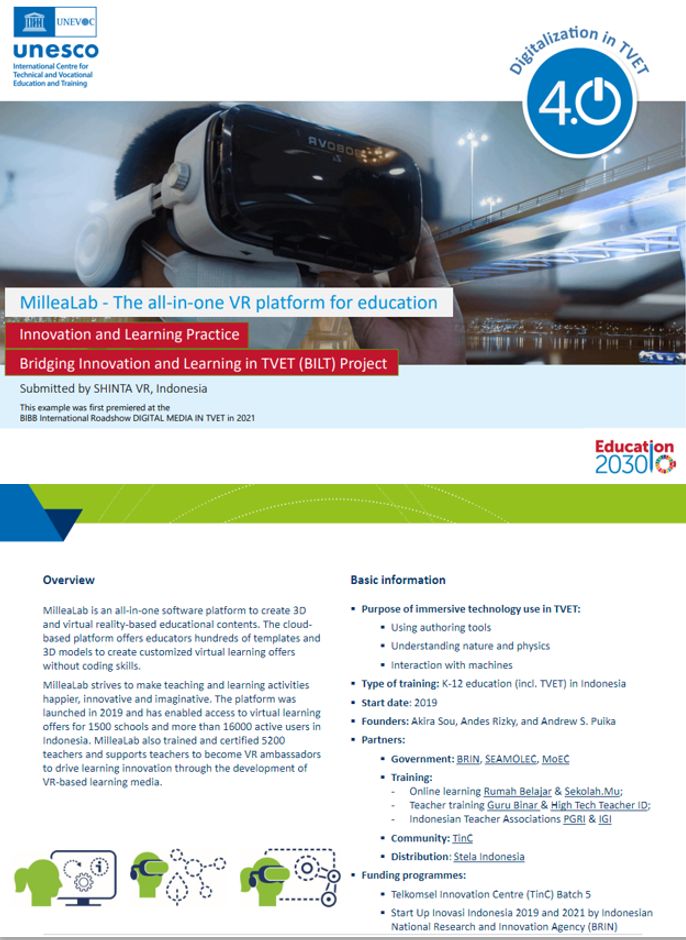
Submitted by SHINTA VR, Indonesia
MilleaLab is an all-in-one software platform to create 3D and virtual reality-based educational contents. The cloud-based platform offers educators hundreds of templates and 3D models to create customized virtual learning offers without coding skills ...
download read more 



Stay in touch