




Discussion forum
Project documents
Network visualization map
Home: The i-hubs initiative | Project timeline | What is the i-hub? | Who are the i-hubs?
Recent developments: General Project News | News from the i-Hubs
Guided Self-Assessment: About | Calendar | Indicative Programme
Innovation Toolbox: The Balanced Scorecard | Skills and Innovation Ecosystem Map
Knowledge resources: Publications | Other useful resources
Networking for innovation: Discussion forum | Project documents | Network visualization map

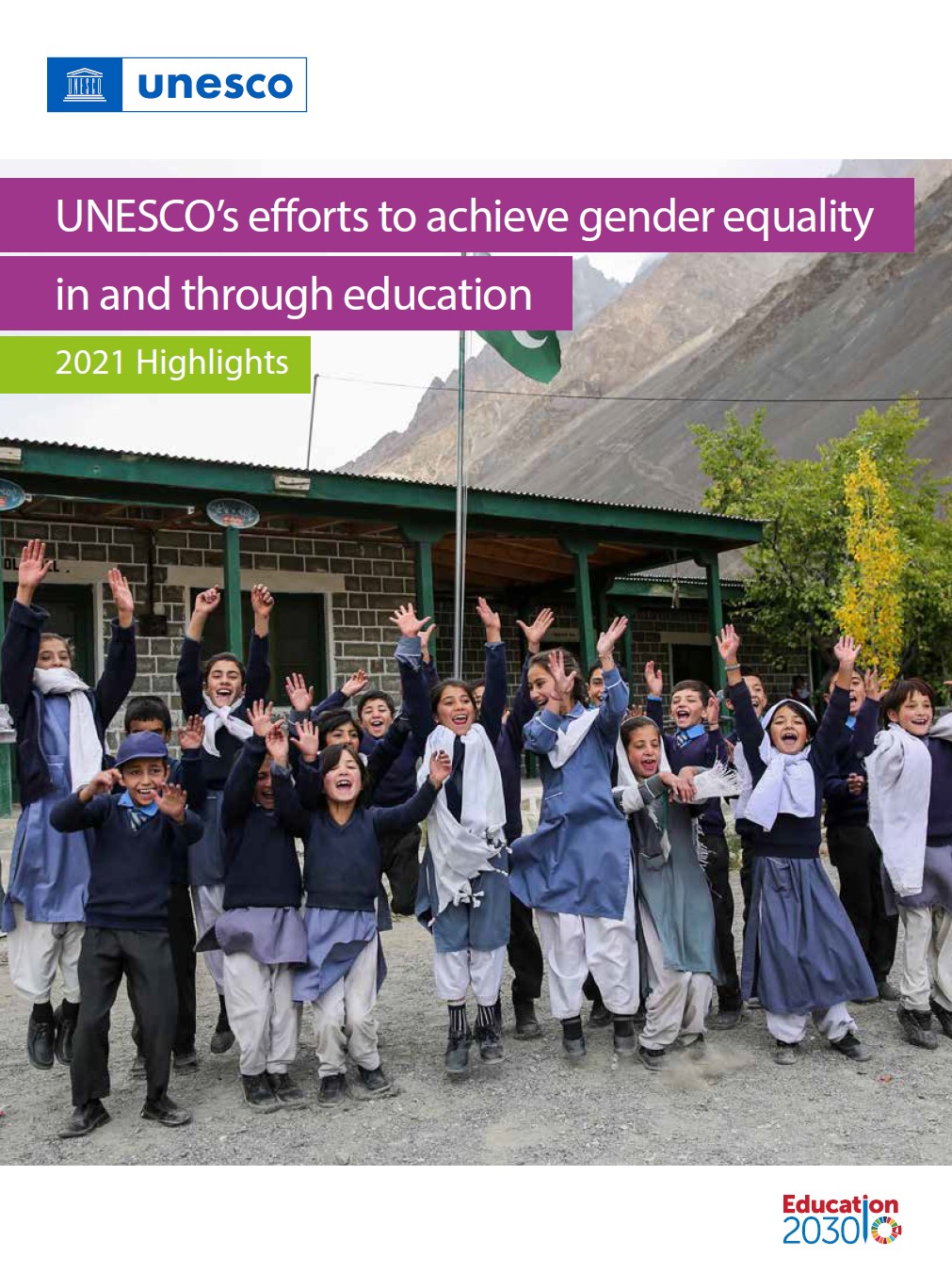
Significant progress has been made in advancing gender equality and girls’ and women’s education.
UNESCO data shows that girls’ enrolment has improved dramatically over the past 25 years; 180 million more girls are enrolled in primary and secondary education. Between 1995 and 2019, the primary school enrolment rate of girls increased from 79 to 90 percent, while the percentage of boys enrolled increased from 86 to 92. Completion rates also improved, with girls’ primary school completion rate increasing by almost 20 percentage points to 87 percent during the period. The fastest progress was in Central and Southern Asia, where in 1995 just over half of girls completed primary school, but a generation later almost 90 percent of their daughters do so. And the pursuit of education continues; globally, 118 million women and 110 million men were participating in tertiary education in 2019.
But many challenges remain: In 2020, 260 million children and youth were out of school – just over half of whom were boys. Women still accounted for almost two-thirds of adults unable to read in 2019. Digital literacy gaps are widening. Among 10 low- and middle-income countries with data, women are less likely than men to have used a basic arithmetic formula in a spreadsheet in the 7 poorest countries, while parity exists in the 3 richest countries.





Stay in touch