





Discussion forum
Project documents
Network visualization map
Home: The i-hubs initiative | Project timeline | What is the i-hub? | Who are the i-hubs?
Recent developments: General Project News | News from the i-Hubs
Guided Self-Assessment: About | Calendar | Indicative Programme
Innovation Toolbox: The Balanced Scorecard | Skills and Innovation Ecosystem Map
Knowledge resources: Publications | Other useful resources
Networking for innovation: Discussion forum | Project documents | Network visualization map
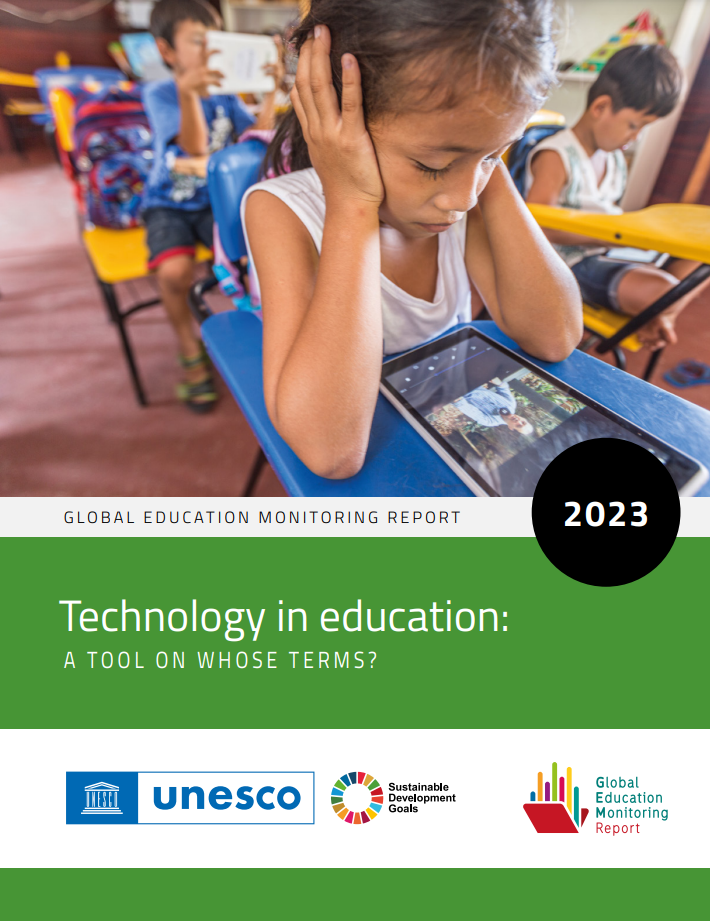
 view
view| Author/s: | Global Education Monitoring Report Team |
| Publisher/s: | UNESCO |
| Published: | 2023 |
| Licence: |  CC BY-SA |

The adoption of digital technology has resulted in many changes in education and learning, yet it is debatable whether technology has transformed education as many claim. The application of digital technology varies by community and socioeconomic level, by teacher willingness and preparedness, by education level and by country income. Except in the most technologically advanced countries, computers and devices are not used in classrooms on a large scale. Moreover, evidence is mixed on its impact. The short- and long-term costs of using digital technology appear to be significantly underestimated. The most disadvantaged are typically denied the opportunity to benefit.
In asking ‘A tool on whose terms?’, the Report shows that regulations for technology set outside of the education sector will not necessarily address education’s needs. It is released along with a #TechOnOurTerms campaign, calling for decisions about technology in education to prioritize learner needs after assessment of whether its application would be appropriate, equitable, evidence-based and sustainable.







Stay in touch