

Discussion forum
Project documents
Network visualization map
Home: The i-hubs initiative | Project timeline | What is the i-hub? | Who are the i-hubs?
Recent developments: General Project News | News from the i-Hubs
Guided Self-Assessment: About | Calendar | Indicative Programme
Innovation Toolbox: The Balanced Scorecard | Skills and Innovation Ecosystem Map
Knowledge resources: Publications | Other useful resources
Networking for innovation: Discussion forum | Project documents | Network visualization map
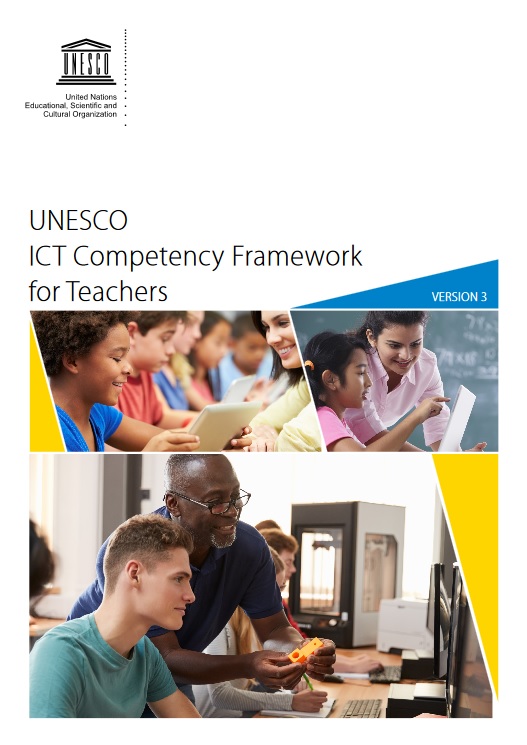

Version 3
The ICT Competency Framework for Teachers (ICT CFT) Version 3 is a tool to guide pre- and in- service teacher training on the use of ICTs across the education system. It is intended to be adapted and contextualized to support national and institution ...
 download
  read more
Implications for the recognition of learning across borders
Digital technologies are creating new opportunities and challenges for skills development and recognition globally. Changes in modalities of access and learning methods, massification and internationalization, are taking place at an increasingly rapi ...
download read more 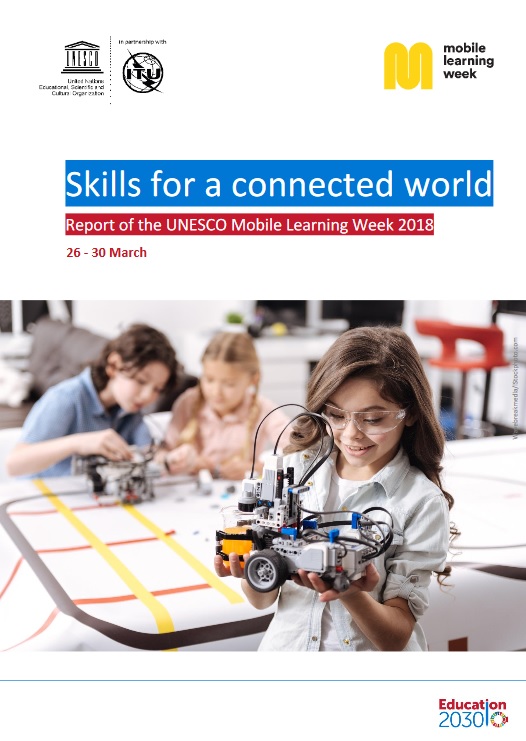
Report of the UNESCO Mobile Learning Week 2018, 26-30 March 2018
All over the world, the way we educate and are educated is changing. New technologies, platforms and ways of reading the world are transforming the philosophies underpinning education pedagogies and modes of delivery. New voices, hitherto unheard, ar ...
download read more 

Handbook: Open Educational Resources for skills development
Digital technology is gaining in importance - not only in life and work, but also in education and training. The availability of quality educational materials to prepare learners for work and life is a key factor to ensure an inclusive and equitable ...
download read more 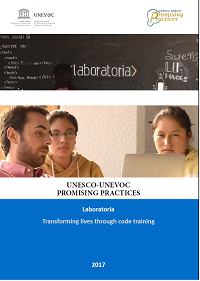
UNESCO-UNEVOC Promising Practice
Laboratoria, a Lima-based web development company, observed a lack of female software developers in Peru and decided to set up a six-month training course for women, called Code Academy. The course is offered exclusively to young women from low-incom ...
download read more 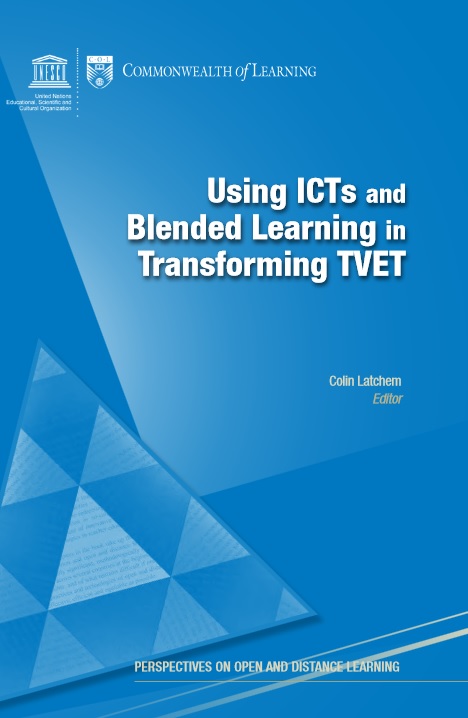
The Education for All initiative concluded in 2015, but in many countries, and particularly in the developing countries, secondary education is still the preserve of the privileged few. This means that millions of adults and young people are denied t ...
download read more 


Stay in touch