


Call for Expression of Interest
NQC Self-Reflection Tool
SUMMARY
The BILT project is currently developing a Self-Reflection Tool intended to allow TVET providers to assess their preparedness to identify new qualifications and competencies, integrate them into curricula and implement them in adequate learning environments. For this purpose, the BILT project is selecting six TVET providers from Africa, Asia and Pacific as well as Europe (two from each region) to co-develop and pilot the Self-Reflection Tool, to implement a Guided Self-Reflection Workshop and to scale up the updated version of the Tool to (at least) three other TVET providers. Interested TVET providers are invited to apply through an open Call for Expression of Interest as per the deadline below:
KEY DATES
- Launch of the Self-reflection Tool Call for Expression of Interest: 7 December 2021
- Deadline for interest manifestation: 04 February 2022
- Selected TVET providers announcement: 18 February 2022
- Co-development and pilot of the Self-Reflection Tool: between April and June 2022
- Update the Self-reflection Tool (responsibility of the BILT team): between July and August 2022
- Dissemination of the Self-Reflection Tool: between August and December 2022
APPLY
To apply, please fill in the online application form. The deadline for submission is 04 February 2022.
About the BILT project and the Self-Reflection Tool
THE BILT PROJECT
The BILT project explores solutions for challenges related to new qualifications and competencies (NQC). Since 2020, this theme has been approached from different perspectives and complementary results have been achieved, deepening the discussions on the identification, integration and implementation of NQC, or the three I’s process.
One of the main results achieved by the BILT project was the launching of the “New qualifications and competencies for future-oriented TVET systems” publication on 7 December 2021. Organized in three volumes, the publication is aimed to cater to the diverse needs of TVET-related institutions by exploring and understanding the three I’s process from their unique perspectives. Exploring new paradigms and illustrated with case studies and practical examples, the publication proposes solutions to specific challenges, offers a database of inspiring experiences and of practical lessons from across the world and highlights how actors are finding solutions and sharing lessons learned.
THE SELF-REFLECTION TOOL
At this stage, the BILT project is starting to turn one of the publication volumes, the one devoted to TVET providers “TVET Delivery: providing innovative solutions” into a Self-Reflection Tool. The Tool is intended to encourage TVET providers to assess their preparedness to identify new qualifications and competencies, integrate them into curricula and implement them in adequate learning environments.
A pilot phase is planned in the first quarter of 2022, when training providers will be invited to co-develop and pilot the Self-Reflection Tool, to implement a Self-Reflection Workshop with the support of the BILT team and to provide feedback on them. These TVET providers will also play a relevant role scaling up the methodology in their respective continent: they will disseminate the updated tool in the framework of multiplication workshops with further TVET providers.
WHAT IS EXPECTED FROM INTERESTED TVET PROVIDERS?
TVET providers are expected to work in close collaboration with the BILT team and with the project’s consultants in order to perform the following activities:
- Hosting a (up to) five days Guided Self-Reflection Workshop between April and June 2022, including the mobilization of internal stakeholders, and other relevant players.
- Reporting on the Guided Self-Reflection Workshop, including feedback on the activity and on the Self-Reflection Tool.
- Developing and implementing an Action Plan in order to benefit from opportunities of improvement identified during the Guided Self-Reflection Workshop.
- Identifying and publishing an ‘Innovation and Learning Practice’ based on the strengths identified during the Guided Self-Reflection Workshop.
- Dissemination of the updated Self-Reflection Methodology to three other TVET providers in the same continent, between August and December 2022.
- Designating an English-speaking coordinator to support the Self-Reflection Tool related activities, who will be responsible for:
b. Leading the implementation of the Guided Self-Reflection Workshop with the support from the BILT team and project’s consultants;
c. Guiding the scaling up of the Self-Reflection Workshop in other TVET institutions between August and December 2022 and reporting on the Workshops to the BILT team.
WHAT IS OFFERED TO INTERESTED TVET PROVIDERS?
TVET providers will be supported by the BILT team in order to perform the expected activities. More specifically, the BILT project offers:
- Up to 20,000 USD for each TVET provider that will co-develop and pilot the Self-Reflection Tool, implement the Guided Self-Reflection Workshop and scale up the methodology at regional level.
b. The selected TVET providers are expected to contribute to the initiative through in-kind (e.g. human resources and facilities) or/and financial contributions
c. An Implementation Partnership Agreement, covering items a. and b., will be signed between the selected TVET providers and UNESCO-UNEVOC
- Technical and operational support in the implementation of the Guided Self-Reflection Workshop.
- Institutional acknowledgement in the publications related to the development of the Self-reflection Tool.
- Present the experience on the co-development of the Self-Reflection Tool as speaker or panelist in BILT regional and global events.
- Firsthand access to the final version of the Self-Reflection Tool, before it is officially launched.
COVID SITUATION
Due to the COVID-19 situation, all meetings are currently planned to take place online. However, depending on how the situation evolves in the respective countries of the selected TVET providers, there might be the possibility of:
- The BILT team to attend the Guided Self-Reflection Workshops in-person.
- TVET providers disseminating the self-reflection methodology through the facilitation of in-person Guided Self-Reflection Workshops.
QUESTIONS
Should you have any questions about this Call, please do not hesitate to contact the BILT team at unevoc.bilt (at) unesco.org
EXPRESSION OF INTEREST
To express your interest in participating in the development of the Self-Reflection Tool, please fill in the online application form. The deadline for submission is 04 February 2022.
KEY DATES
- Launch of the Self-reflection Tool Call for Expression of Interest: 7 December 2021
- Deadline for interest manifestation: 04 February 2022
- Selected TVET providers announcement: 18 February 2022
- Co-development and pilot of the Self-Reflection Tool: between April and June 2022
- Update the Self-reflection Tool (responsibility of the BILT team): between July and August 2022
- Dissemination of the Self-Reflection Tool: between August and December 2022
BILT Publications and Innovative Learning Practices
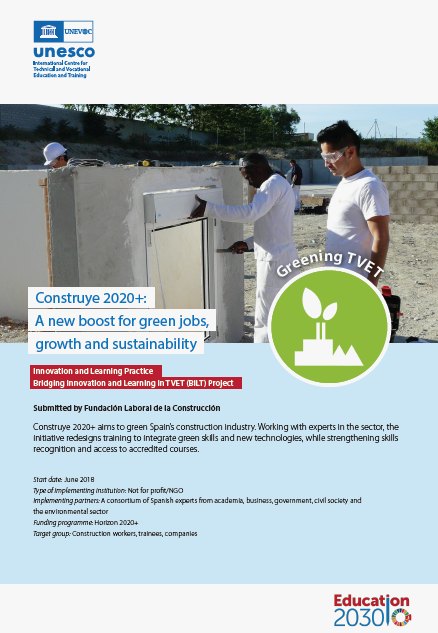
Construye 2020+: A new boost for green jobs, growth and sustainability
Innovation and Learning Practice Bridging Innovation and Learning in TVET (BILT) Project
Construye 2020+ aims to green Spain’s construction industry. Working with experts in the sector, the initiative redesigns training to integrate green skills and new technologies, while strengthening skills recognition and access to accredited cours ...
 download
  read more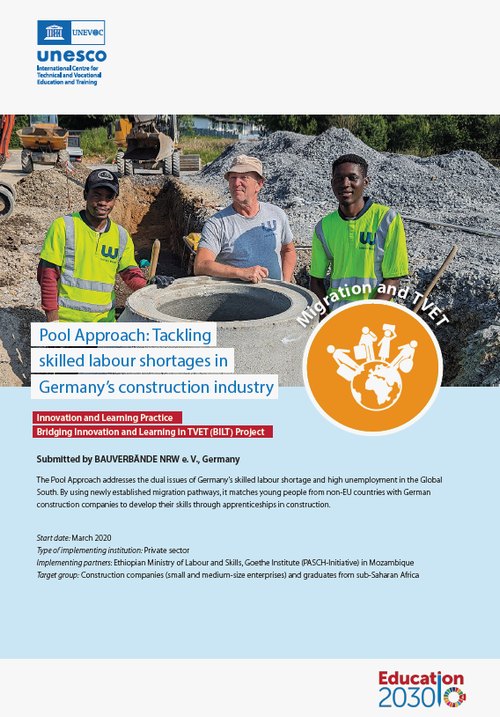
Pool Approach: Tackling skilled labour shortages in Germany’s construction industry
Innovation and Learning Practice Bridging Innovation and Learning in TVET (BILT) Project
The Pool Approach addresses the dual issues of Germany’s skilled labour shortage and high unemployment in the Global South. By using newly established migration pathways, it matches young people from non-EU countries with German construction compan ...
download read more 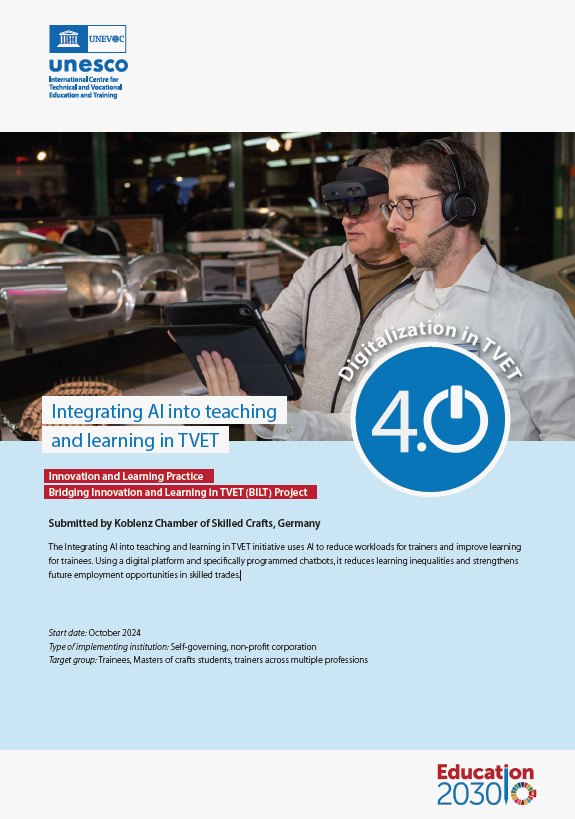
Integrating AI into teaching and learning in TVET
Innovation and Learning Practice Bridging Innovation and Learning in TVET (BILT) Project
The Integrating AI into teaching and learning in TVET initiative uses AI to reduce workloads for trainers and improve learning for trainees. Using a digital platform and specifically programmed chatbots, it reduces learning inequalities and strength ...
download read more 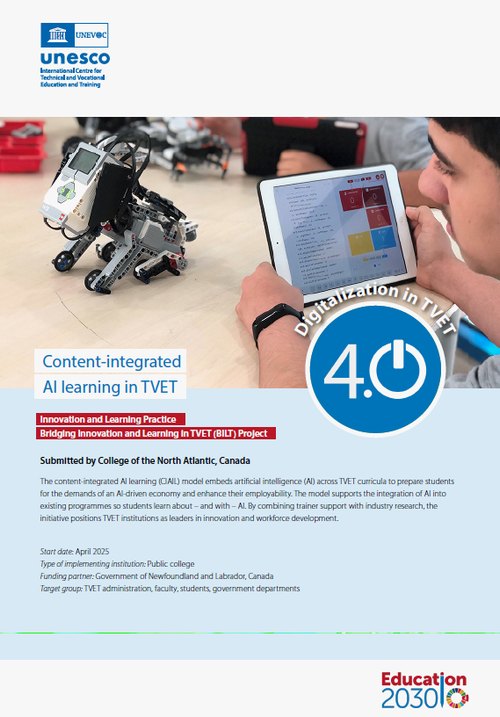
Content-integrated AI learning in TVET
Innovation and Learning Practice Bridging Innovation and Learning in TVET (BILT) Project
The content-integrated AI learning (CIAIL) model embeds artificial intelligence (AI) across TVET curricula to prepare students for the demands of an AI-driven economy and enhance their employability. The model supports the integration of AI intoexist ...
download read more 


Transformative TVET for the building and construction sector
Embracing digitalization, greening and migration trends
There is an urgent need to expand the skilled workforce and promote green practices in the building and construction industry. The sector, currently employing approximately 7 per cent of the global working population, accounts for over a third of glo ...
 view read more
The Innovative Engineering Curricula project
Innovation and Learning Practice Bridging Innovation and Learning in TVET (BILT) Project
The Innovative Engineering Curricula project – a multi-disciplinary, multi-stakeholder initiative – aims to modernize engineering education in South Africa by integrating competency-driven learning, industry engagement and professional developmen ...
download read more 
ConCOVE: Degree apprenticeships in construction and infrastructure
Innovation and Learning Practice Bridging Innovation and Learning in TVET (BILT) Project
ConCOVE’s degree apprenticeships in construction and infrastructure aim to bridge the gap between degree-level education and the construction sector. Through strategic partnerships with employers, it seeks to meet industry needs while expanding acc ...
download read more 
Recognition of Prior Learning in the construction sector
Innovation and Learning Practice Bridging Innovation and Learning in TVET (BILT) Project
The Recognition of Prior Learning (RPL) project enables workers in Ethiopia’s construction industry who have had no formal training to acquire nationally recognized qualifications. To date, 812 construction workers have been assessed across seven k ...
download read more 
Vietnamese talent for Thüringen
Submitted by BiW
BiW’s ViTa programme (Vietnamese Talent for Thüringen) represents a model for international TVET cooperation. In partnership with Vietnamese language and vocational schools, BiW has created a comprehensive system to train and integrate skilled you ...
view read more 
Digi-CVET: Support for broad-based digital skills
Innovation and Learning Practice, Bridging Innovation and Learning in TVET (BILT) Project
Digi-CVET is a direct response to the changing needs of the workplace, where around 90% of jobs in Europe in the near future will require digital skills – from basic to advanced levels. It aims to enhance the resilience of those working in construc ...
download read more 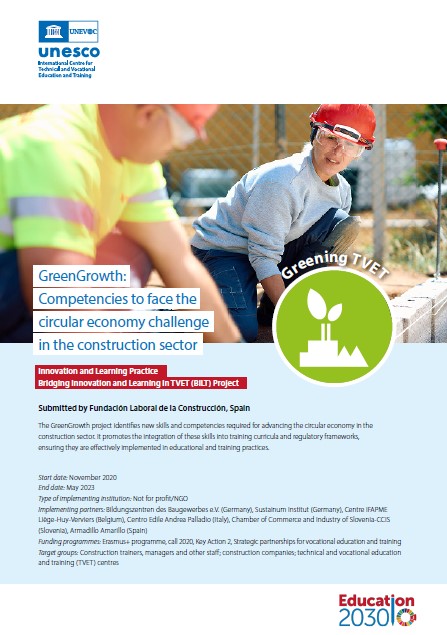
GreenGrowth: Competencies to face the circular economy challenge in the construction sector
Innovation and Learning Practice, Bridging Innovation and Learning in TVET (BILT) Project
The GreenGrowth project was created to reduce the construction sector’s CO2 emissions by implementing strategies that reinforce the circular economy, particularly in building renovation. The project’s labour market analysis – conducted with com ...
download read more 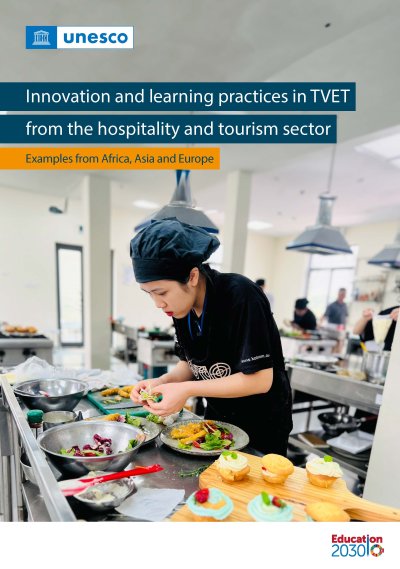
Innovation and learning practices in TVET from the hospitality and tourism sector
Examples from Africa, Asia and Europe
This publication presents 10 Innovation and Learning Practices that were selected based on their contribution to identifying new qualifications and competencies in an efficient manner, integrating them into appealing curricula and training regulation ...
view read more 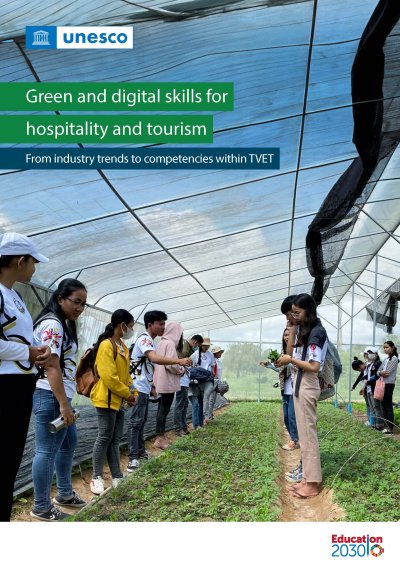
Green and digital skills for hospitality and tourism
From industry trends to competencies within TVET
This publication proposes approaches to facilitate the dual transition in hospitality and tourism, structured around the identification of emerging green and digital competencies in a timely manner, their integration into future-oriented curricula, a ...
view read more 

Mentorship Handbook for women in STEM Areas
This Handbook is the result of a project funded through the UNESCO-UNEVOC Coaction Initiative 2023. The project's objective was to establish the Latin American Mentorship Network for Gender Equity and Opportunities in STEM (Science, Technology, Engin ...
download read more 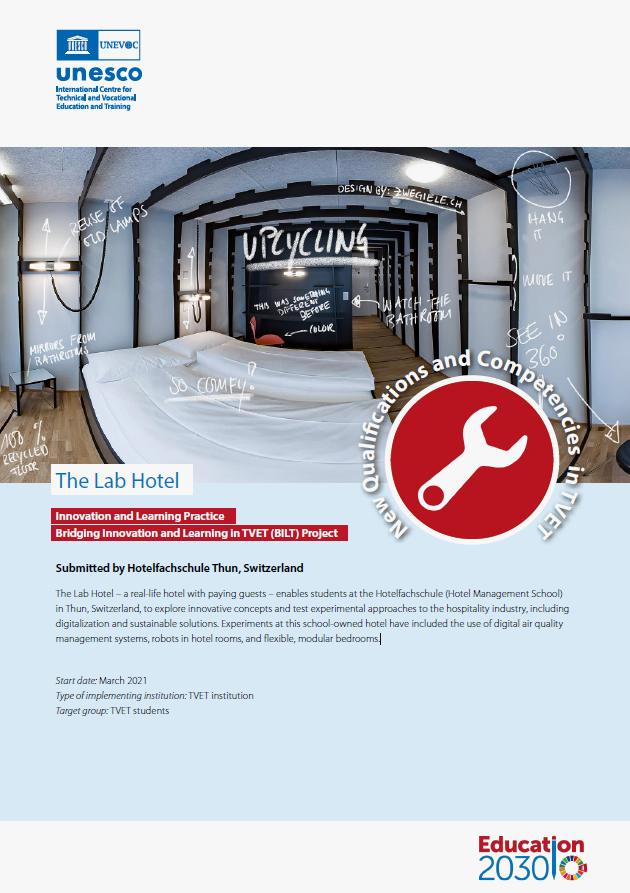
The Lab Hotel
Submitted by Hotelfachschule Thun, Switzerland
The Lab Hotel – a real-life hotel with paying guests – enables students at the Hotelfachschule (Hotel Management School) in Thun, Switzerland, to explore innovative concepts and test experimental approaches to the hospitality industry, including ...
download read more 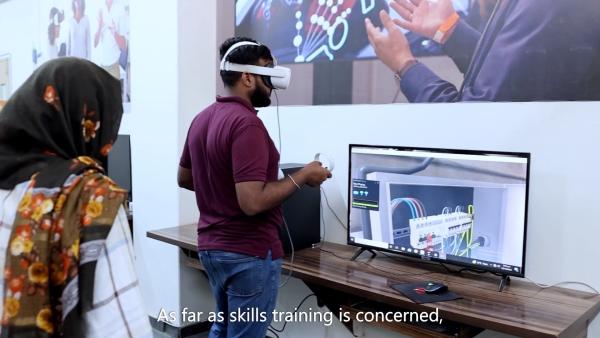
Developing the skills of TVET students through immersive learning tools
Submitted by MIMBUS and NED University of Engineering and Technology
NED University, in partnership with MIMBUS, has integrated innovative virtual reality training component aimed at mitigating occupational hazards, reducing training costs, and shortening training durations. The virtual reality training component offe ...
view read more 
Learning by your doing: How Tourism Training Australia is creating flexible learning pathways in TVET through micro-credentials
Submitted by Tourism Training Australia
Tourism Training Australia, in collaboration with industry and the Victoria government, launched an online micro-credential platform and AI-based marketing tool to address local labour shortages in the tourism and hospitality sectors during the pande ...
view read more 
Digitalization readiness in the tourism and hospitality industry
Submitted by CiMSO Business Solutions, Africa
Identifying a gap between the digital skills of graduates and hospitality industry needs, CiMSO set up the ‘Digitalization readiness in the tourism and hospitality industry’ initiative. CiMSO supplies management software to hospitality providers ...
download read more 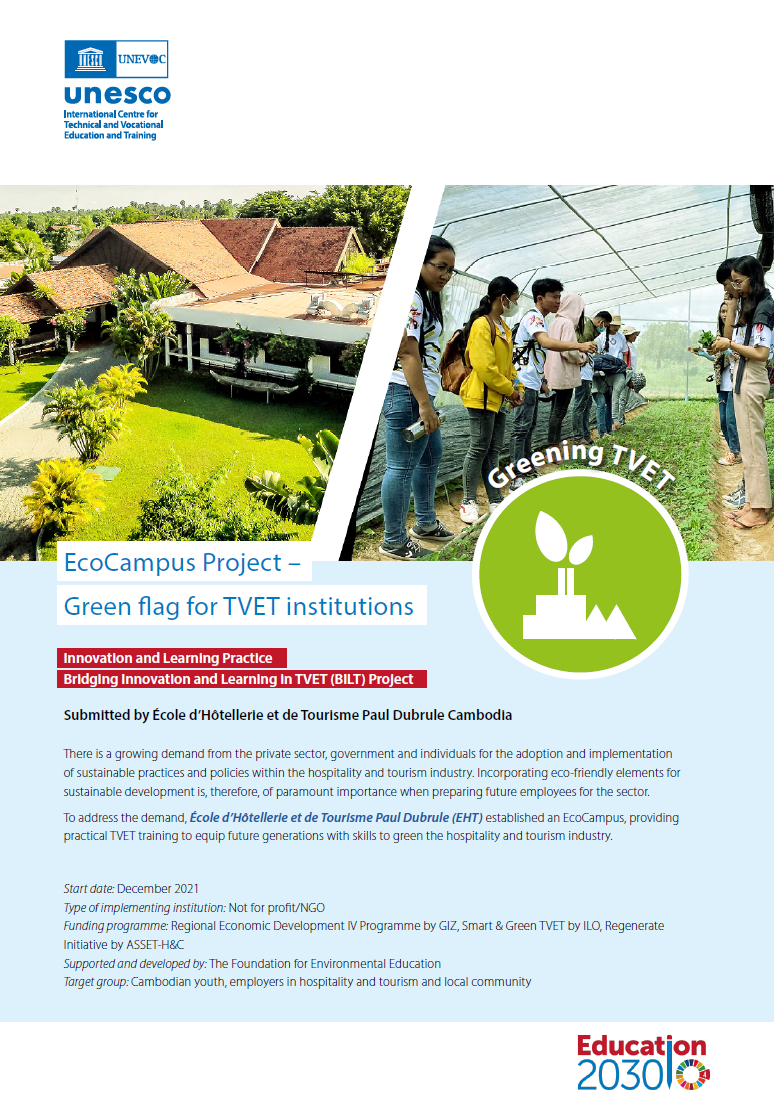
EcoCampus Project – Green flag for TVET institutions
In 2021, through a series of green activities and actions, École d’Hôtellerie et de Tourisme Paul Dubrule (EHT) started to implement the EcoCampus programme from the Foundation of Environmental Education (FEE). The EcoCampus programme is an in ...
download read more 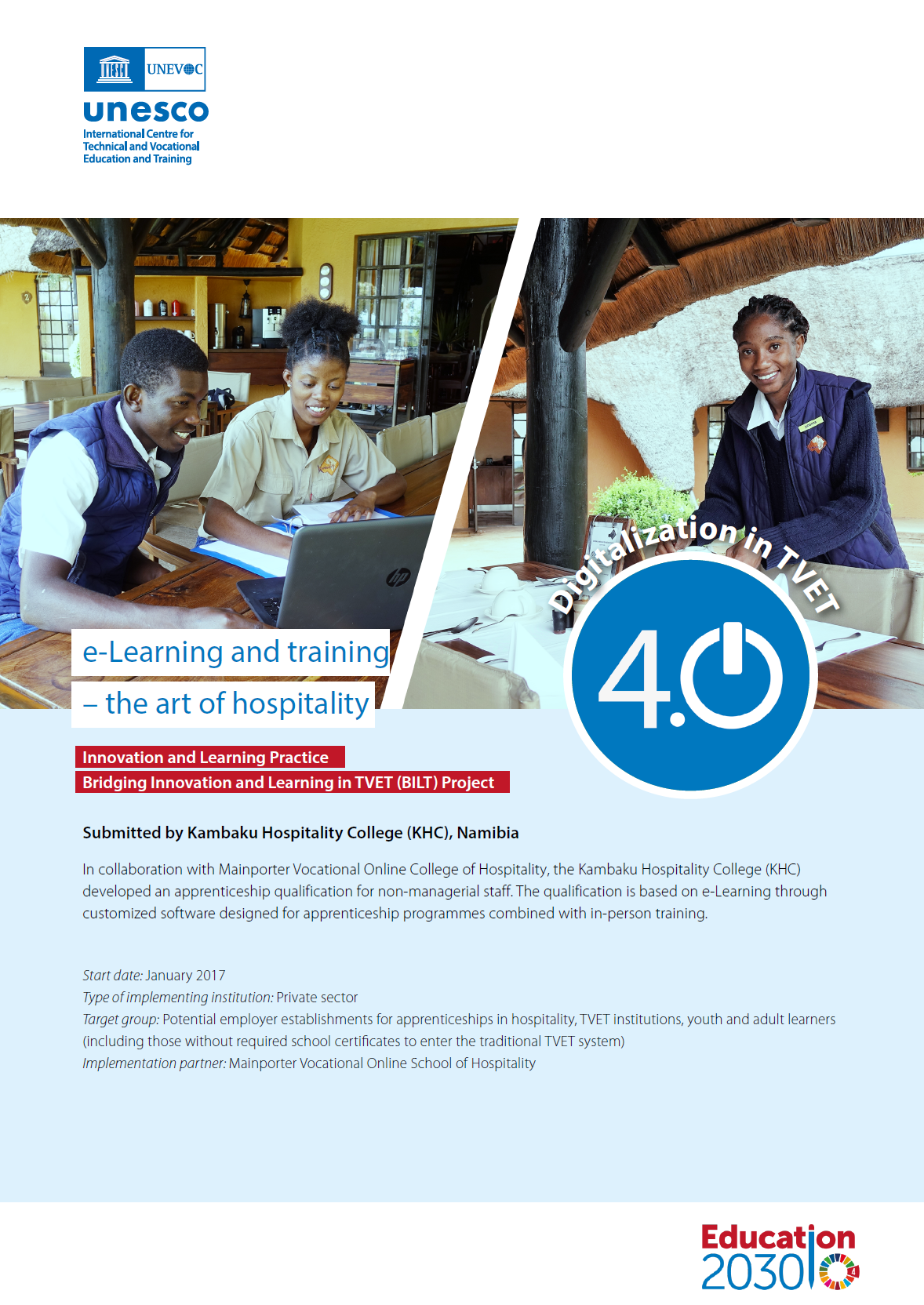
e-Learning and training – the art of hospitality
In collaboration with Mainporter Vocational Online College of Hospitality, the Kambaku Hospitality College (KHC) developed an apprenticeship qualification for non-managerial staff. The qualification is based on e-Learning through customized software ...
download read more 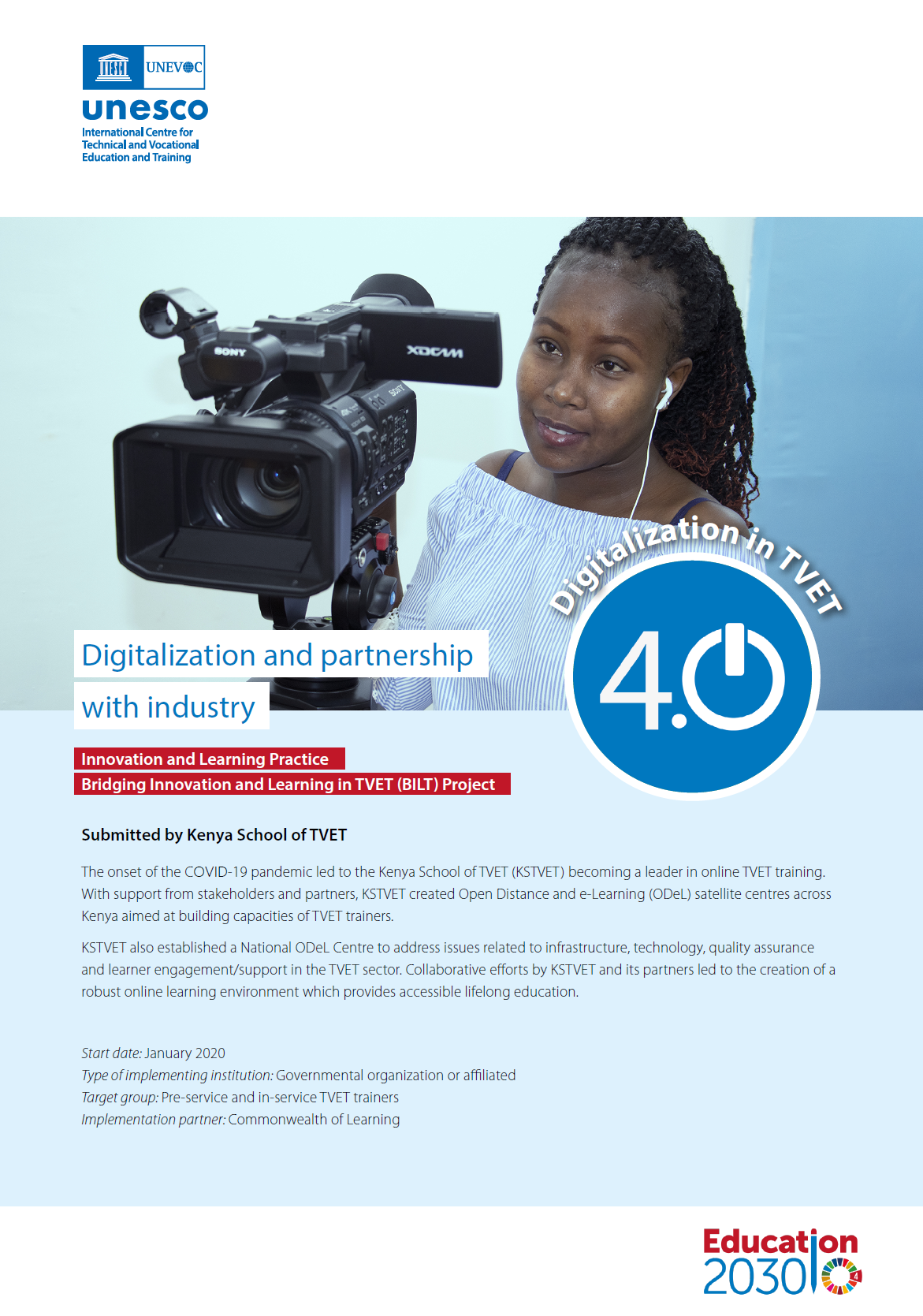
Digitalization and partnership with industry
The onset of the COVID-19 pandemic led to the Kenya School of TVET (KSTVET) becoming a leader in online TVET training. With support from stakeholders and partners, KSTVET created Open Distance and e-Learning (ODeL) satellite centres across Kenya aime ...
download read more 
Green training for the hospitality sector
Fifty Shades Greener is a leading educational company for sustainable development. The Fifty Shades Greener hospitality programme became a state-funded project through TVET organizations in Ireland in 2020, with over 270 hotel employees pursuing fund ...
view read more 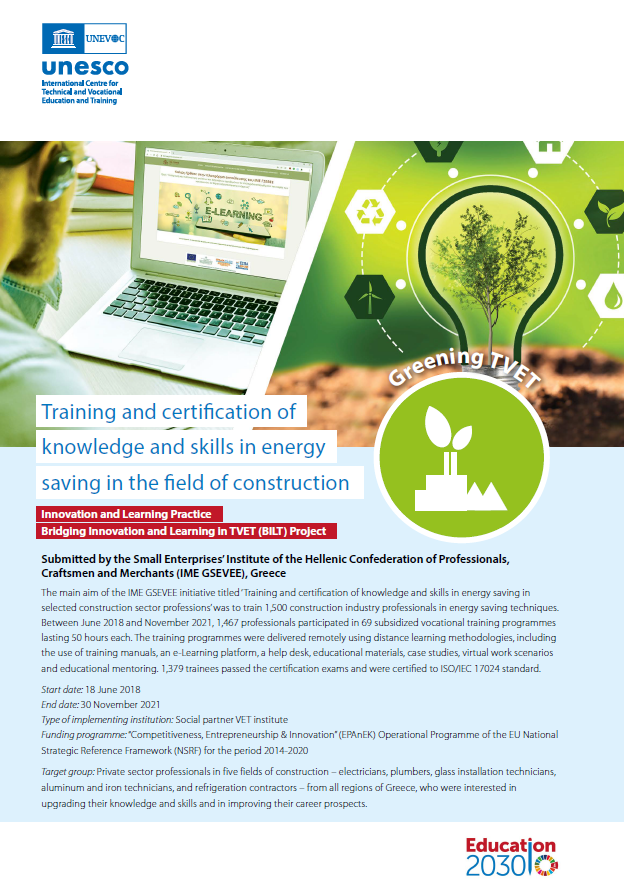
Training and certification of knowledge and skills in energy saving in the field of construction
Submitted by the Small Enterprises’ Institute of the Hellenic Confederation of Professionals, Craftsmen and Merchants (IME GSEVEE), Greece
The main aim of the IME GSEVEE initiative titled ‘Training and certification of knowledge and skills in energy saving in selected construction sector professions’ was to train 1,500 construction industry professionals in energy saving techniques. ...
download read more 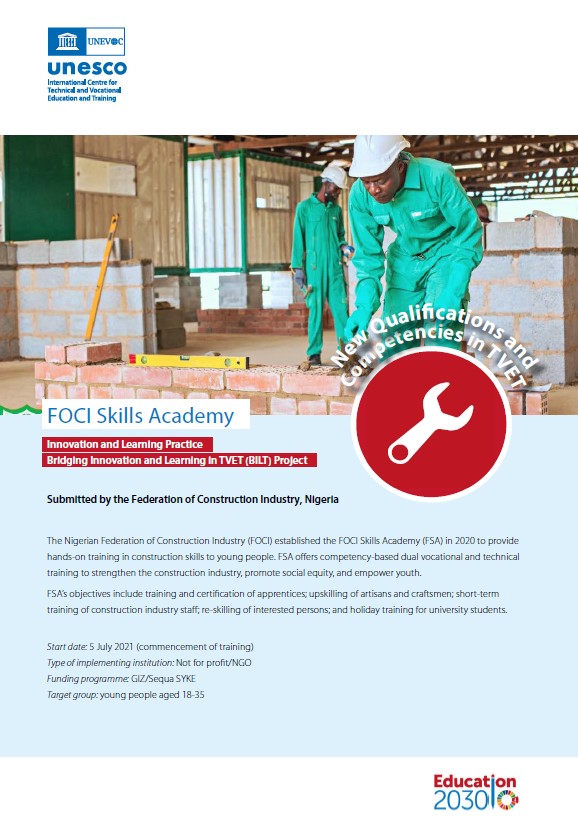
FOCI Skills Academy
Submitted by the Federation of Construction Industry, Nigeria
The Nigerian Federation of Construction Industry (FOCI) established the FOCI Skills Academy (FSA) in 2020 to provide hands-on training in construction skills to young people. FSA offers competency-based dual vocational and technical training to stren ...
download read more 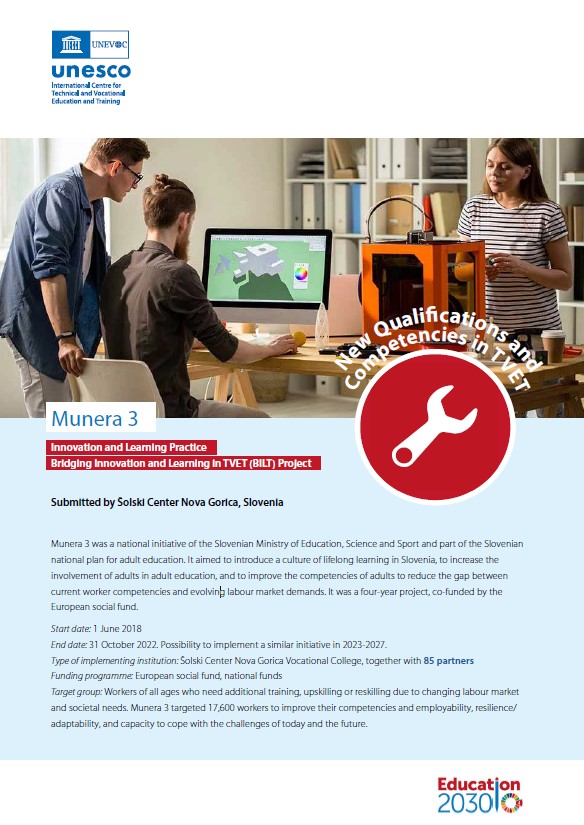
Munera 3
Submitted by Šolski Center Nova Gorica, Slovenia
Munera 3 was a national initiative of the Slovenian Ministry of Education, Science and Sport and part of the Slovenian national plan for adult education. It aimed to introduce a culture of lifelong learning in Slovenia, to increase the involvement of ...
download read more 
