


This first on-site BILT bridging event in the Asia-Pacific region was organized by UNESCO-UNEVOC, BIBB and Temasek Polytechnic, Singapore, and co-hosted by the Ministry of Education of Singapore, Chair of the ASEAN TVET Council.
The conference brought together 65 onsite and 124 online participants including policymakers, industry representatives, and TVET providers, who shared insights on green and digital qualifications and competencies in the Asia-Pacific region, with a focus on the hospitality and tourism sector.
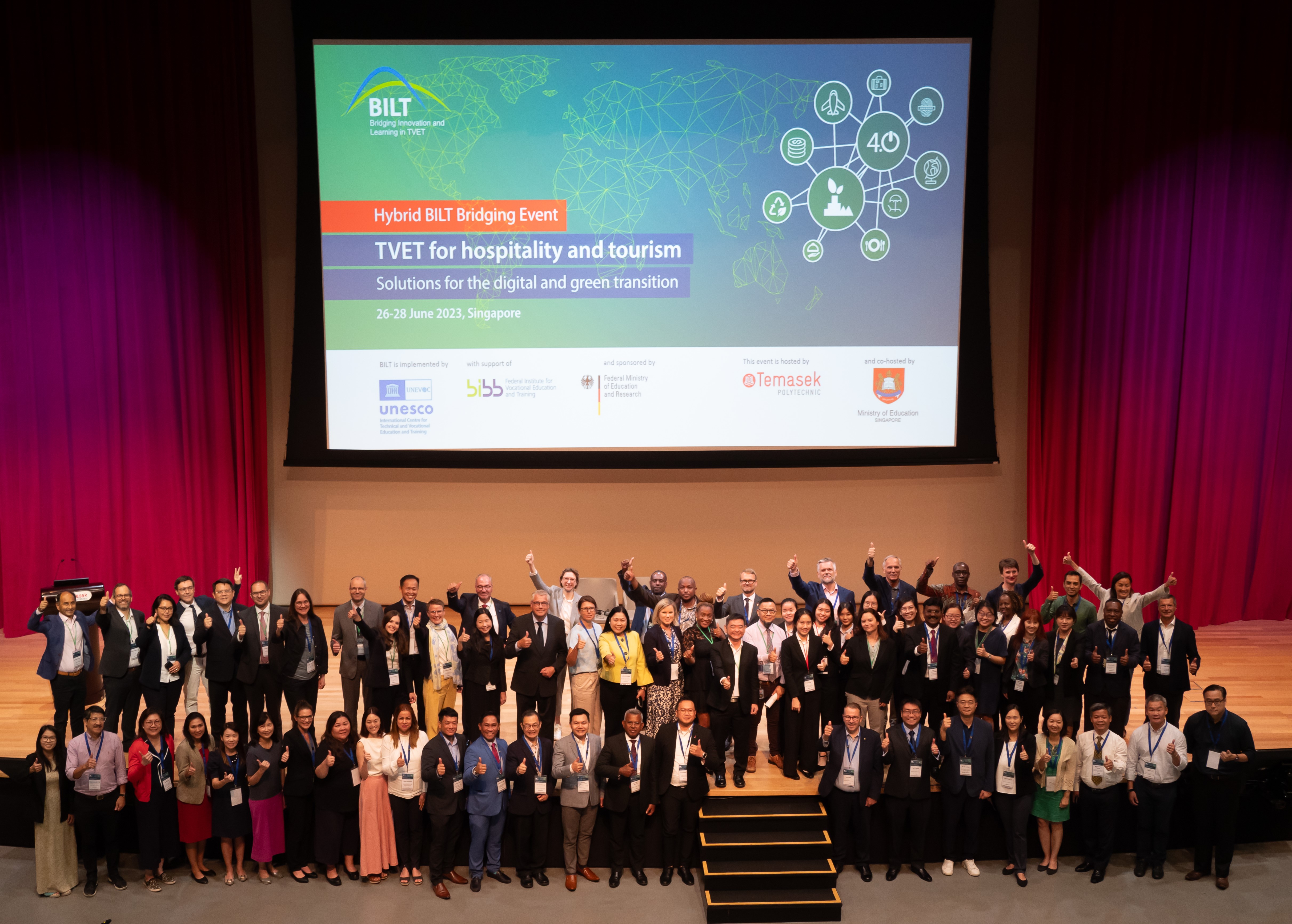
Participants at Temasek Polytechnic, Singapore
The goal of the event was to establish or deepen innovation collaborations on an international level and particularly in the Asia-Pacific region. To this end, the conference programme featured matchmaking sessions to foster cooperation and thematic exchange among the UNEVOC Centres and members of the BILT Community. The conference hosted the first face-to-face meeting of the BILT Expert Group on the dual transition in the hospitality and tourism sector, which presented the preliminary results of their work.
Staying relevant to industry needs
The conference dialogues revealed that it is crucial for TVET systems to be adaptable and relevant to industry needs. To achieve this, key stakeholders such as industry, governments and training institutions must work in close partnership. Collaboration with industry experts and regularly updating curricula can help bridge the skills gap and ensure graduates are prepared for the workforce. One critical element is the need for TVET staff to maintain familiarity with the newest industry trends and insights to ensure instruction is up to date.
“In an effective TVET system amidst disruptive changes, it is imperative to ensure relevance to industry needs, quality of delivery, quality of our faculty members and the close partnership with industry and the government” - Mr Peter Lam, Principal and CEO of Temasek Polytechnic
International collaboration on green and digital skills development
Experts emphasized the importance of international exchange, alignment of curricula, and breaking away from stereotypes as prerequisites for relevant TVET in today’s rapidly changing world. Learning from innovative practices around the world helps identify effective strategies that can be implemented locally. To enable peer learning among participants, several online and onsite sessions of the conference featured cutting-edge practical examples incorporating digital and green skills and competencies into TVET training and learning.
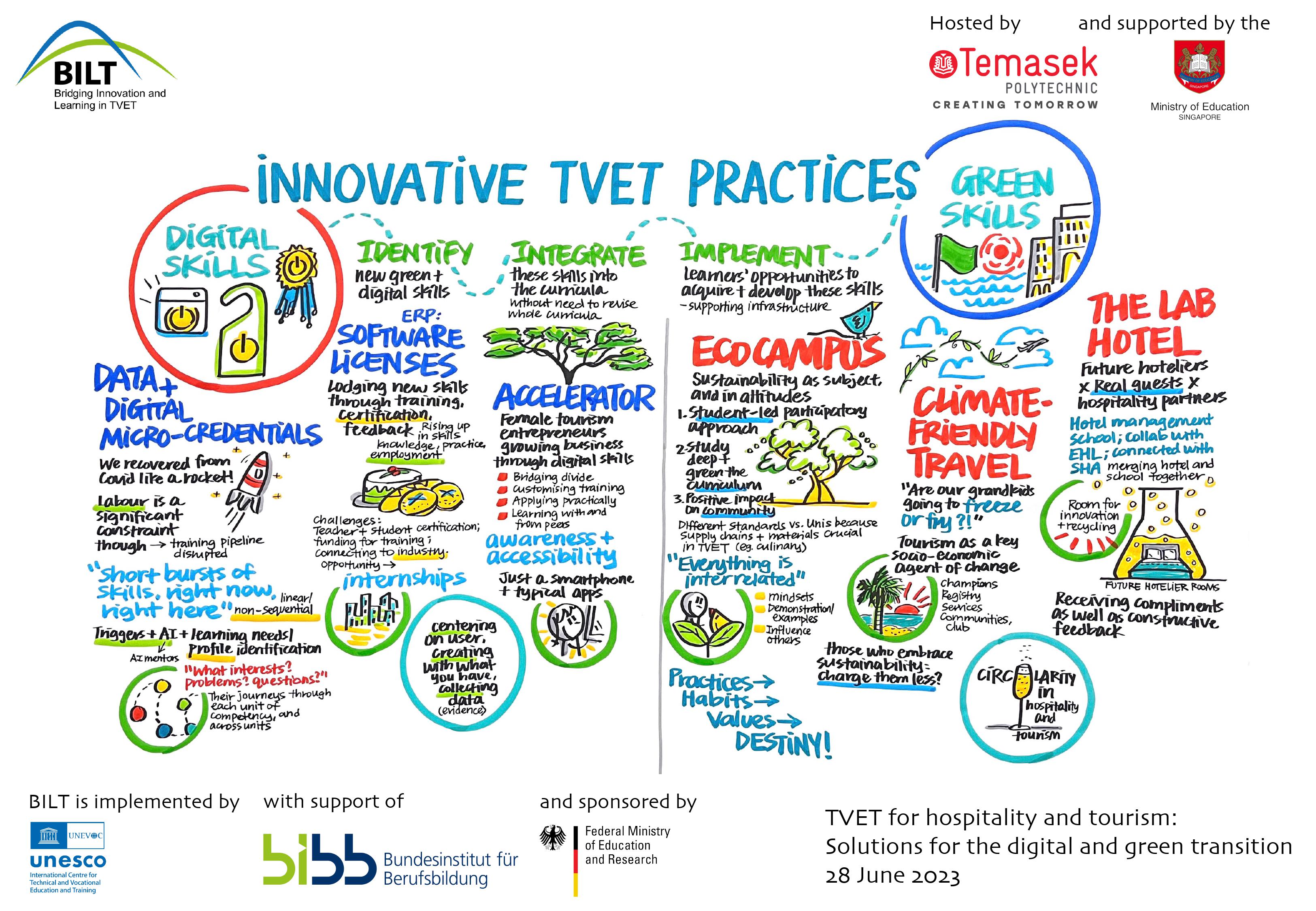
Visual summary by Wendy Wong, Welenia Studios: Critical core skills in hospitality and tourism — excellent and innovative TVET practices
Next steps
Framed under the UNESCO TVET Strategy 2022-2029, the BILT project will continue promoting international cooperation and capacity-building in TVET by expanding the reach of the UNEVOC Network and the BILT community and fostering partnerships. Mark your calendars for the BILT Learning Forum, which will take place on 24-26 October 2023 at the UN Campus in Bonn, Germany. On this occasion, UNESCO-UNEVOC and BIBB will welcome around 60 UNEVOC Centres and TVET stakeholders from Africa, Asia-Pacific, and Europe for three days of peer learning and networking.
This event was hosted by the UNEVOC Centre

and co-hosted by the

Chair of the ASEAN TVET Council
 ”, Malta
 Facebook
 Twitter
