


Green Skills Competition
Competition overview
The Green Skills Competition is the final activity of the UNESCO CFIT Phase III and UNESCO-UNEVOC project and seeks to promote innovation in sustainable development. Participants will have the opportunity to apply the green skills gained from the microlearning programme to develop and implement a green project within their respective countries. Participants will also be paired with mentors who completed the Training of Trainers on green skills development. In addition to ongoing mentorship, participants will benefit from knowledge sharing by green skills experts through webinar sessions.
Eligibility criteria
 For students to be eligible to participate in the competition, they must meet the following criteria:
- Be a part of a team or group of students (within the same institution) of at least 3–5 members; gender diversity is encouraged
- Between the ages of 16 and 35 years
- Must be currently enrolled in one or more technical disciplines at any of the technical institutions and organizations actively implementing the CFIT III project from one of the following countries: Ivory Coast, Ethiopia, Gabon, Senegal, Tanzania or Uganda
- Participated in the Microlearning programme, Empowering youth for the green transition (webinar/self-reading online course)
- Supported by one or more mentors from their technical higher education institution (e.g. educators or subject matter experts from CFIT III project partners who participated in the relevant Training of Trainers)
- Willingness to provide UNESCO-UNEVOC with documentation relating to the project’s progress to facilitate monitoring
Competition aims

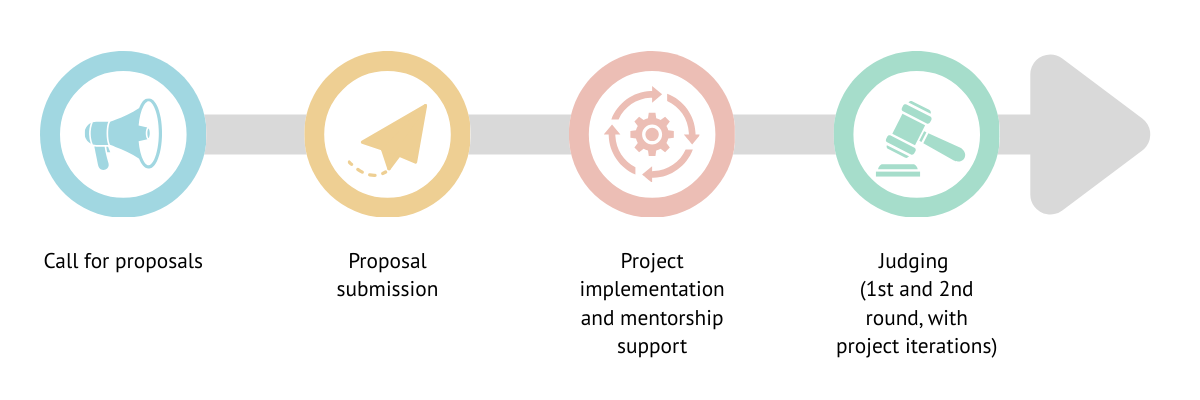
Competition cycle
What is a green project?
 A green project is one that applies the principles of greening and employs green skills throughout its development and implementation. The project is intended to address environmental issues that impact communities and societies. By considering economic, societal and environmental factors, a green project should also lead to enhanced decision-making and promote environmentally conscious lifestyles. Ultimately, a green project contributes to environmental protection and the sustainability of natural resources for current and future generations.
Key competition skill areas

Circular economy business solutions
- Waste minimization
- Resource efficiency
- Eco-design and product life cycle
- Material innovation
- Reverse logistics
- Plastic/E-Waste recycling and safe disposal

Sustainable agriculture and food systems
- Sustainable farming
- Food processing and handling
- Biodiversity conservation
- Supply chain management
- Food safety
- Irrigation technology
- Agroforestry
- Soil conservation
- Post-harvest loss management
Green building and design
- Design
- Procurement
- Material and construction
- Energy optimization
- Waste
Energy And Renewable Energy Solutions
- Solar, Wind, Bioenergy
- System Engineering
- Energy Storage,
- Energy Efficiency

Water conservation and management
- Water system and efficiency
- Harvesting and recycling
- Pollution prevention
- Technology
Environmental education and advocacy
- Digital media
- 3D modeling

Eco-tourism
- Community led eco-tourism
- Anti-poaching tracking tools/ drones
- Reforestation
Judging criteria for projects
Projects entered in the green skills competition will be judged by a panel based on the following criteria:

Impact on individual, economy and environment (including business viability, policy scalability or community impact)

Technical execution

Innovation and creativity

Replicability and scalability
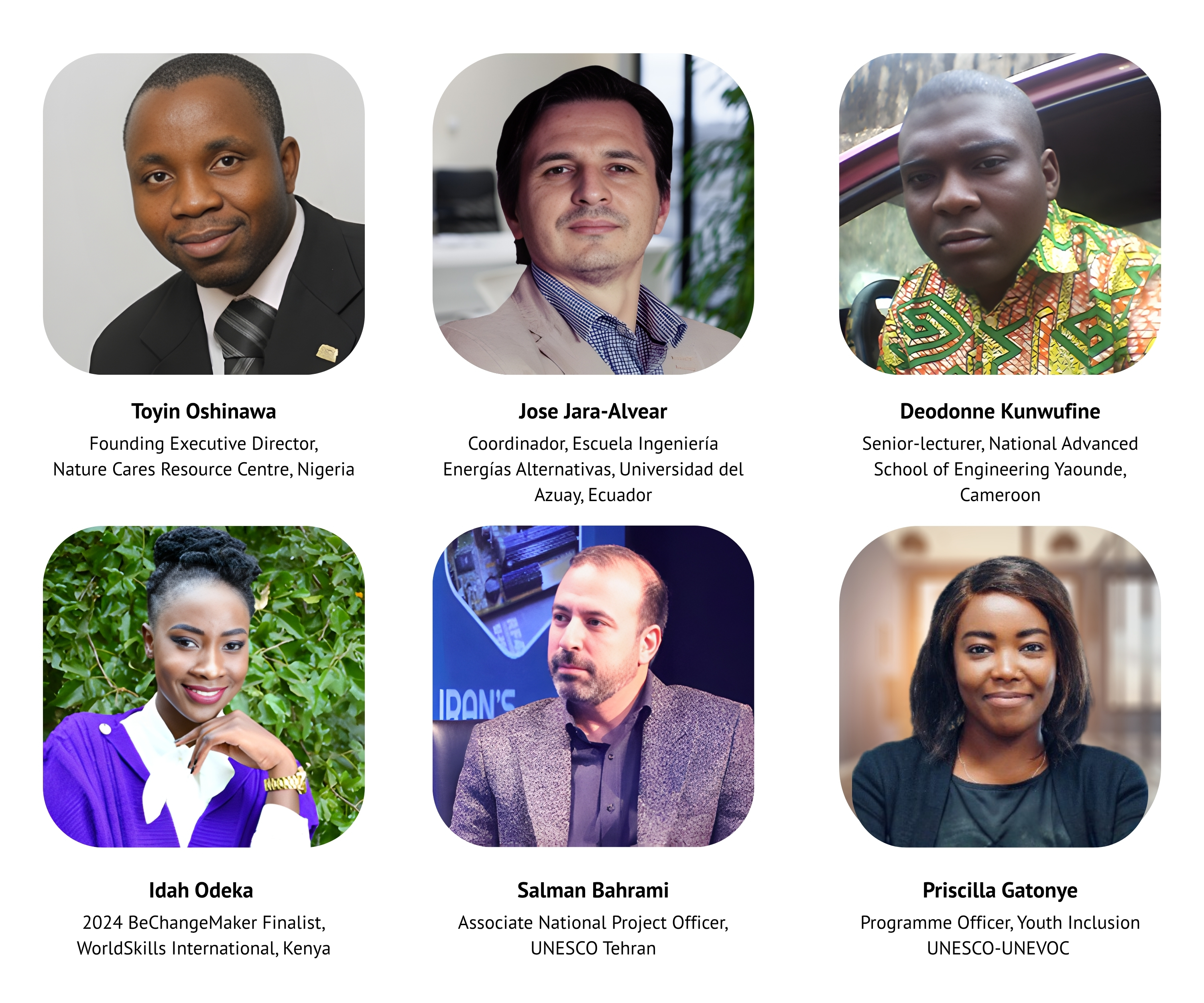
Panel of judges
Related pages

This project is funded by:
 Facebook
 Twitter
