


Inclusion in TVET: Empowering all learners to thrive
Across formal, non-formal and informal education settings, Technical and Vocational Education and Training (TVET) is recognized for its inclusive nature – opening doors for learners who have been left out of mainstream education. Despite this potential, many individuals and groups remain excluded from TVET. Persistent barriers such as poverty, geographic isolation, gender disparities, language differences, disability, ethnicity, crisis and migration continue to limit equitable access, participation, completion and the transition to work. Many TVET systems still lack inclusive policies, disaggregated data, teacher training, operational partnerships and the necessary resources to reach every learner, leaving too many behind.
UNESCO-UNEVOC’s new Inclusion in TVET: A Practical Guide equips TVET institutions, leaders, trainers and other stakeholders with a step-by-step framework to build learning environments where every learner thrives.
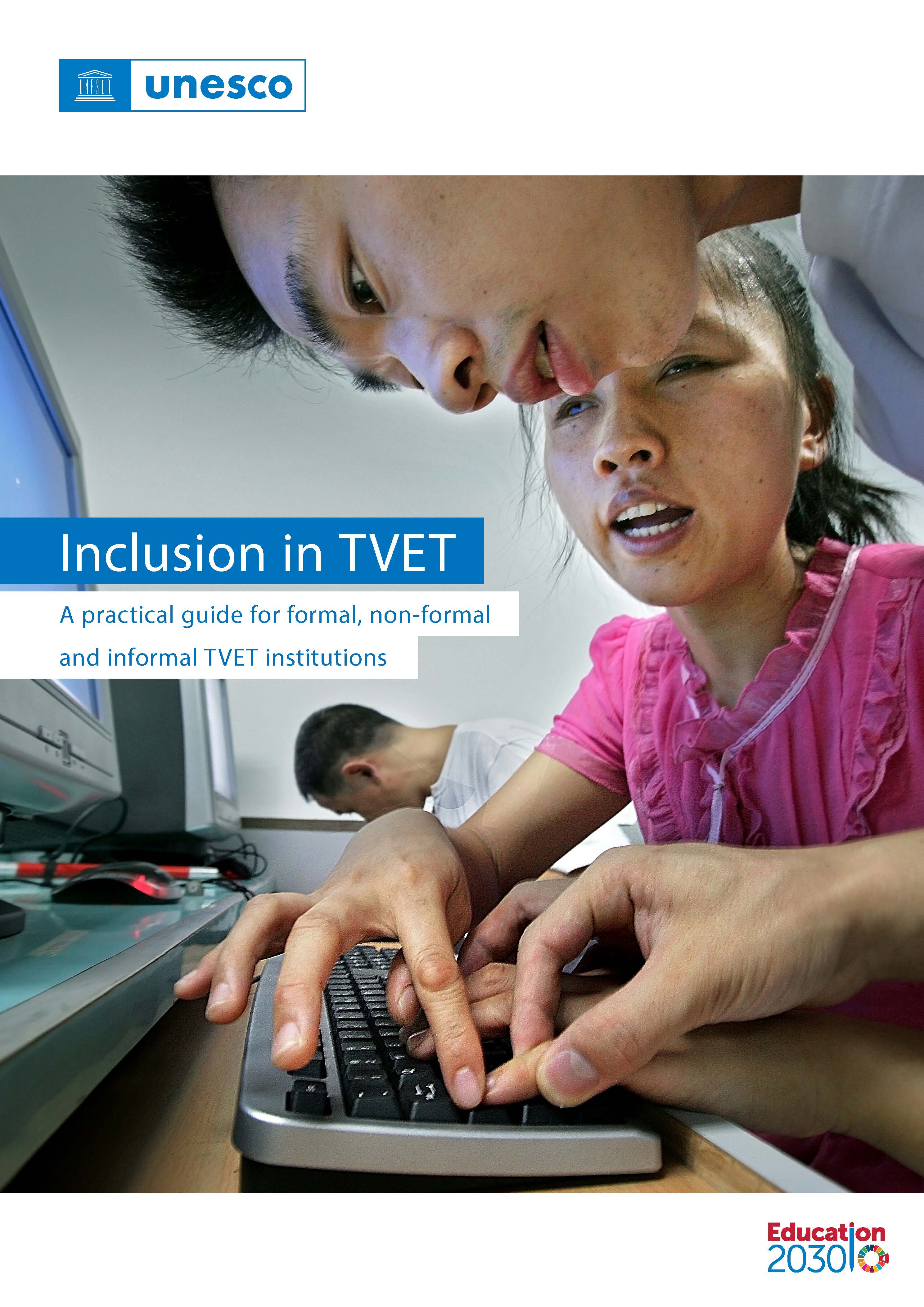


Inclusion in TVET: a practical guide for formal, non-formal and informal TVET institutions
This guide provides actionable strategies for building inclusive TVET systems. It promotes collaboration among NGOs, private sector actors and education providers to ensure no learner is left behind. This hands-on guide shows how to move beyond ident ...
 view
view  read more
 Why inclusion matters in TVET
Disadvantages arise from a complex interplay between a learner’s characteristics and the effects of the social and environmental context in which they exist.
For many disadvantaged learners, their journey through TVET can be challenging, especially when conventional learning systems and environments reward conformity and sameness in access, teaching methodologies, assessment and certification and support systems. These learners often struggle with conventional learning and end up feeling misunderstood, unseen or labelled as difficult, lazy or hopeless. They go through learning thinking of differences as roadblocks. They not only lack support tailored to their needs, but also a sense of safety, mentorship, guidance, self-esteem and confidence.
This exclusion contributes to the increased number of young people worldwide who are not in education, employment or training (NEET). Many youth and adults lack basic literacy skills, millions of girls lack access to the minimum requirements for water sanitation and hygiene, 40% of the global population does not have access to education in a language they speak or understand and few poor rural women complete secondary education, indicating a severe educational gap.
Harnessing differences to create pathways
TVET can bridge this gap by offering targeted support and skills development that lead to improved job prospects and sustainable livelihoods. Inclusion in TVET means meeting the needs of all learners, regardless of their abilities, backgrounds or circumstances.
This approach is grounded in four key principles:
- Equitable access and participation
- Diverse delivery and assessment
- Operational partnerships and collaborations
- Outcomes for decent work
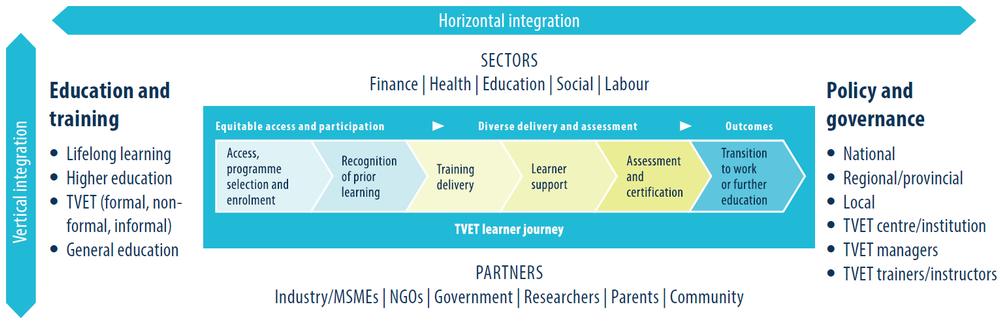
Whole system approach to inclusion in TVET (Source: UNESCO 2025)
TVET institutions, leaders, teachers and trainers play a critical role in unlocking the hidden potential of each learner to transform disadvantages into strengths. They can achieve this through an integrated approach to TVET policies, practice and culture. They can actively create learning environments that are richer, more innovative and more effective for all learners. They can foster a culture where differences are respected, supported and not stigmatized, where learners recognize their value and develop their potential.
UNESCO-UNEVOC’s Inclusion in TVET: A Practical Guide is a comprehensive tool to help formal, informal and non-formal TVET Institutions transition from “What needs to be done” to “How it can be achieved”. TVET institutions can use the guide to:
- Build a shared understanding of inclusive TVET
- Map exclusion across the learner journey
- Conduct an initial inclusion assessment
- Apply strategies for building inclusive TVET Institutions
- Pilot inclusive strategies
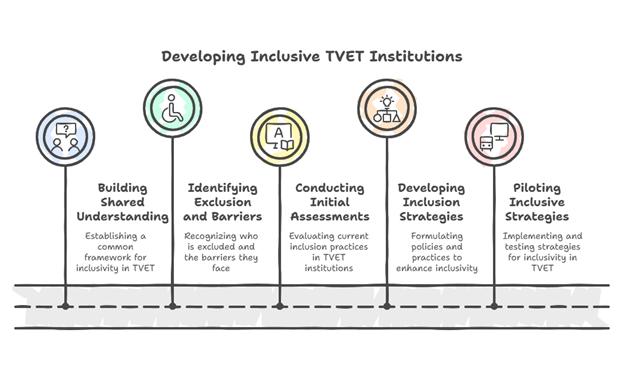 The journey toward inclusive TVET is ongoing. It requires regular reflection, adaptation and growth.
We invite you to use this practical guide as a transformative resource for your context and needs, to implement pilot projects and create environments where every learner is valued, respected and empowered.
Share your story with us: unevoc.inclusion(at)unesco.org
Publications
Related publications
- Technical and vocational education and training for disadvantaged youth
- Boosting gender equality in science and technology - A challenge for TVET programmes and careers
- Human migration and TVET - Discussion paper
- Inclusion in education 2020 GEM report

- Practical approaches to increase inclusion of migrants and refugees in TVET in the Arab States

