Innovation is crucial for TVET institutions to remain relevant as drivers of employability, economic growth and inclusive social development,. According to data from the OECD, 85% of growth comes from innovation, and over 50% depends on skills (OECD, 2004).
TVET systems can no longer operate according to the business-as-usual approach of gradual, progressive evolution driven by policy-makers from the top down. The speed and scale of change call for a radical shift, with TVET institutions increasingly taking the initiative from the bottom up and engaging in the innovation process.
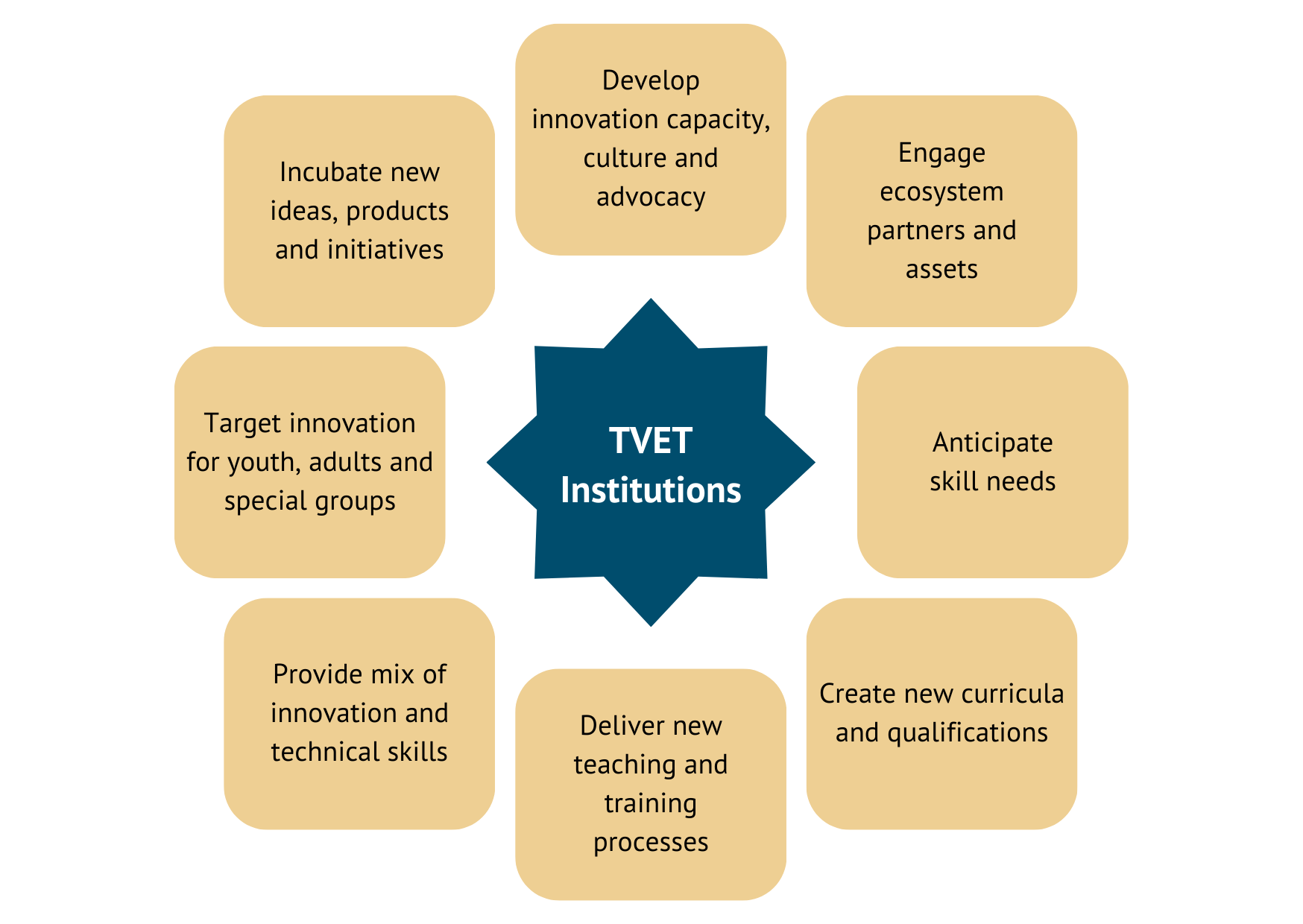
Innovation comprises substantial and systematic evolution in the way TVET is practised in an institution, enhancing its relevance for the changing needs of the economy, society and environment.
About this project
The TVET Innovation Framework: Promoting excellence in Brazil aims to create, frame and strengthen the environments and innovation mechanisms of six members of the Federal Network of Professional and Technological Education (RFEPCT), using UNESCO-UNEVOC’s Innovation Framework. The framework is intended to support TVET institutions in assessing how prepared they are:
- to participate in ongoing innovation processes, and
- to determine whether the institution's ecosystem is favourable to developing knowledge and innovation.
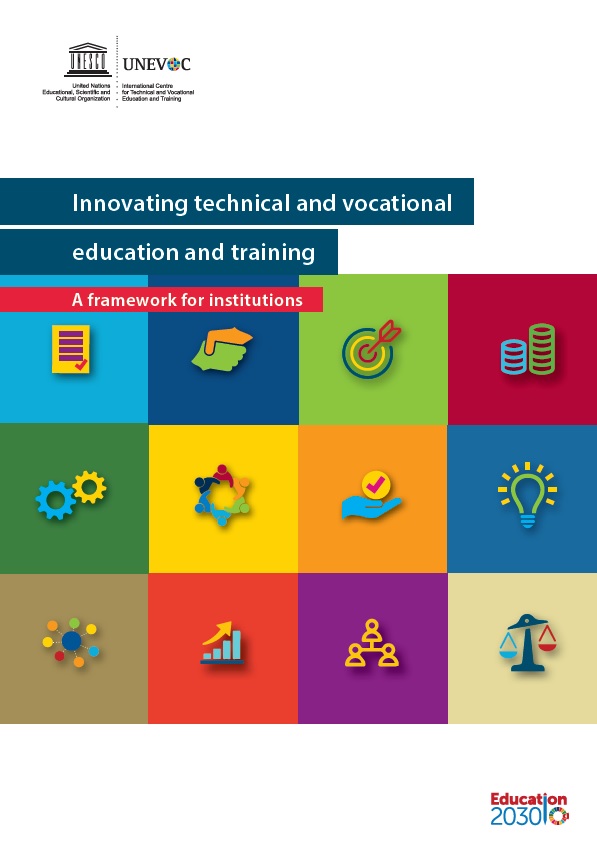

Innovating technical and vocational education and training
A framework for institutions
Global developments including the transition to greener economies, the application of digital technologies in the world of work, and the COVID-19 pandemic, amongst others, are changing the way we live and work. These developments are driving technica ...
 download
  read more
 The project was officially launched on 23 January 2024, when the objectives and the work plan were presented to members of the RFEPCT. After a screening process, six institutions, one per region plus the Fluminense Federal Institute (project partner), were selected to take part in the training. Those institutions are:
- Instituto Federal Fluminense (IFF)
 – Campus Campos Centro (workshop 11-15 March)
- Instituto Federal de Espíritu Santo (IFES) – Campus Vila Velha (workshop 18-22 March)
- Instituto Federal Santa Catarina (IFSC) – Campus Jaraguá do Sul (workshop 15-19 April)
- Instituto Federal Brasília (IFB) - Campus São Sebastião (workshop 22-26 April)
- Instituto Federal do Acre (IFAC) – Rio Branco (workshop 06-10 May)
- Instituto Federal do Maranhão (IFMA) – Campus Monte Castelo (workshop 13-17 May)
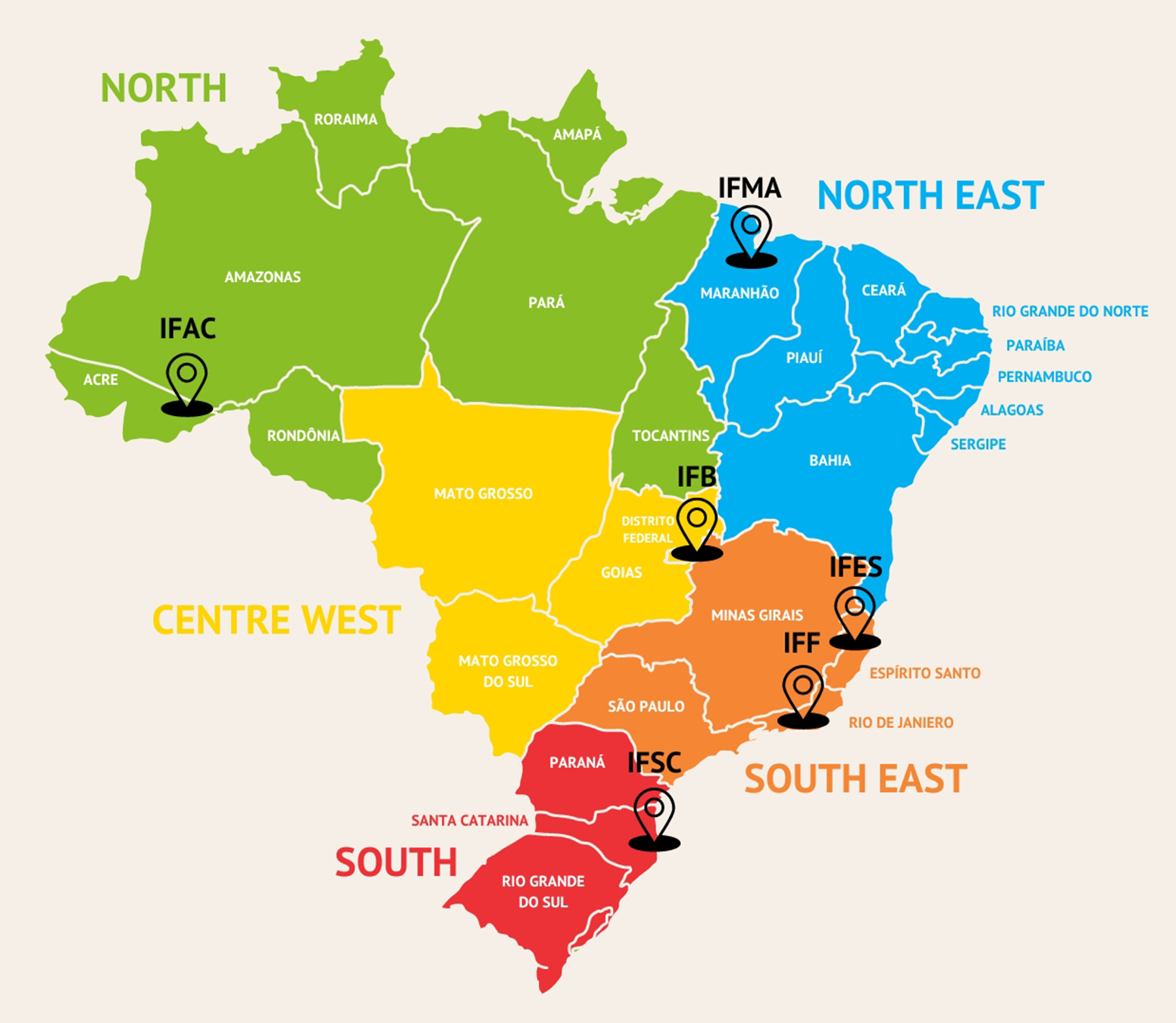 Institutions mapped in the 5 regions of Brazil
The project aims to develop concrete outputs, such as fostering the relationship between TVET institutions and the productive sector, promoting the development of institutional competencies through transversal skills and techniques, and innovating learning processes, products and services. The project’s final goal is to ensure that the institutions participating in the training will have the capacity to support their local ecosystem and inspire other members of the RFEPCT network to pursue the path of innovation.
.png)
and the
and financed by the Ministry of Education of the