


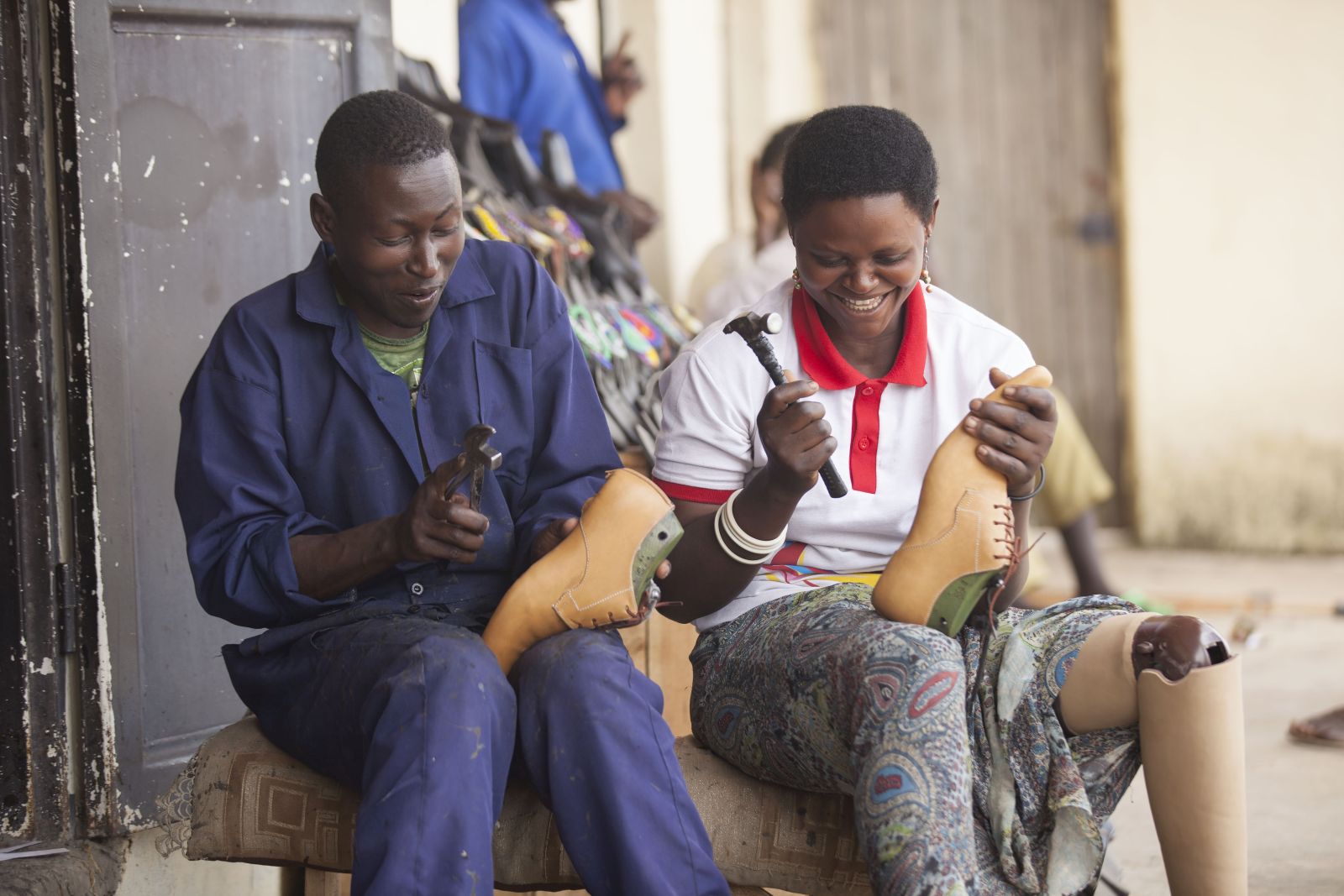
UNESCO-UNEVOC Virtual Conference on ‘Inclusion in technical and vocational education and training’
Organized in collaboration with UNESCO’s Global Education Monitoring Report (GEMR), moderated by Joyceline Alla-Mensah
- When 1 to 12 July 2019
- Where UNESCO-UNEVOC TVeT Forum
- Language English
- Download the background note; GEMR 2020 Concept Note

(1960). Due to its direct link to the labour market, technical and vocational education and training (TVET) can play an important role as an enabler for social mobility by helping young people and adults transition to employment and decent work.
While TVET has the potential to empower disadvantaged groups, this potential has often been underutilized. Globally, marginalized groups continue to face difficulties in accessing or completing TVET programmes.
UNESCO is putting the spotlight on this issue. In the framework of the Sustainable Development Goals, particularly Goal 4 on Quality Education which aims to “ensure inclusive and equitable quality education and promote lifelong learning opportunities for all”, and continuing its work on the Education for All movement, UNESCO has made equity and inclusion one of the three priority areas of its Strategy for TVET (2016-2021). Furthermore, the Global Education Monitoring Report – UNESCO’s flagship publication and comprehensive, analytical and authoritative reference for the global follow-up and review of education – is also focusing on ‘Inclusion and Education’ in its 2020 issue.
In order to deepen the international TVET community’s understanding on this topic, UNESCO-UNEVOC and the UNESCO Global Education Monitoring Report organized a virtual conference to discuss and identify suitable measures to support inclusive TVET.
In line with the upcoming GEMR 2020 Report, this virtual conference stemmed from the premise that inclusive education ‘focuses on the full and effective participation, accessibility, attendance and achievement of all students, especially those who, for different reasons, are excluded or at risk of being marginalized’ (2016 Convention on the Rights of Persons with Disabilities Committee, general comment 4). This conference thus applied a broad concept of inclusive TVET, paying attention not only to inclusion of persons with disabilities but also of other groups who are vulnerable to exclusion.
The insights and evidence gathered in this virtual conference contributed to the 2020 Global Education Monitor Report.
Outcomes
The virtual conference enabled participants to:
- Understand what is meant by inclusive TVET and identify different groups that are particularly vulnerable;
- Explore the role of national legal frameworks and policies/strategies that promote the development of an inclusive TVET system;
- Appreciate different approaches to making TVET programmes inclusive (including in curricula and learning materials and assessment; pedagogical approaches; campus infrastructure; school policies; and career guidance and counselling);
- Identify obstacles to the implementation of programmes for inclusive TVET;
- Discuss the roles of different stakeholders in promoting inclusive TVET programmes;
- Understand the role inclusive TVET can play to facilitate graduates’ transition to the world of work.
 Facebook
 Twitter