


Empowering South Sudan
UNESCO’s mission to revitalize TVET along the lines of greening and gender equality
In 2011, South Sudan gained independence, becoming the world’s youngest nation. Despite its newfound freedom, the country faces numerous challenges. Seventy percent of the population is under 30, yet the adult literacy rate hovers at just 35%, and two-thirds of primary-age children are not attending school. The high unemployment rate among young people is a significant challenge. Women are severely under-represented in many sectors due to weak policy enforcement on gender participation, particularly in education. Ranked 192 out of 193 on the Human Development Index, South Sudan is in dire need of change.
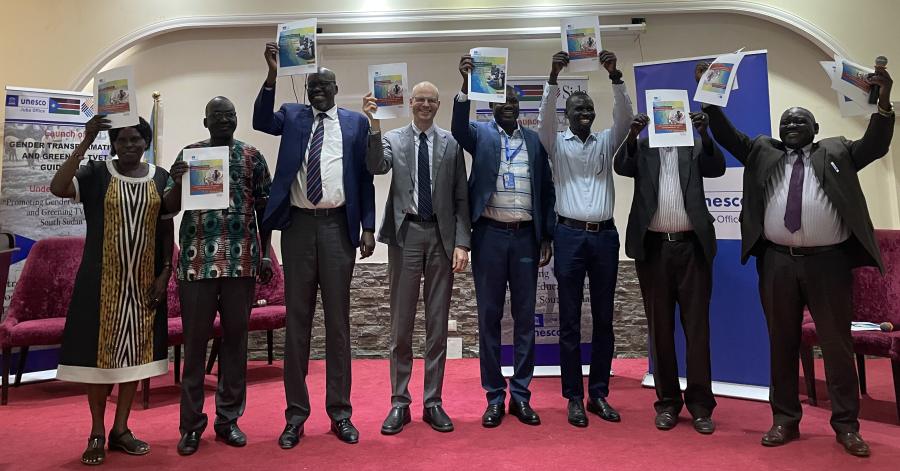
 To address these issues, UNESCO Juba, supported by a USD 11 million grant from the Swedish International Development Cooperation Agency (Sida), launched the "Strengthening TVET in South Sudan" project. This initiative aims to improve TVET, particularly by empowering managers and instructors to integrate climate adaptation and gender equality into their programs. UNESCO-UNEVOC was entrusted to support capacity building and developing guidelines on greening TVET and gender equality. To that end, UNESCO-UNEVOC conducted a baseline study, which identified areas that need strengthening to align TVET in the country with the aspirations of addressing environmental issues, youth employability, peace-building and social inequality. The findings of the study were introduced by Friedrich Huebler, Head of UNESCO-UNEVOC, at a high-level event in Juba on 27 August 2024, alongside draft guidelines to guide TVET institutions in these areas.
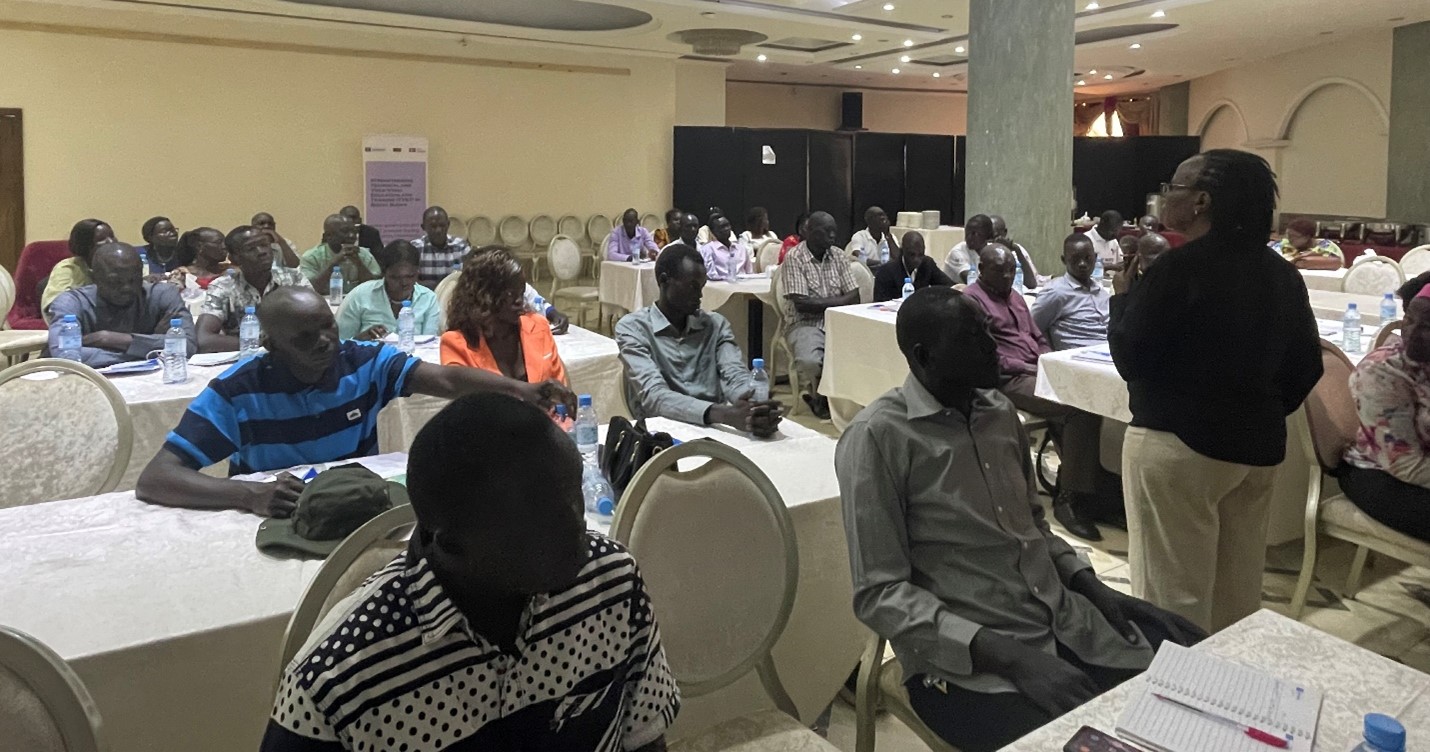
During the same week, over 100 national TVET stakeholders participated in an event to raise awareness of the global TVET reform agenda and the key bottlenecks in the country’s TVET system that could hinder the adoption of new reforms. 80 representatives from TVET institutions in South Sudan received training focused on institutional approaches for greening and gender-focused transformation during a three-day sensitization training programme. Led by experts from the University of Juba and UNESCO-UNEVOC’s Kenneth Barrientos and Priscilla Gatonye, the participants completed the training equipped with action plans and ready to bring positive change to their institutions. The training concentrated on different parts, from understanding greening in the context of South Sudan to what climate change mitigation and adaptation can look like in the context of TVET system-level and institutional approaches. The training aimed to prepare the institutions to address impacts such as food insecurity, flooding, plastic pollution, deforestation, and new technologies, while also enabling the state to give incentives to create jobs in green sectors like renewable energy or waste management.
Engaging with various ministries, UNESCO Juba and UNESCO-UNEVOC explored the status of TVET across South Sudan. Officials from the Ministry of General Education and Instruction, the Ministry of Labour and the Ministry of Higher Education, Science and Technology praised UNESCO’s efforts but highlighted the challenges they face, including outdated equipment, lack of qualified teachers and poor training infrastructure.
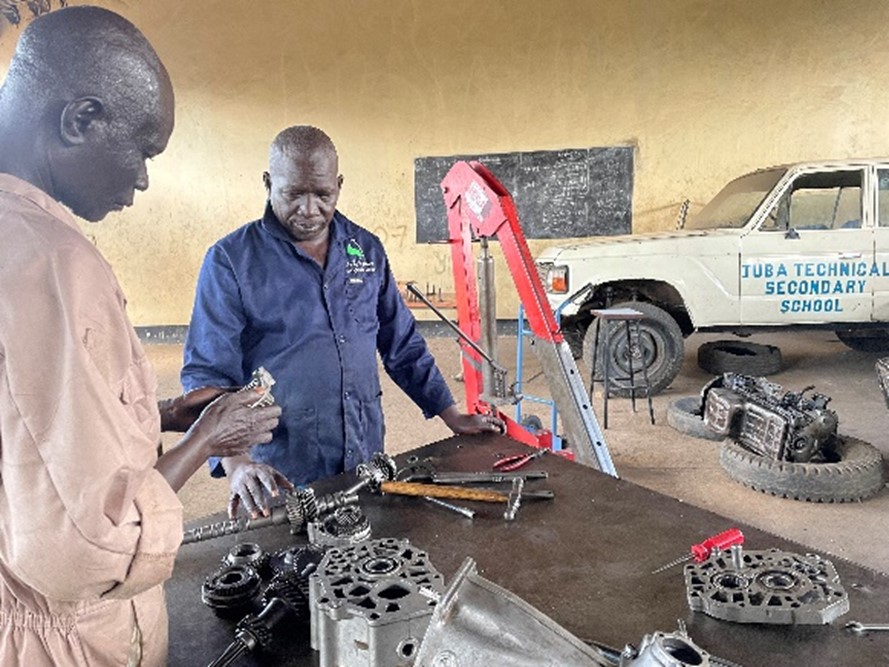
Despite these hurdles, UNESCO leverages the existing practices and training programmes like those at the Multi-Training Centre, Juba Technical College and the Don Bosco Vocational Training Centre, to help identify institutional gaps for improvement, and provide support for addressing these gaps to enable the institutions to deliver high-quality vocational training in carpentry and joinery, auto mechanic, electric installation, welding, fabrication tailoring and more. However, the lack of resources remains a significant barrier to progress, with most institutions struggling to provide students with the necessary skills to thrive in the limited employment labour market and promote self-employment.
Despite the challenging situation, it was inspiring to see the passion of TVET teachers, who, sometimes with extremely limited resources, still educate with great passion and flexibility, doing their best to equip their students to face the challenges ahead while building up South Sudan.
UNESCO-UNEVOC continues to support South Sudan’s TVET sector, hoping to turn these small steps into large strides towards a better future.
For further information, please see our Project page.
 Facebook
 Twitter
