


UNEVOC Network Consolidation Workshop KRIVET
For a successful transit of TVET in East and Southeast Asia
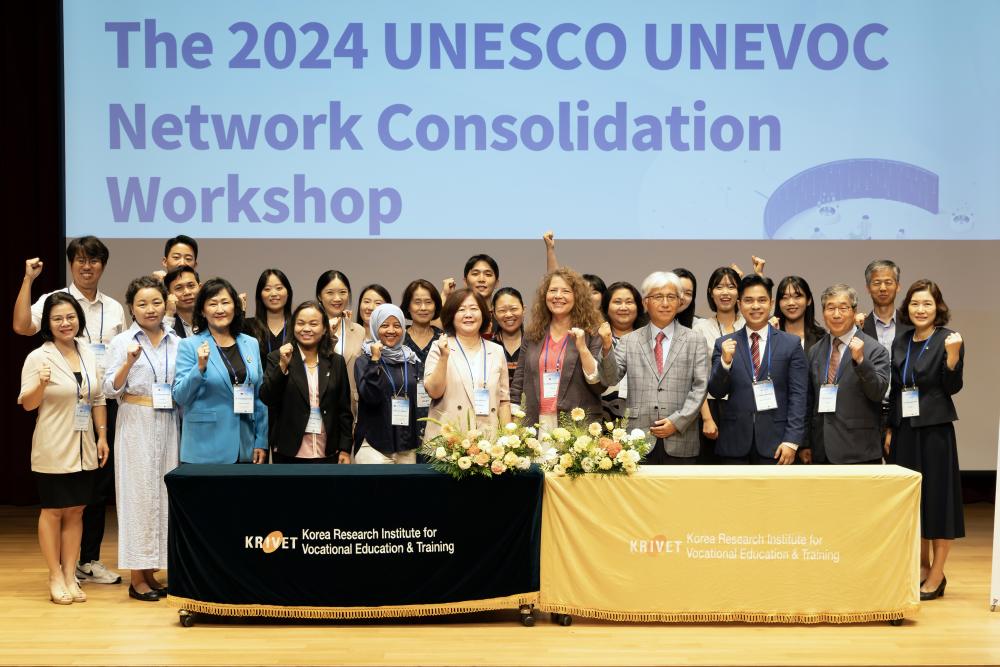
Ms. Hye Won Ko, President of KRIVET, delivered the opening remarks, followed by a congratulatory video from Mr. Friedrich Huebler, Head of UNESCO-UNEVOC. Mr. Jooseop Kim from the Korea Association of Skills and Qualifications presented the keynote speech, diving into the heart of "Innovations in TVET Systems."
Throughout the symposium, presenters from nine UNEVOC Centres across the region shared their experiences and successes. They spoke of their international collaborations on greening TVET, student entrepreneurship projects and ambitious strategies for AI-driven digital transformations. Participants discussed the Korea-ASEAN TVET student exchange project, each speaker offering a glimpse into their centre's initiatives.
Lenny Martini, Regional Focal Point for Asia and the Pacific UNEVOC Network, delivered an insightful presentation on UNEVOC’s Medium-Term Strategy for 2024-2026, outlining key thematic priorities and exploring new collaboration opportunities for the region's UNEVOC Centres.
The event was not just about ideas shared within four walls. KRIVET organized immersive study visits to showcase South Korea’s vibrant TVET ecosystem. The first stop: Chungnam Mechanical Technical High School, located in Daejeon, just 30 kilometers from Sejong. Here, participants marveled at the innovative learning approaches designed to prepare students for careers in the defense industry. Departments focused on digital equipment, smart cities and mechanical design. Students learned through playful, hands-on experiences, using drones, simulators, and AI models before advancing to real machines and tools. The school's close ties with local government, industry associations and universities offer a promising future for its graduates, with guaranteed employment or paths to higher education.
Next, the workshop attendees arrived at the KRIVET office, where Ms HwaChoon Park shared the institute’s ongoing efforts. Since its inception in 1997, KRIVET has been at the forefront of research in TVET policies, qualifications systems and the development of VET programs. The participants were invited to explore the KRIVET museum and review the institute's vast collection of publications, including research reports and the esteemed Journal of Vocational Education and Training.
The study visits concluded with stops at the Textbook Museum and the Presidential Archives, offering participants a deeper understanding of South Korea’s rich educational history and the critical role of TVET in shaping the future.
As the workshop came to a close, there was a sense of accomplishment in the air. The participants had not only shared their own expertise but also forged new connections, ready to return to their centres and apply the lessons learned from their peers and hosts. This gathering, like those before it, would leave a lasting impact on the UNEVOC Network, strengthening the bonds between nations and advancing the cause of technical and vocational education for all.
 Facebook
 Twitter
