


First UNESCO-UNEVOC Global OER Grant Programme
May 2020
Presentation of the five selected OER projects
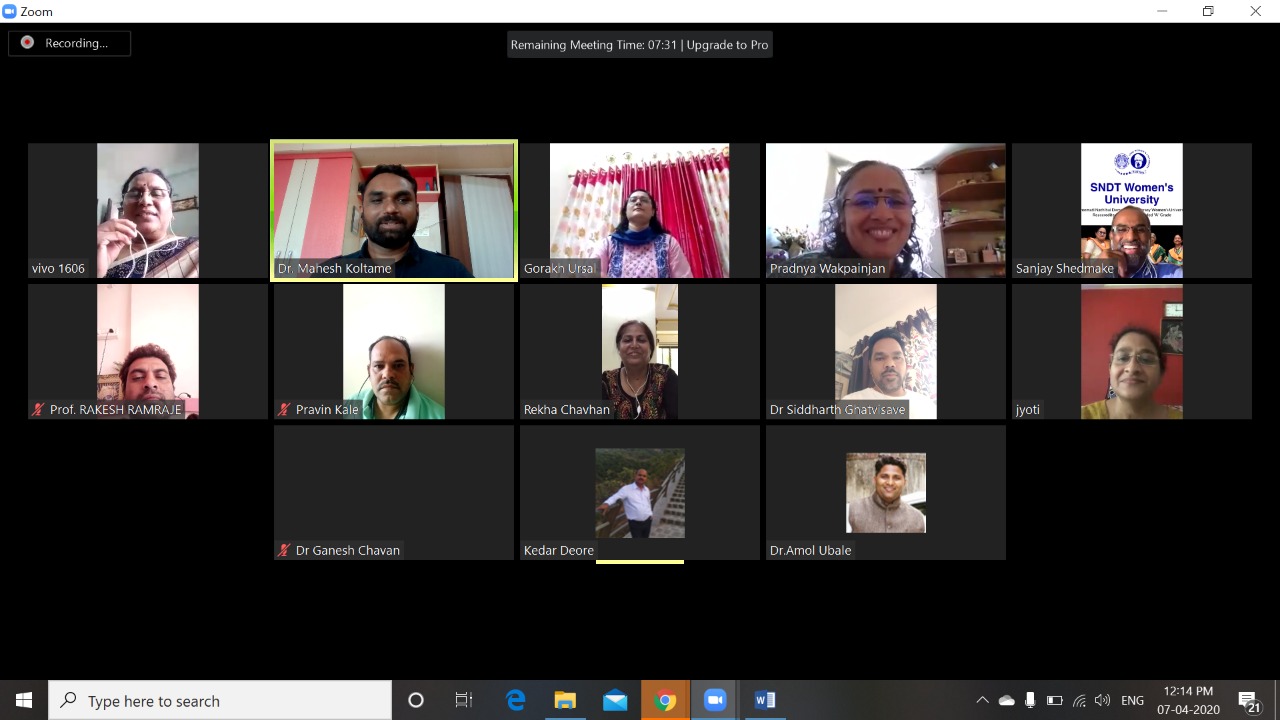
Online workshop on MOOCs writing
Development of school leadership capacities and management skills
Implemented by: P.V.D.T. College of Education for Women , SNDT Women's University, Mumbai, India
Resource language: English
In India, private schools and private coaching centres are facing problems due to a lack of quality school leaders. Traditional school management training courses and intake of these courses are limited and very restricted. The government has organized training only for government teachers and it is very costly. To equip all teachers with modern essential managerial skills, there is a need to design and develop high quality open educational resources (OER).
It is possible to facilitate the training of school principals and managers through a Massive Open Online Course (MOOC).The aim of this MOOC is to develop the skills and knowledge of school leadership and management among practicing principals, and teachers who want to become principals, as well as trainee teachers, and school or coaching centre managers.
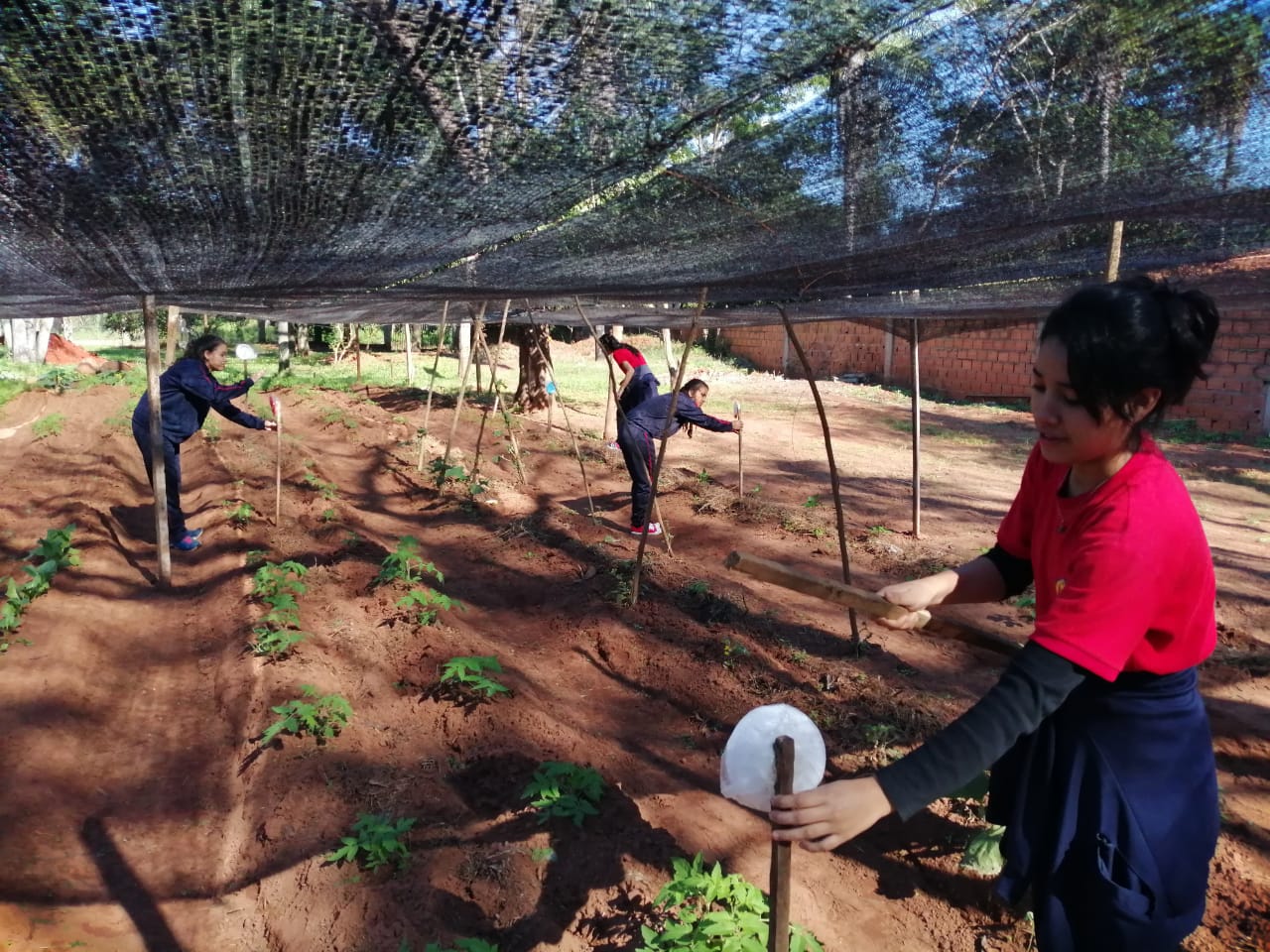
Fundación Paraguaya, School garden supplying the institution
Learning by doing, selling and earning
Implemented by: Fundación Paraguaya de Cooperación y Desarrollo, Paraguay, UNEVOC Centre
Resource languages: Spanish, Guarani, English
This project aims to develop a video-based, horticultural distance course. The course will support entrepreneurship, efficient financial management, and nutritional diets in women between 20 to 60 years old, promoting the use of existing available resources through the bio intensive system production of organic vegetables.
As a result, ten animated videos with audio and subtitles will be produced in three languages, the two national languages of Paraguay, Guaraní and Spanish, and English for international use. These animations will be accompanied with manuals to cover different types of learning. Technology is used here to improve the accessibility of the course for teachers and students in rural areas.
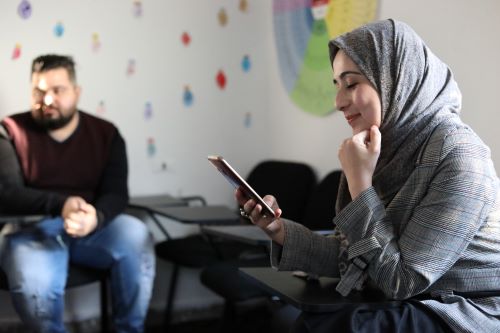
CC BY Kiron Open Higher Education - Improving digital literacy
Living in a digital world - a digital literacy programme
Implemented by: Kiron Open Higher Education, Germany
Resource languages: English, German, French and Arabic
Kiron Open Higher Education is a non-governmental organization (NGO) with a focus on providing learning opportunities to refugees in Germany and around the world. Refugees have often had to interrupt their learning pathway because of social emergencies. The students at Kiron tend to be around 30 years old, which means that they are unlikely to have received any prior digital training. Providing them with these skills is a significant route to empowering them to search for, obtain and be successful in the job market. At the same time, and in line with the principles of OER, the course will be open to other participants and it is expected that it will be of use to both young people in many communities at the start of their careers and to older people, who need ‘upskilling’ for their current or future careers.
The course to be developed builds on an existing programme, which is already offered by Kiron in collaboration with Lübeck University, and - as is increasingly the case with other courses provided by Kiron - is openly licenced (CC-BY). This programme has been shown to be popular, but it needs to be significantly updated. It is being updated so that it refers to current use cases, can be offered in multiple languages (English, German, French and Arabic) and is accessible and usable to the many users who will be accessing the course via a mobile phone (mostly Android).
The limitation, which this grant will be used to solve, is that Kiron uses its own learning management system (Kiron Campus). This means that even if the programme is openly licenced, its ‘technical openness’ for others is restricted. Kiron thus uses the grant in order to develop a common cartridge output format for the programme. This will make the course truly open.
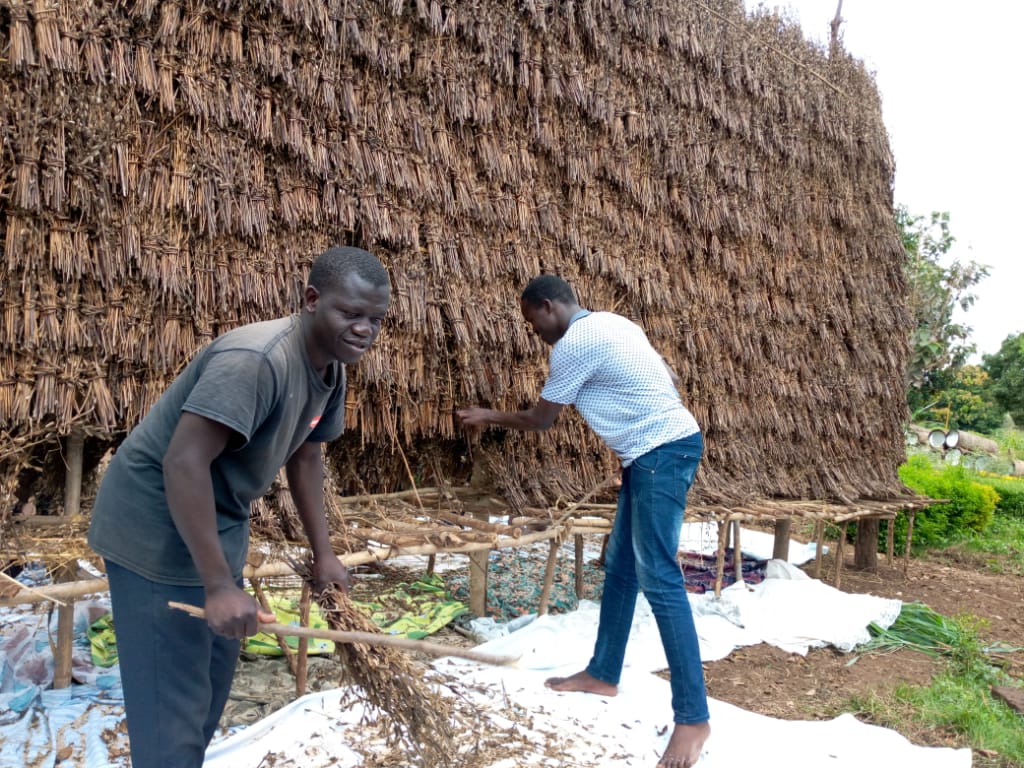
CC BY Hussein Ali - Removing dry simsim from cobs
Greening Agriculture Value Chain for Sustainable Post-Harvest Loss Management in the East African Community
Implemented by: Masinde Muliro University of Science and Technology (TVET accredited University), Kenya
Resource languages: Swahili, French and English
The goal of the project is to enhance food and nutritional security among the East African Community by applying green technologies in sustainable post-harvest loss management for agricultural products. The concept of this online module describes an integrated approach to dealing with post-harvest losses by bringing together all possible methods across the entire agricultural value chain that contribute to reduced levels of losses occurring during and post harvesting of grains, fruits, vegetables, oil seeds and all food crops, livestock and fisheries products.
The target audience includes horticultural farmers, agricultural extension officers, agricultural supply chain staff and personnel from academia, TVET instructors in agriculture and agricultural value chain management, government and non-governmental institutions, and private sector entities involved directly or indirectly in the horticultural post-harvest industry in six East African countries.
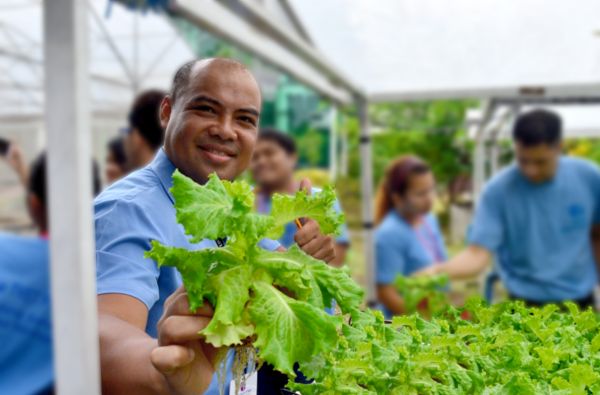
© TESDA
eLearning TVET Course: Aquaponics Module
Implemented by: Technical Education and Skills Development Authority (TESDA), Philippines, UNEVOC Centre
Resource language: English
Recognizing the critical role of a strong agricultural sector and a skilled population in building national resilience, the eLearning TVET course on Aquaponics aims to promote urban farming and sustainable practices.
Through the provision of a massive open online course (MOOC) that can also be used as material for remote and flexible TVET programmes for agriculture, the project aims to increase the absorptive capacity of TVET in the country, enhance the quality of instruction to impact and reach a greater number of stakeholders in different areas/sectors, contribute to the “global pool of culturally diverse, locally relevant, gender-sensitive, accessible, educational materials in multiple languages and formats”, and showcase/promote TVET in the Philippines through the development of quality-assured and competency-based training courses and modules.
31 January 2020
Five projects have been selected
Following two weeks of extensive discussions and a challenging selection process, the selection committee has chosen five projects.
The selection process was carried out in three stages. In the first step, all submissions were checked against the criteria of the call. Out of 239 submissions from 57 countries, 61 submissions met all criteria. In the second stage, each committee member thoroughly reviewed the first selection submissions, until further reducing the shortlist to 20. From the resulting shortlist of 20 excellent proposals, the 5 recipients were selected after deep and substantial discussion.
UNESCO-UNEVOC would sincerely like to thank all participants who submitted their proposals. The enormous amount of high-quality proposals highlights the many issues at stake in TVET across a very broad range. Furthermore, they indicate that there is an awareness of the significant role of Open Educational Resources in TVET as we work to achieve the Sustainable Development Goals.
As Robert Schuwer put it: "The outcome is so overwhelming that it must persuade funding organizations to invest more in Open TVET projects." Ben Janssen remarked: "The high level of quality is striking. It is very unfortunate that only 5 proposals could be selected."
The committee was composed of the following members:
- Prof Robert Schuwer, UNESCO Chair on OER at Fontys University of Applied Sciences
- Ben Janssen, Director and Founder of Open Ed Consult
- Pascal Mabille, President of the TVET Academy
- Max Ehlers, Associate Officer IT, UNESCO-UNEVOC
13 January 2020
Thank you for an overwhelming response! We have received more than 230 submissions.
December 2019

SUMMARY
Open Educational Resources (OER) - learning, teaching and research materials in any format and medium that reside in the public domain – and Open Educational Practices (OEP) around the creation, use, and management of OER to improve quality and innovate education are cornerstones of modern day education and training. The UNESCO–UNEVOC Global OER Grant Programme provides 5 grants of up to 5,000 USD to institutions that develop, adapt or curate such resources to promote open practices in Technical and Vocational Education and Training (TVET). Applications are invited through an open call for proposals as per the deadline below:
Key Dates
Deadline for proposals: 12 January 2020 (closed)
Grant recipient announcement date: 31 January 2020
Project rollout and implementation: between February and September 2020
About the UNESCO-UNEVOC OER Grant programme
The Recommendation Concerning Open Educational Resources, adopted by the UNESCO General Conference in November 2019, puts forward the following expectation:
"In building inclusive Knowledge Societies, Open Educational Resources (OER) can support quality education that is equitable, inclusive, open and participatory as well as enhance academic freedom and professional autonomy of teachers by widening the scope of materials available for teaching and learning."
It defines as one objective "to develop a global pool of culturally diverse, locally relevant, gender-sensitive, accessible, educational materials in multiple languages and formats."
With our Global OER Grant Programme, we aim to promote OER and motivate the global TVET community to develop OER and related initiatives and practices. A study commissioned by UNESCO-UNEVOC in 2018 on the use of OER in TVET found that the OER concept was still widely unknown among TVET stakeholders. At the same time it was seen as highly promising for improving access to high-quality TVET. Our call for proposals is directed to institutions (e.g. TVET schools, training providers, teaching and learning centres, teacher training institutions, libraries, OER working groups, etc.).
What type of projects are covered?
The OER/OEP must concern a subject area linked to Technical and Vocational Education and Training. We explicitly welcome the development of resources not only for formal education streams, but also for informal settings. The grant may be used for, but is not limited to:
- Creation of new OER for TVET including textbooks, online courses, curricula, animations, multimedia resources etc.
- Adaptations, localizations and repurposing of existing OER on the basis of existing resources, for example adaptations and translations of existing OER, including textbooks, online courses, curricula, animations, multimedia resources etc.
- Creation or introduction of platforms for sharing of OER/OEP
- Turning existing (closed) resources into open resources
Although this call for proposals is only issued in English, we do encourage the creation of resources and open practices in other languages. However, we need to be able to assess it, so a summary of the output needs to be made available in English or French (translation can be paid from the grant).
What type of projects / proposals will not be considered?
The focus of the Grant is on the development of OER and OEP allowing users to freely retain, copy, modify, remix, and/or redistribute open content. Proposals containing the following will not be considered:
- Purchase of hardware or tools
- Proposals that do not suggest to deliver an output to be released with an open licence, such as a Public Domain or Creative Commons license, preferably CC BY.
Who can apply?
The Global OER programme is open for institutions only. Individuals with innovative ideas are welcome to partner with local institutions, as payments can only be made to institutions (including NGOs). Preferably, the implementation is carried out in cooperation or with support of a UNEVOC Centre. A selection committee comprising of Robert Schuwer (Fontys University, Netherlands), Ben Janssen and other international partners will evaluate proposals meeting the following criteria:
- the final product has to be a tangible output that can be shared with the global OER community (an open resource or a guide on Open Educational Practices that can be followed as example by others) via UNESCO-UNEVOC
- the output has to be released with an open licence, such as a Public Domain or Creative Commons license, which conforms with the 5R requirement, i.e. allows others to freely retain, copy, modify, remix, and/or redistribute the content
- the expected contribution to a learning outcome should be described clearly
- the proposal clearly describes how the requested grant will be used and what expenses it will cover
- proposals need to indicate the in-kind contribution and any other resources necessary to complete the project, such as the assistance of students, instructors and trainers, instructional designers, multimedia developers, librarians, copy editors etc.
How to apply
THE CALL FOR PROPOSALS IS CLOSED (deadline was 12 January 2020).
Further information
There are plenty of helpful resources on OER and OER development available online. Some key UNESCO and UNEVOC resources listed below provide good starting points.
- More information on OER is available on the UNEVOC website.
- Recommendation Concerning Open Educational Resources
- Open Educational Practices: Open Education Quality Initiative (OPAL), 2011. OEP Guide: Guidelines for Open Educational Practices in organisations
Contact
If you have any further questions, please get in touch with us at mailto:oer.tvet@unesco.org.

