



Anne Kamonjo, MoE Kenya
Why does greening TVET matter?
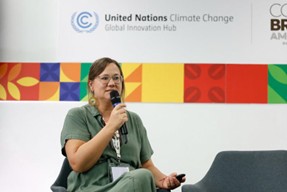
Julia Giebeler Santos, GIZ
The session created a platform to engage policymakers, civil society, non-state actors and youth in how TVET can drive the climate agenda, and shared examples of initiatives from Brazil and Kenya, among others.
The key messages were:
- Skills are climate enablers - There is no climate transition without a skills transition. Current gaps in workforce readiness threaten the pace of green transformation.
- There is a need to learn from and scale up future-oriented approaches that work - SENAI Brazil showcased its foresight methodology for anticipating labour market trends and designing new training programmes in renewable energy, circular economy and bioeconomy. This approach reduces mismatches and prepares workers for emerging green jobs such as biorefinery operations and hydrogen production.
- Inclusive transition must be at the heart of climate action - GIZ’s Professionals of the Future project highlighted strategies to improve employability for women and vulnerable groups through modular, demand-driven courses and active labour market measures.
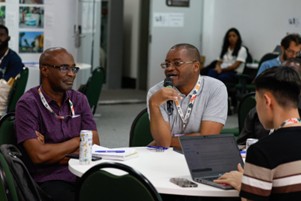 The event also provided an avenue to share the latest UNESCO Greening Communities Guidance
 , which is a new resource that demonstrates how local engagement and futures literacy can bridge the gap between climate policies and lived realities, fostering resilience at the grassroots level.
Additionally, the Hub’s core objective was reinforced — strengthening institutional and human capacities to deliver climate solutions. Making green TVET transformations can unlock pathways for decent work, social equity and environmental stewardship. Greening TVET is not an option, it is a necessity for future-proofing societies.
The session called upon governments, industry and education partners to invest in skills as a cornerstone of climate strategies.
Visit the 7th Capacity Building Hub on the COP30 website to learn more.
 Facebook
 Twitter
