


Pratiques innovantes et prometteuses dans l’EFTP
 En savoir plus sur les trois types de pratiques figurant dans notre base de données
 En savoir plus sur les trois types de pratiques figurant dans notre base de données
 Pratiques d’innovation et d’apprentissage – les pratiques d’innovation et d’apprentissage
  Pratiques innovantes i-hubs – les pratiques innovantes i-hubs sont compilées en collaboration avec les partenaires du projet "Skills for innovation hubs" et basées sur le concept d’innovation tel qu’il est décrit dans le
  Pratiques prometteuses – des pratiques d’EFTP du monde entier ont été mises en œuvre pour relever les défis émergents et contribuer à améliorer l’enseignement et l’apprentissage dans l’EFTP dans une perspective inclusive.
More Women in ICT
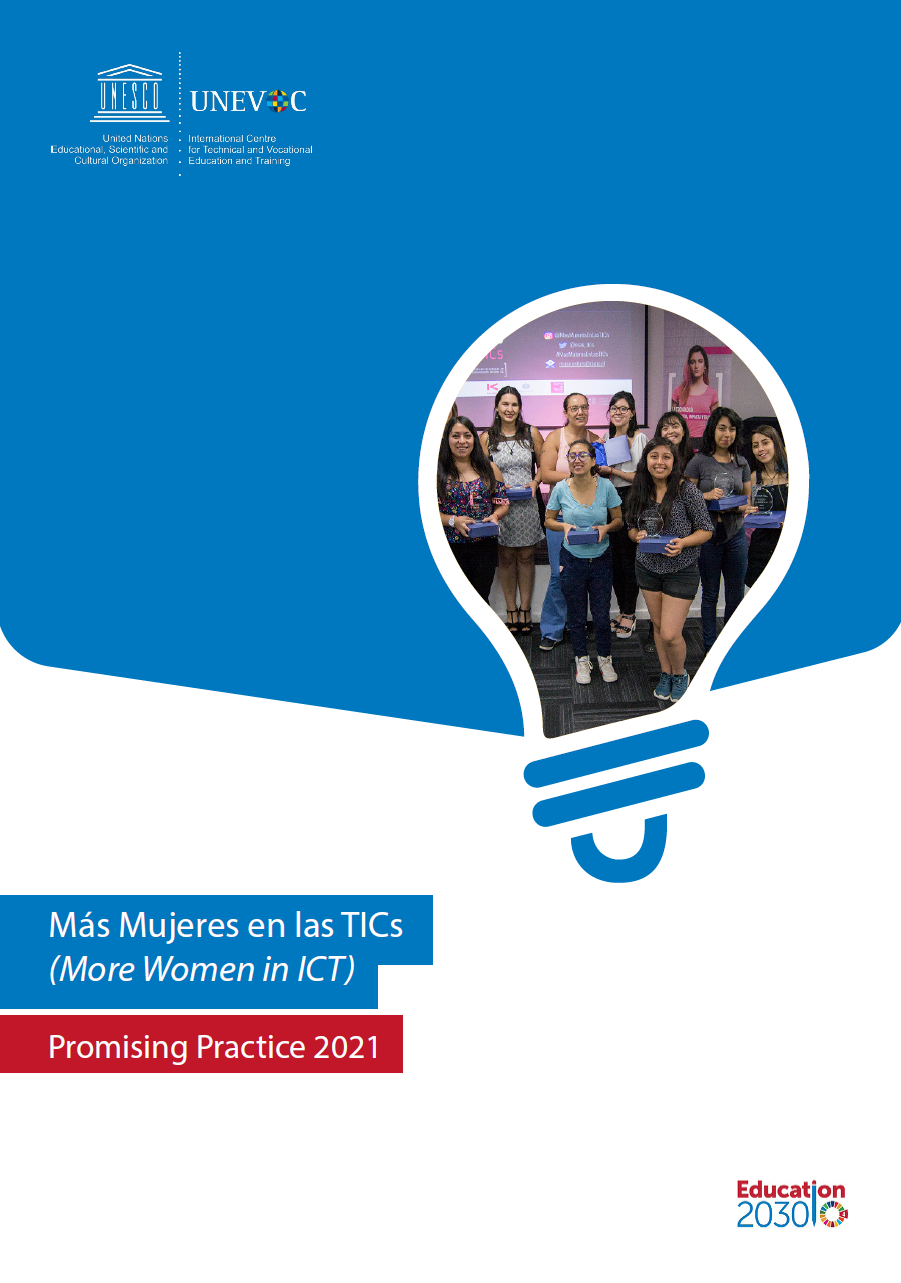
The ICT sector has grown rapidly in recent decades, and with continued expansion forecast, it is an area of high employability and opportunity. In Chile, and indeed globally, however, there is a large gender gap. Just 5% of those working in ICT in Chile are female (compared to 24% globally) and only 10% of those currently in training are female – figures that have not changed in more than 10 years.
Recognizing the stark gender inequality, the ICT School of Duoc UC – with presence in three regions and almost 14,000 students – has focused its efforts on increasing the number of girls and women in ICT. In collaboration with a number of institutions, they are working to reduce this gender gap.
The pandemic forced the implementing team to be flexible in the face of contingencies and to focus on a largely virtual workspace. This was seen as an opportunity to scale-up the initiative to other regions of the country without multiplying implementation costs and subsequently contributed to a large uptake in enrolment of new students in the programme.
| Institution: | Duoc UC |
| Pays: | Chile |
| Focus: | COVID-19 response , Digitalization and future of TVET , Equity and inclusion |

*Clause de non-responsabilité : l'UNESCO-UNEVOC ne cautionne aucune des pratiques incluses dans cette base de données et n'est pas responsable de leur gestion ou de leur mise en œuvre.

