


Pratiques innovantes et prometteuses dans l’EFTP
 En savoir plus sur les trois types de pratiques figurant dans notre base de données
 En savoir plus sur les trois types de pratiques figurant dans notre base de données
 Pratiques d’innovation et d’apprentissage – les pratiques d’innovation et d’apprentissage
  Pratiques innovantes i-hubs – les pratiques innovantes i-hubs sont compilées en collaboration avec les partenaires du projet "Skills for innovation hubs" et basées sur le concept d’innovation tel qu’il est décrit dans le
  Pratiques prometteuses – des pratiques d’EFTP du monde entier ont été mises en œuvre pour relever les défis émergents et contribuer à améliorer l’enseignement et l’apprentissage dans l’EFTP dans une perspective inclusive.
The TVET Database
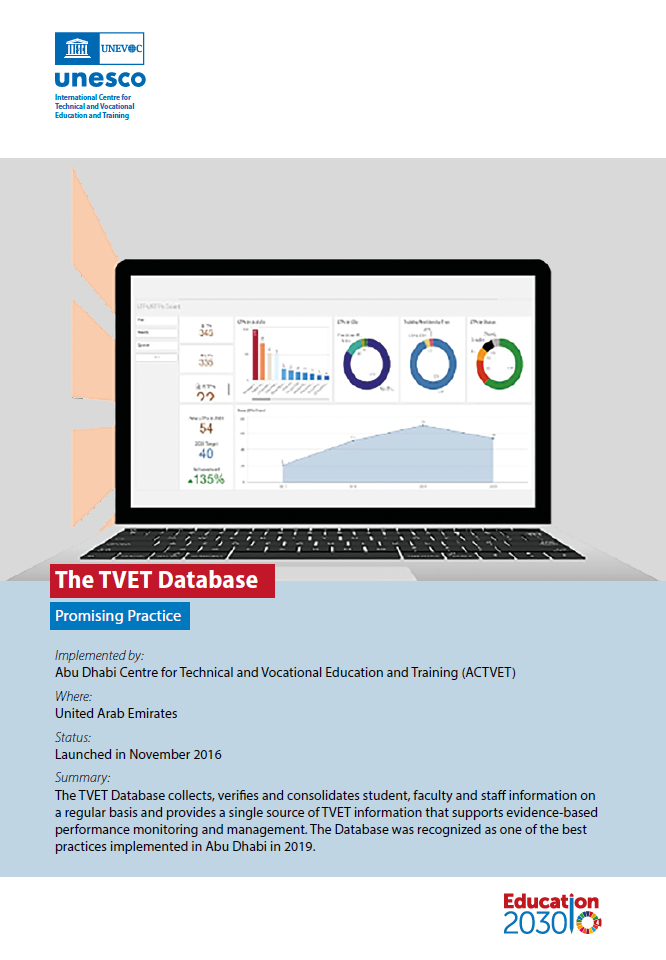
There are 31 campuses with different student records systems existing within the ACTVET structure. To collect, consolidate, verify and report, it requires proper governance and a framework in place to ensure compliance of data transfers, accuracy of data and ownership of content.
ACTVET believes that innovation is an integral part of the TVET sector. Therefore, the institution made an informed decision to develop a fully automated TVET database that ensures the accuracy of data, integrated in one platform to create greater insight and visibility for top management and decision-makers.
The TVET Database provides a holistic and realtime overview about the performance of the different departments and entities within the ACTVET system. Information contained in all TVET Database dashboards are used as input to the Strategic Plan of ACTVET.
| Institution: | Abu Dhabi Centre for Technical and Vocational Education and Training (ACTVET) |
| Pays: | United Arab Emirates |
| Focus: | Digitalization and future of TVET |

*Clause de non-responsabilité : l'UNESCO-UNEVOC ne cautionne aucune des pratiques incluses dans cette base de données et n'est pas responsable de leur gestion ou de leur mise en œuvre.

