


Reimagining skills development in Uzbekistan
TVET is gaining renewed momentum in Uzbekistan, driven by an ambitious reform agenda and a strong national commitment to skills development.
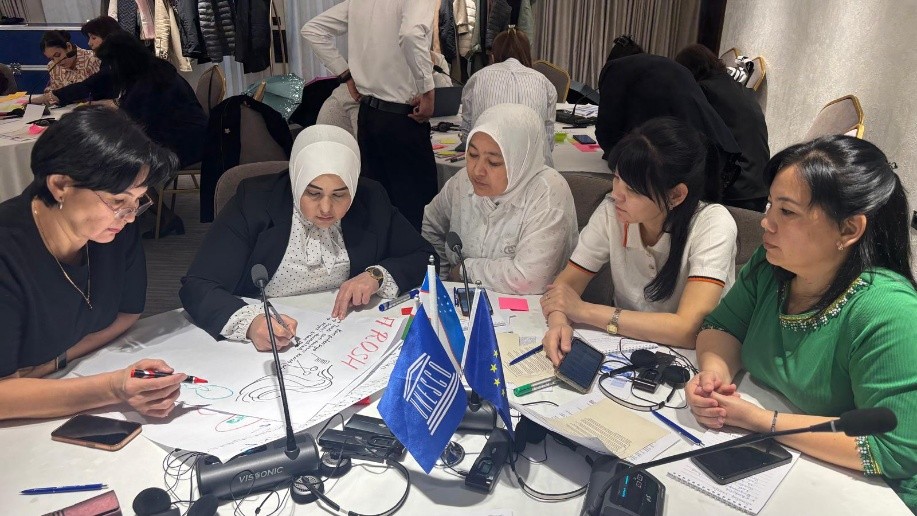
In 2025, the Vocational Education Agency (VEA) was established under the Ministry of Higher Education, Science and Innovation (MHESI). Since then, UNESCO‑UNEVOC has been working with the UNESCO Tashkent Office and national partners through the EU-funded ‘Skills Development for Employability in Rural Areas of Uzbekistan’ project to strengthen skills develop in Uzbekistan.
From January to March 2026, UNESCO launched a series of hybrid capacity‑building activities to support the country’s ongoing TVET transformation. These activities built on earlier institutional visits to tehnikums in Tashkent, Namangan, Samarkand and Republic of Karakalpakstan, where UNESCO teams carried out assessments and long‑term strategic planning.
Strengthening capacities through online learning
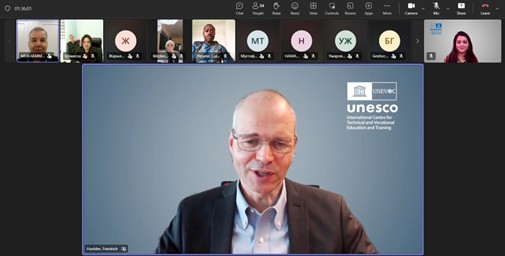 The capacity‑building series began with an online workshop that brought together TVET leaders, senior managers, policymakers and representatives from MHESI, the Institute for the Development of Vocational Education (IDVE), as well as TVET practitioners, teachers and trainers from selected public TVET institutions.
Following the online sessions, a self‑assessment exercise helped participants deepen their understanding of the theoretical concepts and reflect on how these apply within their own institutional contexts. Coaching and mentoring support was also provided to enable participants to apply the knowledge gained to their practical day-to-day responsibilities.
In-person training
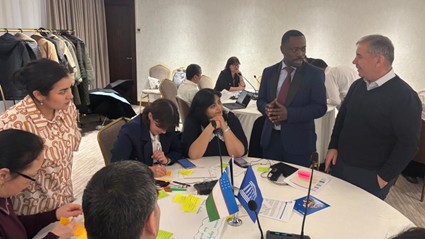
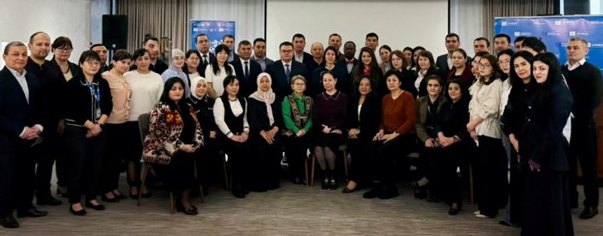
On 3 and 4 March 2026, 39 TVET teachers and practitioners gathered in a workshop to examine how competency-based education and training (CBET) principles can reshape curriculum design, classroom practice and assessment. Through discussions and hands‑on activities, participants reimagined teaching and learning in the context of evolving technologies, changing job roles and increasing industry expectations.
Opening remarks were delivered by Sara Noshadi, Head of UNESCO in Uzbekistan; Olivier Pieume, Chief of the Technical Cooperation Unit at UNESCO-UNEVOC; and Shikhnazar Sharafuddinov, Deputy Director of the Vocational Education Agency of Uzbekistan. Attendees included Bakhtiyor Shayqulov, Deputy Director of the Institute of Pedagogical Innovation (UNEVOC Centre), along with specialists from 10 tehnikums across the country.
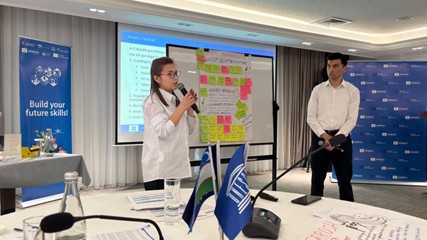
On 5 March, a workshop for TVET leaders and policymakers brought together 19 participants to examine institutional and systemic challenges affecting the implementation of ongoing reforms. Participants included directors from the four partner tehnikums of the UNESCO–EU TVET project, as well as the Head and two representatives of the regional departments of the VEA from the Republic of Karakalpakstan, and the Namangan and Samarkand regions.
The workshop focused on strengthening management capacities through sessions on results‑based management and results‑based financing approach in TVET, complemented by discussions on deepening private sector engagement and models of public–private partnerships, including cooperation modalities under UNESCO’s Global Skills Academy.
Opening remarks were delivered by Sara Noshadi, Head of UNESCO in Uzbekistan, Sakhiba Kazakova, Director of the Institute of Pedagogical Innovation (UNEVOC Centre) and Nodir Irgashev, Head of the Department for Accreditation of TVET Institutions at the National Agency for Quality Assurance in Education. The workshop also welcomed representatives from the Deutsche Gesellschaft für Internationale Zusammenarbeit (GIZ), NIRAS Group, and the Internationale Zusammenarbeit des Deutschen Volkshochschul-Verbandes e.V. (DVV International).
A key highlight was the presentation of pilot projects. These initiatives stemmed from the technical assistance provided by UNESCO, which allowed each institution to identify priority actions and strategic directions on their pathway toward becoming hubs of innovation and excellence.
The workshops offered an important platform for TVET centres to share their aspirations and explore the practical steps needed to enhance the quality, relevance and innovation of their TVET sector.
The relevance of the programme content, the high training of the organizers and interactive methods in the training process have further increased its effectiveness. I wish that such programmes will continue consistently in the future. – Participant from Samarkand
 Facebook
 Twitter
