| |
| Day 1, 27 April 2021
|
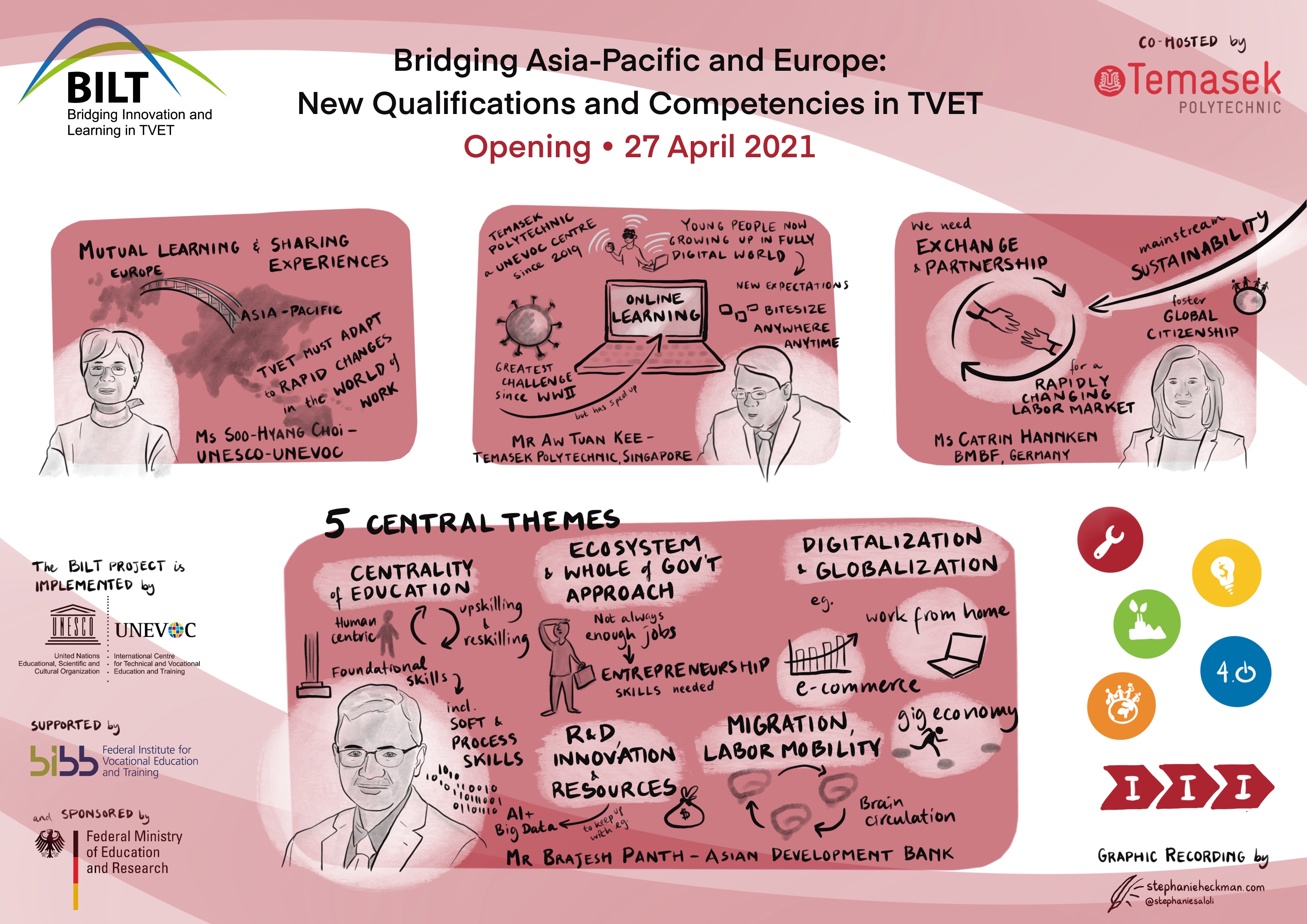 | Welcome remarks
Ms Soo-Hyang Choi, Director, UNESCO-UNEVOC
Mr Aw Tuan Kee, Senior Director, Temasek Polytechnic, Singapore
Ms Catrin Hannken, Deputy Director-General for Vocational Training, Federal Ministry of Education and Research (BMBF), Germany
Key note
Mr Brajesh Panth, Chief, Education Sector Group, Asian Development Bank, on  "Workforce Development in Light of IR4.0, Educational Levels, and Migration" "Workforce Development in Light of IR4.0, Educational Levels, and Migration"
Objective: understand the major trends impacting the world of work in Asia and how differences in technology, educational levels and migration affect the regional economy.
|
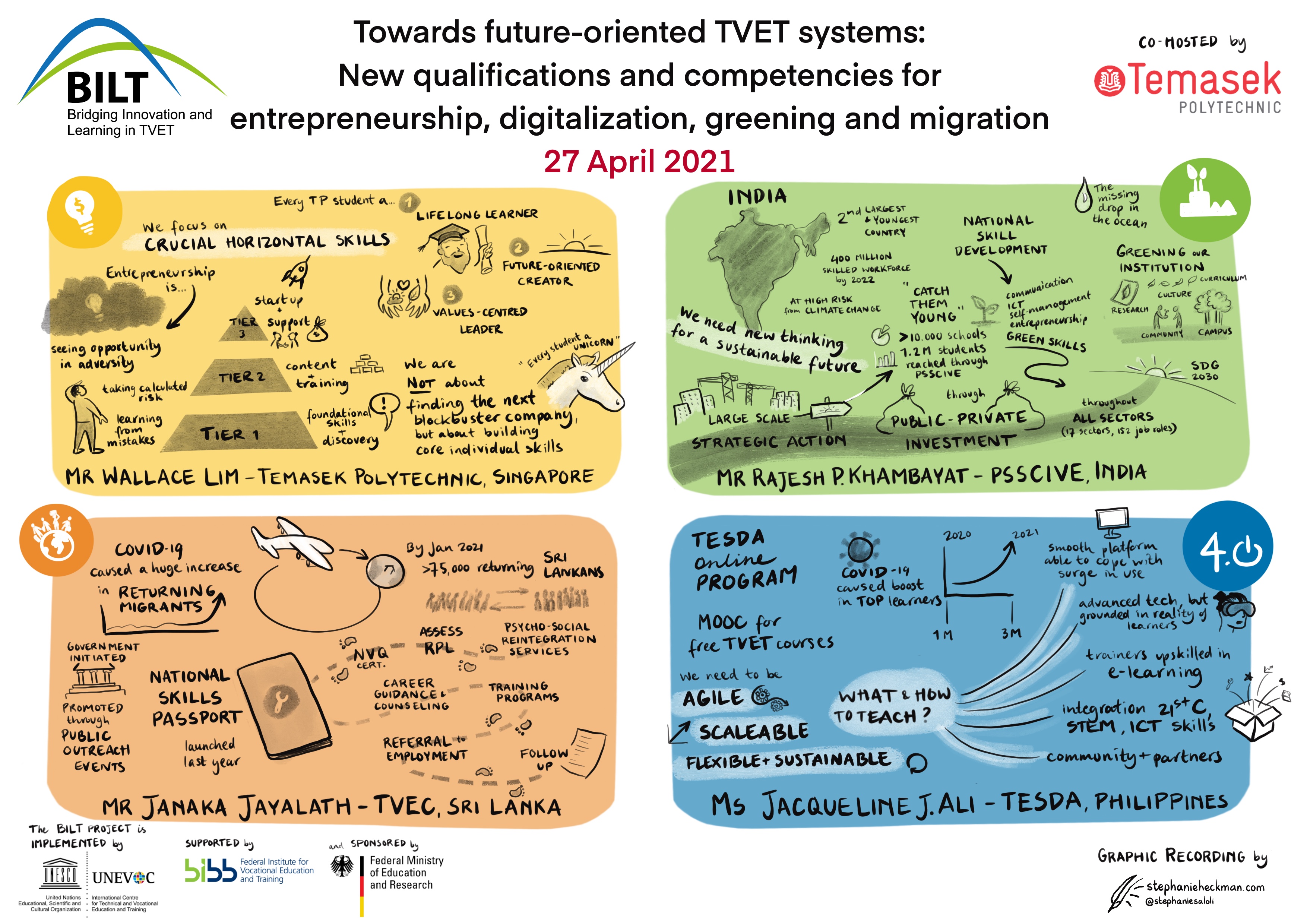 | Towards future oriented TVET systems: New qualifications and competencies for entrepreneurship, digitalization, greening and migration
Moderated by Ms Jolien van Uden, Human Capital Development Specialist – Innovative Teaching and Learning, European Training Foundation (ETF)
Objective: present innovative practices that address the themes of digitalization, greening, entrepreneurship and migration, highlighting relevant aspects related to the identification, integration and implementation of new qualifications and competencies.
Presented by:
- Entrepreneurship: Mr Wallace Lim, Director of Innovation and Entrepreneurship Department, Temasek Polytechnic, Singapore, on “Framework for Entrepreneurship Training in Temasek Polytechnic”
- Greening: Mr Rajesh P. Khambayat, Joint Director, PSS Central Institute of Vocational Education, Bhopal, India, on “Advancing Vocational Education and Training in Indian Schools”
- Migration: Mr Janaka Jayalath, Deputy Director General, Tertiary and Vocational Education Commission (TVEC), Sri Lanka, on “Skilling Returning Migrant Workers Program”
- Digitalization: Ms Jacqueline J. Ali, Supervising Technical Education and Skills Development (TESD) Specialist, Technical Education and Skills Development Authority (TESDA), Philippines, on “TESDA Online Program (TOP)”
|
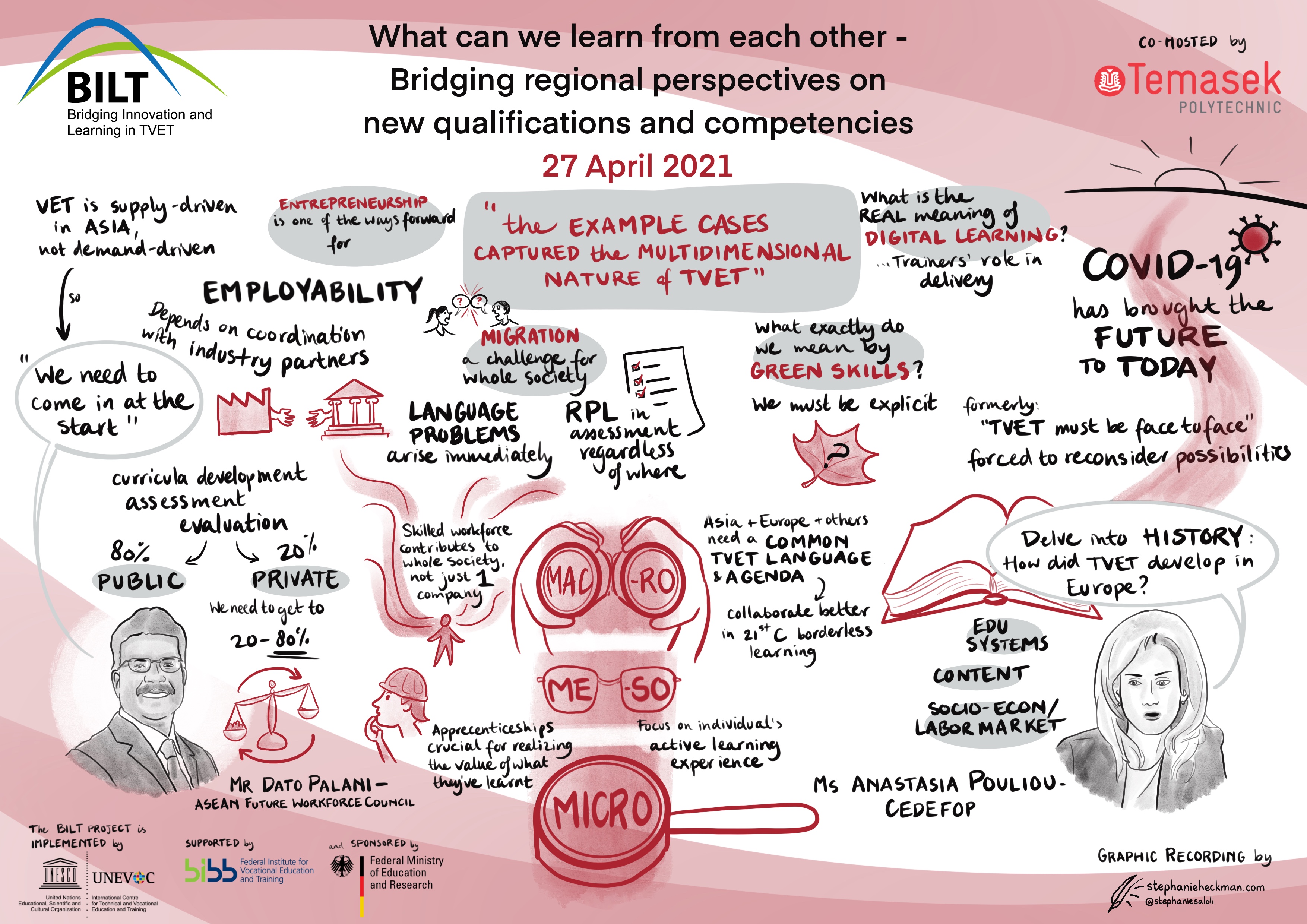
| What we can learn from each other – Bridging regional perspectives on new qualifications and competencies
Moderated by Ms Jolien van Uden, ETF
Objective: highlight and synthesize the main learnings from the four initiatives and their discussion. Explore how Europe and Asia and the Pacific can benefit from each other’s experience regarding the identification, integration and implementation of new qualifications and competencies in TVET.
Podium speakers:
- Ms Anastasia Pouliou, Expert, Department for VET Systems and Institutions, European Centre for the Development of Vocational Training (Cedefop)
- Mr Dato Palani, Head, ASEAN Future Workforce Council (AFWC)
|
| | Day 2, 28 April 2021
|
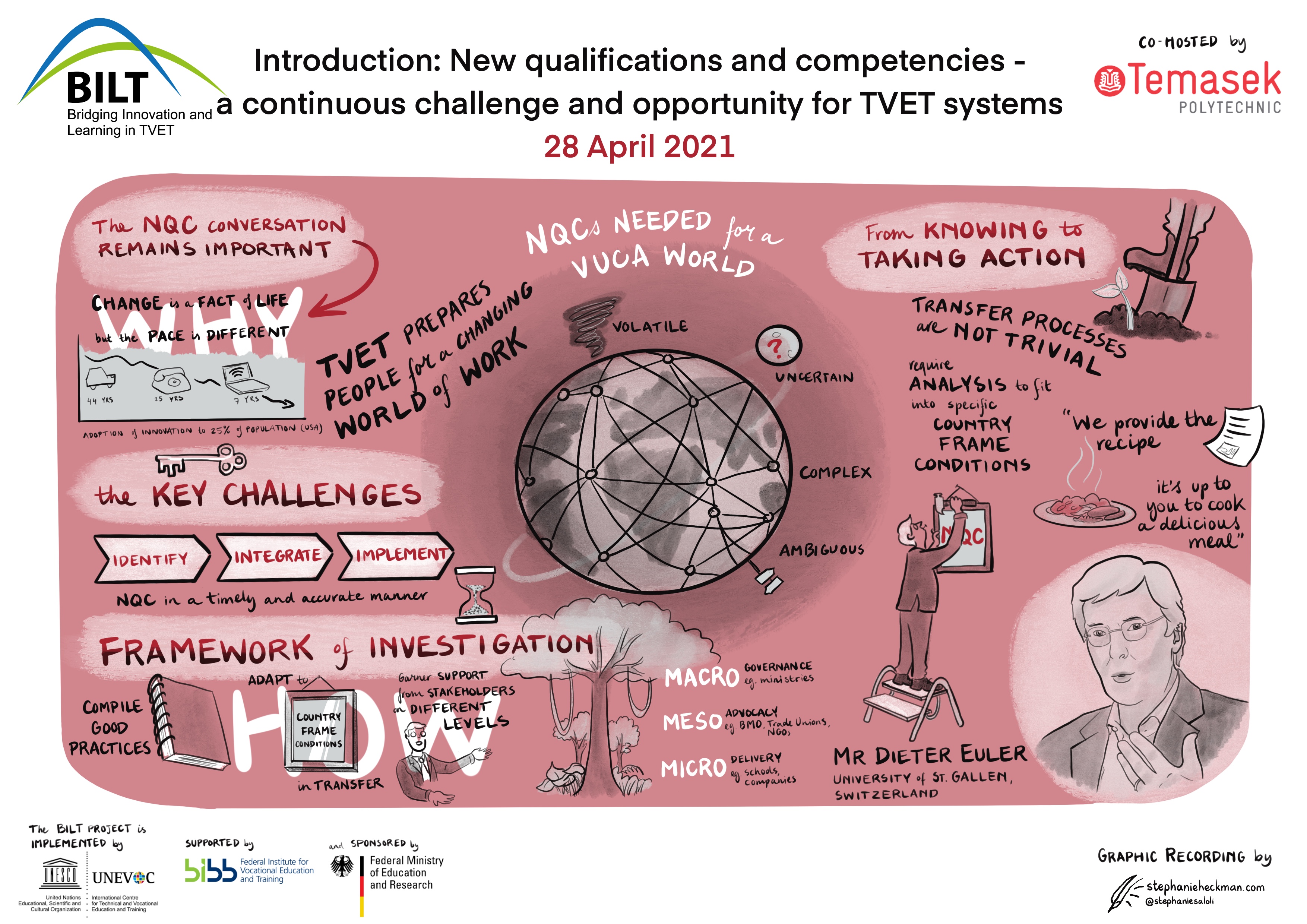 | Introduction: New qualifications and competencies – a continuous challenge & opportunity for TVET systems
Mr Dieter Euler, Professor for Educational Management and Business Education, University of St. Gallen, Switzerland
Objective: underline the importance of improving the intersections between the world of work and the world of education; understand the frame conditions for the process of identification, integration and implementation of new qualifications and competencies, which enables TVET systems to respond accurately and promptly to the needs of society.
|
| |
Parallel breakout sessions
Objective: delve into the process of identifying, integrating and implementing new qualifications and competencies, while exploring the limits and possibilities set by the major trends affecting TVET in Asia and Europe.
|
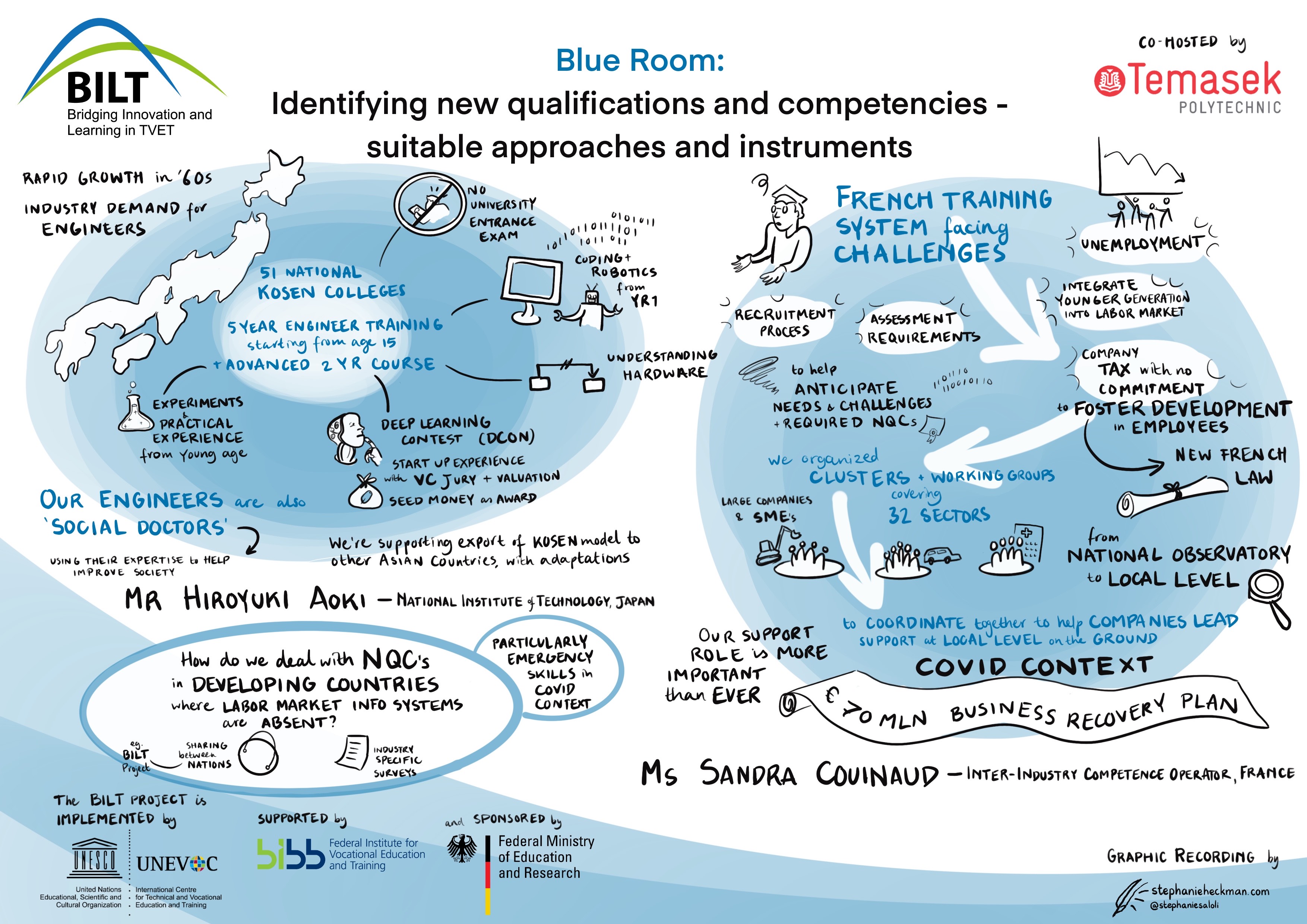 |
Blue Room: Identifying new qualifications and competencies - suitable approaches and instruments
Moderated by Mr Philip Loveder, Executive Manager, Inform and Engage, National Centre for Vocational Education Research (NCVER), Australia
Objective: explore challenges and solutions faced by TVET systems in identifying relevant and future-oriented qualifications and competencies in a fast-evolving technological scenario.
Podium speakers:
- Ms Sandra Couinaud, Director, AR2i PACA Corse, Inter-industry Competence Operator, France
- Mr Hiroyuki Aoki, Senior Director for International Affairs, Headquarters of National Institute of Technology, Japan
|
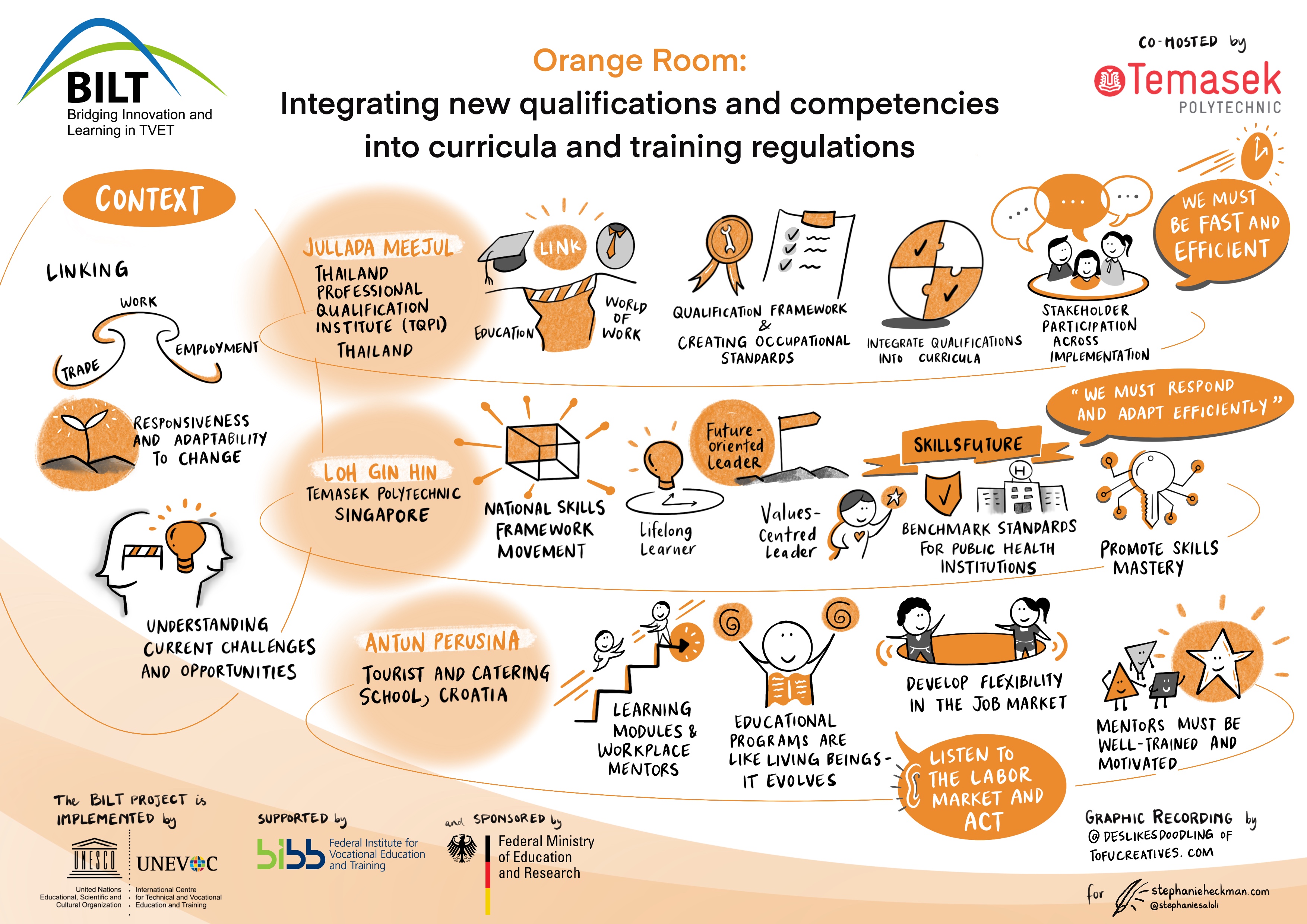 | Orange room: Integrating new qualifications and competencies into curricula and training regulations
Moderated by Mr Matteo Sgarzi, Head of Mission, International Relations, Centre for Studies and Research on Qualifications (Céreq), France
Objective: understand the hurdles and catalysts to design flexible and appealing curricula, increasing lifelong learning opportunities to students and learners. Explore the existing interfaces with the processes of identification and implementation.
Podium speakers:
- Mr Antun Perusina, Headmaster, Dubrovnik Tourist and Catering School, Croatia
- Ms Jullada Meejul, Deputy Director General, Thailand Professional Qualification Institute (TPQI), Thailand
- Mr Loh Gin Hin, Deputy Director, Quality Development & Planning and Domain Chair, Education Research & Development, Temasek Polytechnic, Singapore
|
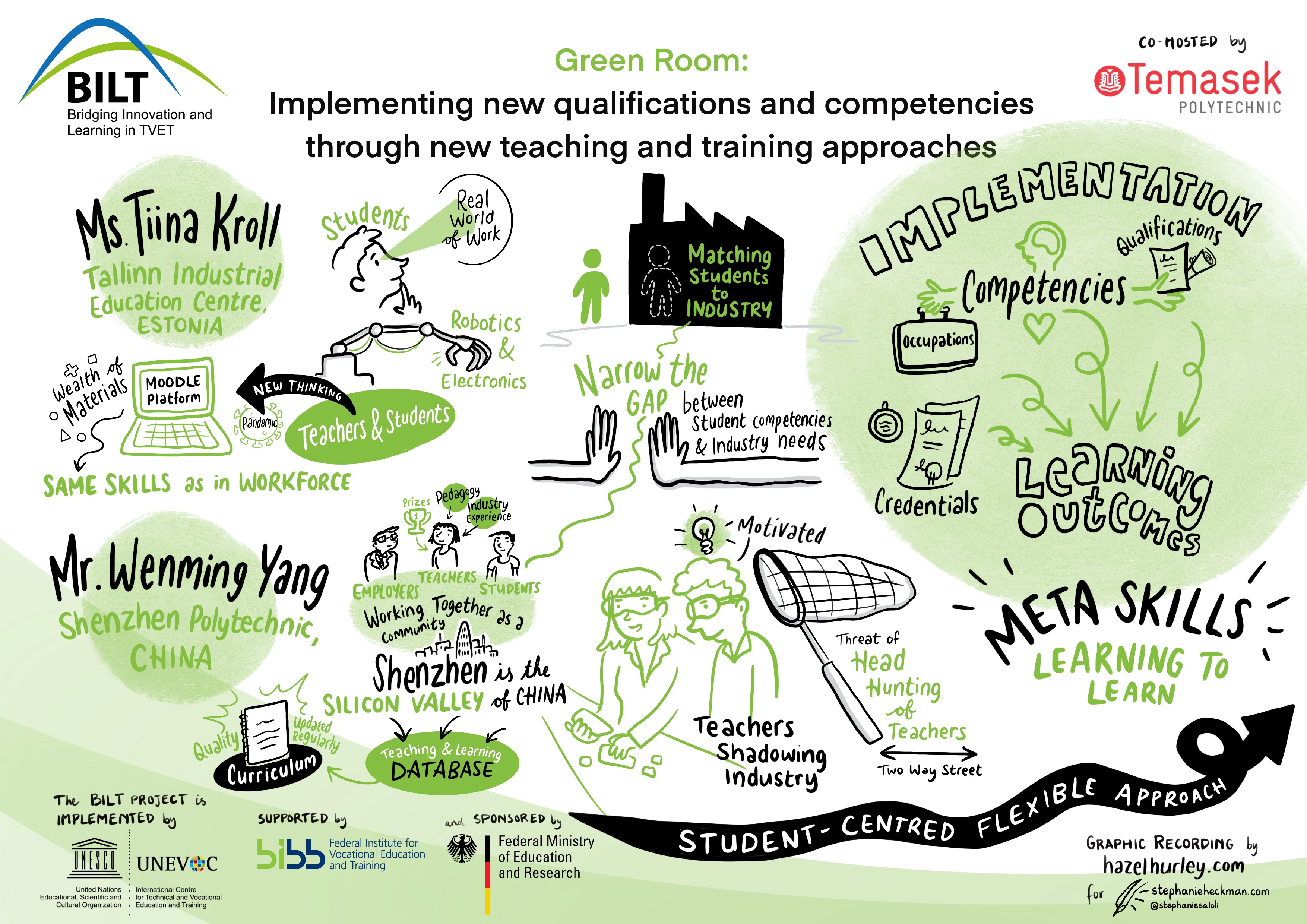 | Green room: Implementing new qualifications and competencies through new teaching and training approaches
Moderated by Mr James Keevy, Chief Executive, JET Educational Services, South Africa
Objective: take stock of the diverse institutional settings in place in Asia and Europe and how they condition the evolvement of the teaching and training practice.
Podium speakers:
- Ms Tiina Kroll, Educational Specialist, Tallinn Industrial Education Centre, Estonia
- Mr Wenming Yang, UNEVOC Centre Coordinator, Shenzhen Polytechnic, China
|
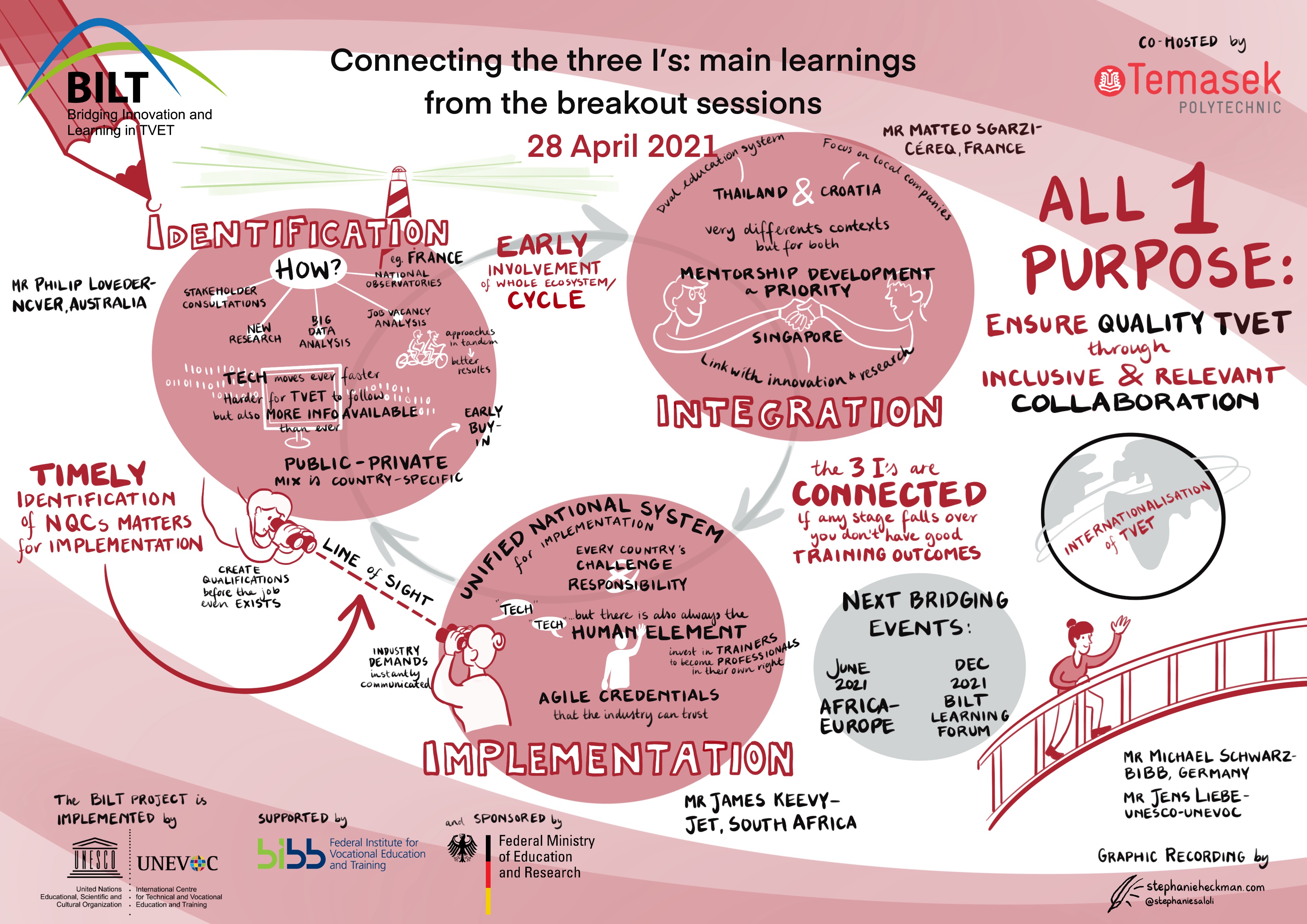 | Connecting the three I's: main learnings from the breakout sessions
Moderated by Mr Mergim Jahiu, International Advisor in VET, International Relations, Swiss Federal Institute for Vocational Education and Training (SFIVET), Switzerland
Objective: To present the main takeaways from each breakout session while highlighting the interplay between the identification, integration and implementation of new qualifications and competencies.
Podium speakers:
Mr Philip Loveder, National Centre for Vocational Education Research (NCVER), Australia
Mr Matteo Sgarzi, Centre for Studies and Research on Qualifications (Céreq), France
Mr James Keevy, JET Educational Services, South Africa
|
|
| Closing of the conference
Mr Jens Liebe, Team Leader for Innovation and the Future of TVET, UNESCO-UNEVOC
Mr Michael Schwarz, Senior Technical Advisor, Federal Institute for Vocational Education and Training (BIBB), Germany
Objective: wrap up the event and look at the next steps for the BILT project until December 2021; highlight the existing opportunities for TVET institutions from across the globe
to engage in the project’s activities.
|
| | Networking & parallel information sessions
Blue Room: How to submit an Innovation and Learning Practice
Learn about the concept and how to submit an innovation and learning practice from your institution.
Ms Alexandra Filippova, Programme Assistant, UNESCO-UNEVOC
Orange Room: How to engage with the UNEVOC Network
Introducing the UNEVOC Network, UNESCO's unique global platform of TVET institutions, the session is intended for TVET stakeholders that are not yet members but are interested to find out more about the network's mission and objectives, composition, and possibilities for future engagement.
Mr Wouter De Regt, Team Leader for the Network Secretariat, UNESCO-UNEVOC
Green Room: Micro-Learning and the Pandemic
Learn how Temasek Polytechnic supports the National Effort in Continuing Education and Training during a Global Pandemic.
Mr Hsien Wei Tan, Assistant Director, Business Development & Marketing, Temasek SkillsFuture Academy, Temasek Polytechnic
|


 VIDÉOS SOUS-TITRÉES EN FRANÇAIS
 VIDÉOS SOUS-TITRÉES EN FRANÇAIS
.focus();)
.focus();)

.focus();)
.focus();)
.focus();)
.focus();)
.focus();)
.focus();)

