Graphic recordings and presentations
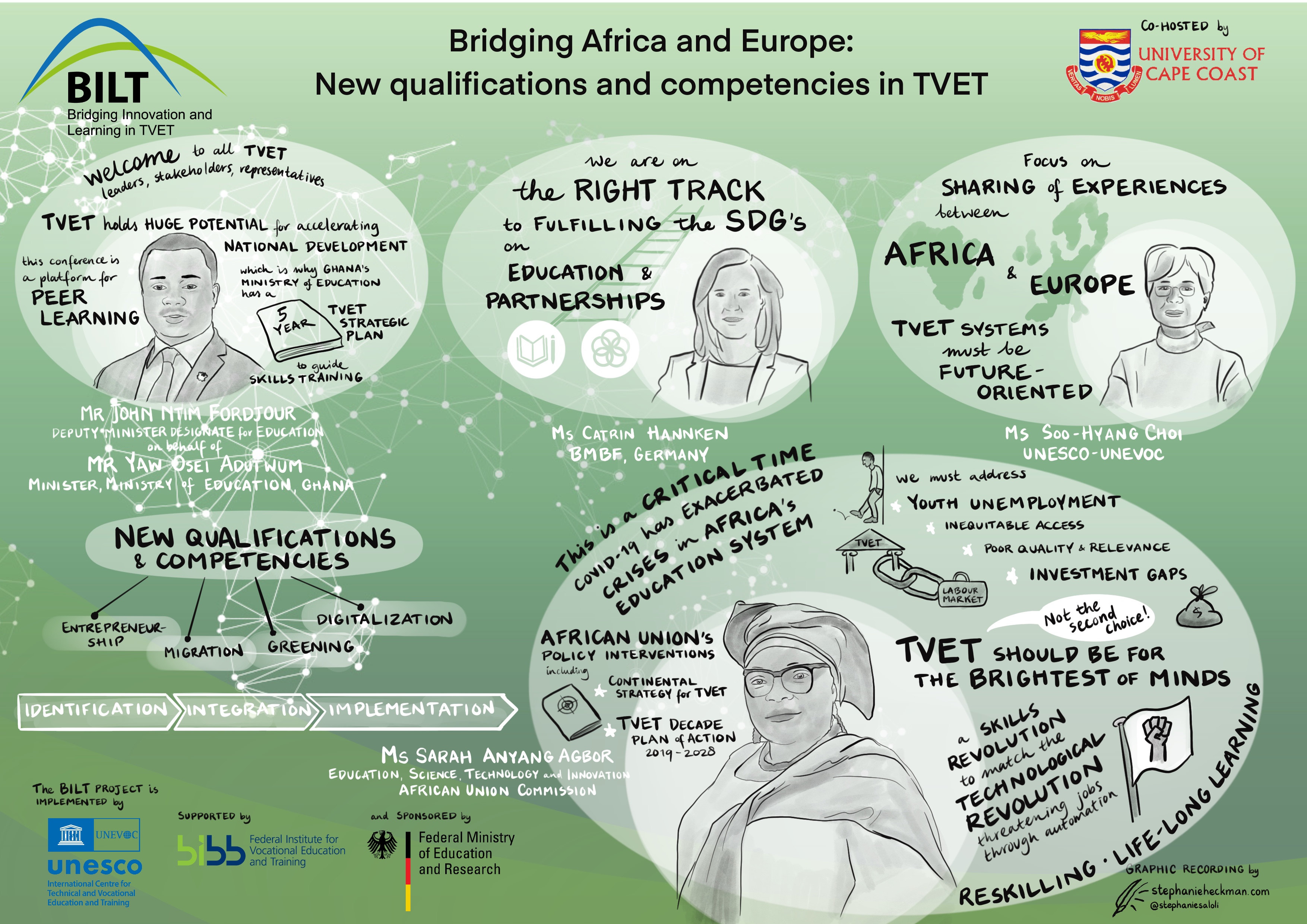
Welcome remarks
- Mr John Ntim Fordjour, Deputy Minister Designate for Education, Ghana, on behalf of Mr Yaw Osei Adutwum, Minister, Ministry of Education, Ghana
- Ms Catrin Hannken, Deputy Director-General for VET, Federal Ministry of Education and Research (BMBF), Germany
- Ms Soo-Hyang Choi, Director, UNESCO-UNEVOC
Key note
-
 Ms Sarah Anyang Agbor
 , Commissioner for Human Resources, Science and Technology of the African Union Commission
The keynote speech elaborates on the key challenges and needs to further improve TVET in Africa as well as the relevant policies that explain the development targets. It reflects on how an exchange with European institutions could support these efforts.
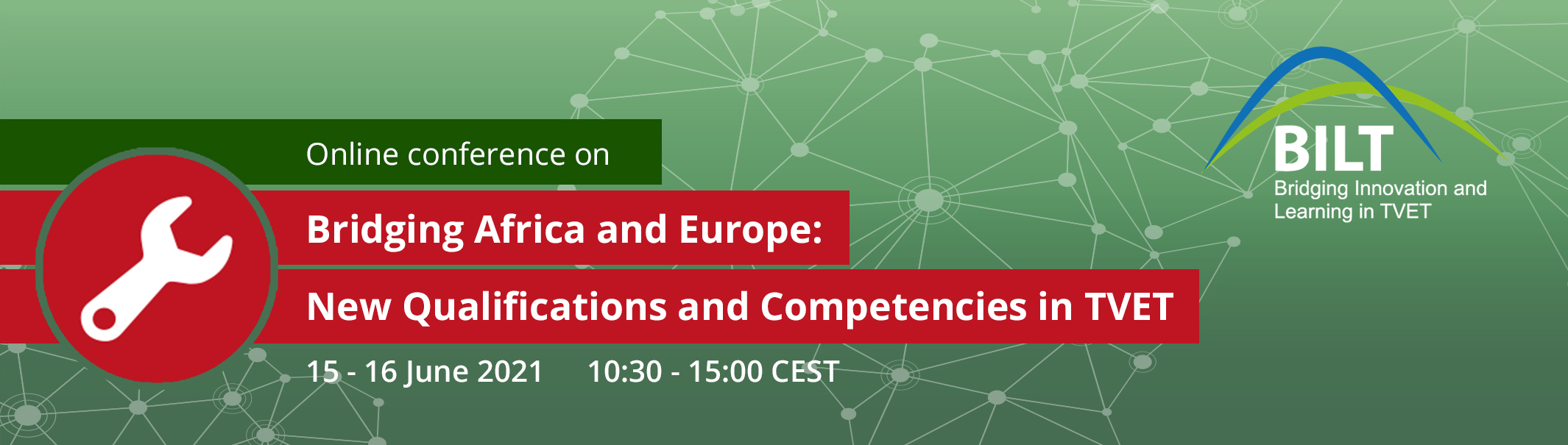
Introduction to the Bridging Innovation and Learning in TVET (BILT) project
- Ms Vera Hark, BILT Project Manager, Federal Institute for Vocational Education and Training (BIBB), Germany
- Mr Wilson Lima Junior, BILT Project Manager, UNESCO-UNEVOC
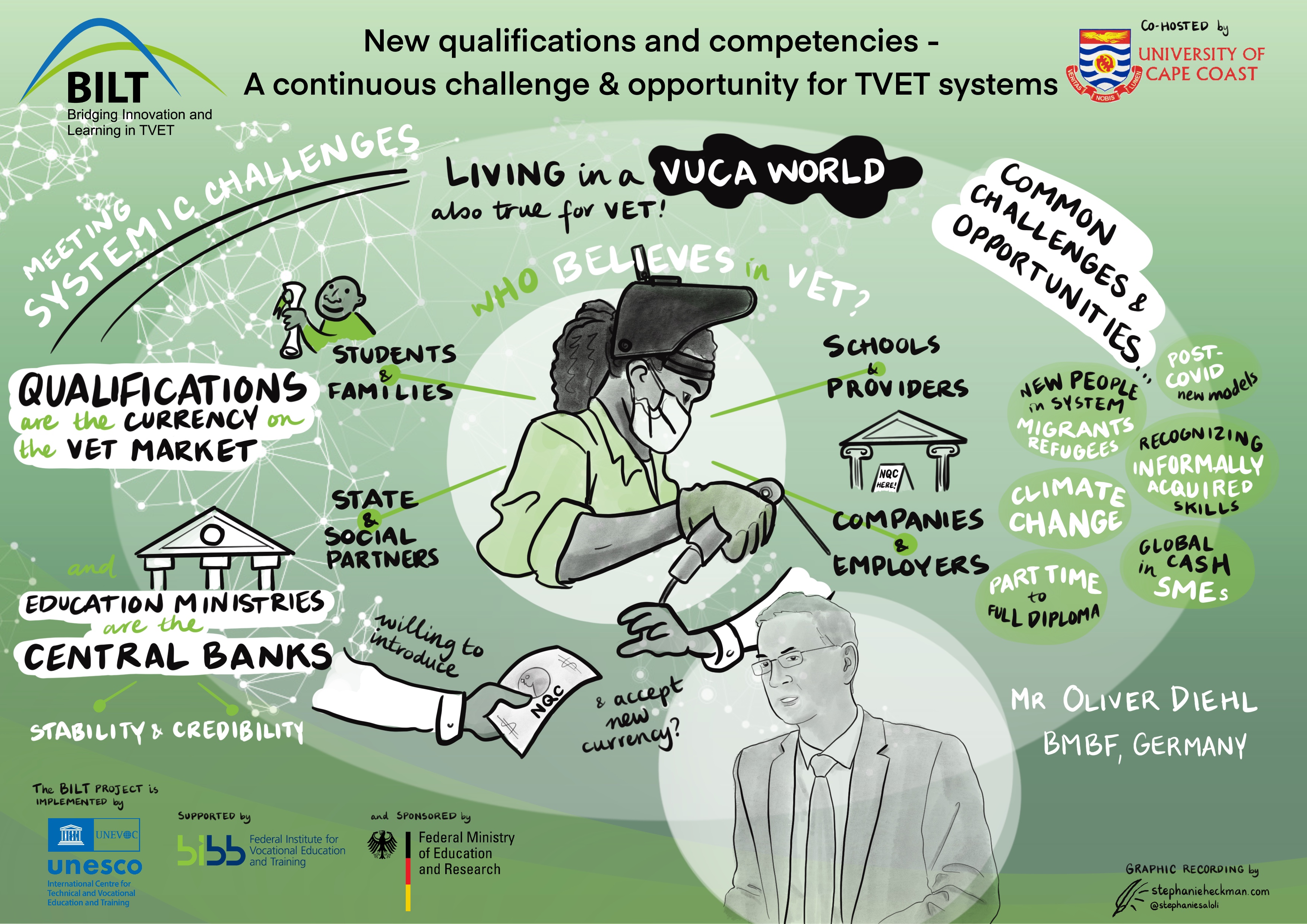
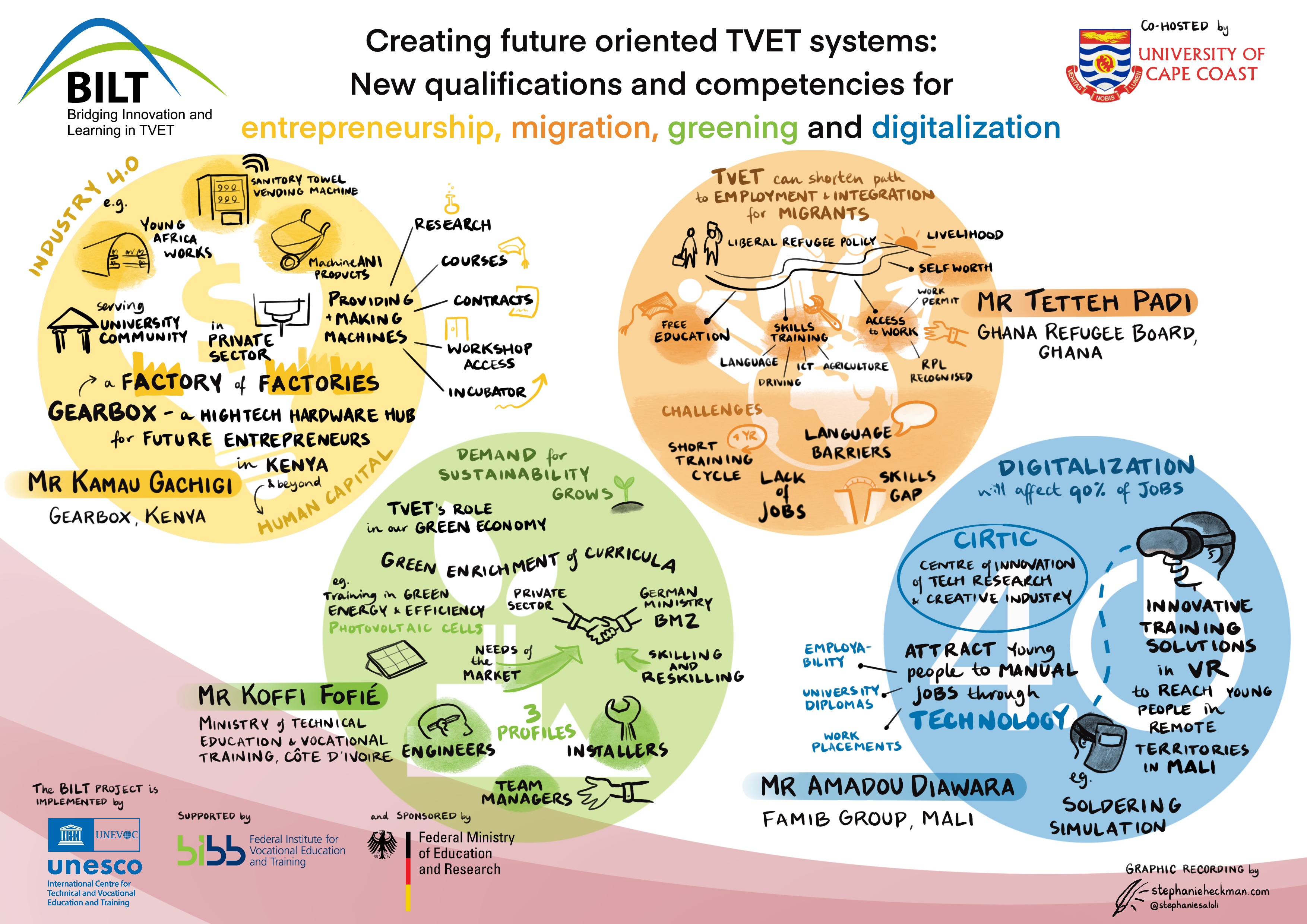
Creating future oriented TVET systems: New qualifications and competencies for entrepreneurship, digitalization, greening and migration
The session explores innovative practices that address the themes of digitalization, greening, entrepreneurship and migration, highlighting relevant aspects related to the identification, integration and implementation of new qualifications and competencies.
Moderators:
- Ms Sarah Darkwa, Dean of the School of Graduate Studies, University of Cape Coast, Ghana
- Ms Vera Hark, BIBB, Germany
Speakers:
- Entrepreneurship: Mr Kamau Gachigi, Executive Director, Gearbox, Kenya
- Migration: Mr Tetteh Padi, Ag. Executive Secretary, Ghana Refugee Board, Ghana
- Greening: Mr Koffi Fofié, Director of Initial Vocational Training, Ministry of Technical Education and Vocational Training, Côte d’Ivoire
- Digitalization: Mr Amadou Diawara, CEO and Founder, FAMIB Group, Mali
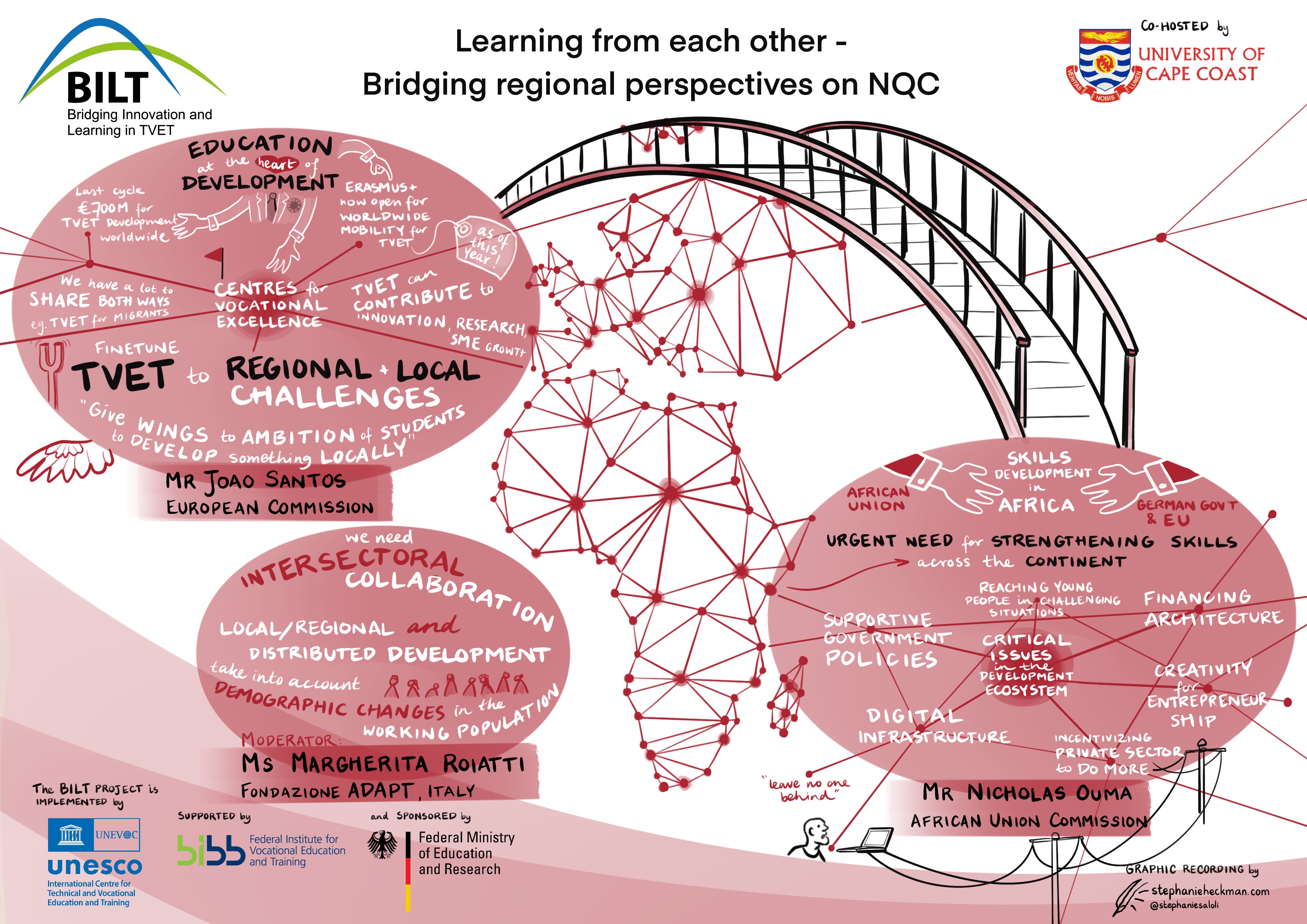
Learning from each other – Bridging regional perspectives on new qualifications and competencies
This session's objective is to highlight and synthesize the main learnings from the four initiatives and their discussion. It aims to explore how Europe and Africa can benefit from each other’s experience regarding the identification, integration and implementation of new qualifications and competencies in TVET.
Moderator: Ms Margherita Roiatti, Senior Research Fellow, Fondazione ADAPT, Italy
Panelists:
- Mr Nicholas Ouma, Senior Youth Advisor in the Education, Science, Technology and Innovation (ESTI) Department, African Union Commission
- Mr Joao Santos, Senior Expert in the Directorate General for Employment, Social Affairs, and Inclusion, European Commission
Breakout sessions “Social partner perspectives on new qualifications and competencies”
The process of identifying, integrating and implementing new qualifications and competencies has greatly evolved as a multi stakeholder endeavor. Social partners, including the private sector, have an active role in this process which goes beyond addressing skills shortages and immediate manpower needs. Companies, as members of business associations and the community, have been constantly adapting to the disruptions and contributing to the development of new qualifications and competencies. This session aims to look at the perspective of private sector in preparing the workforce of the future.
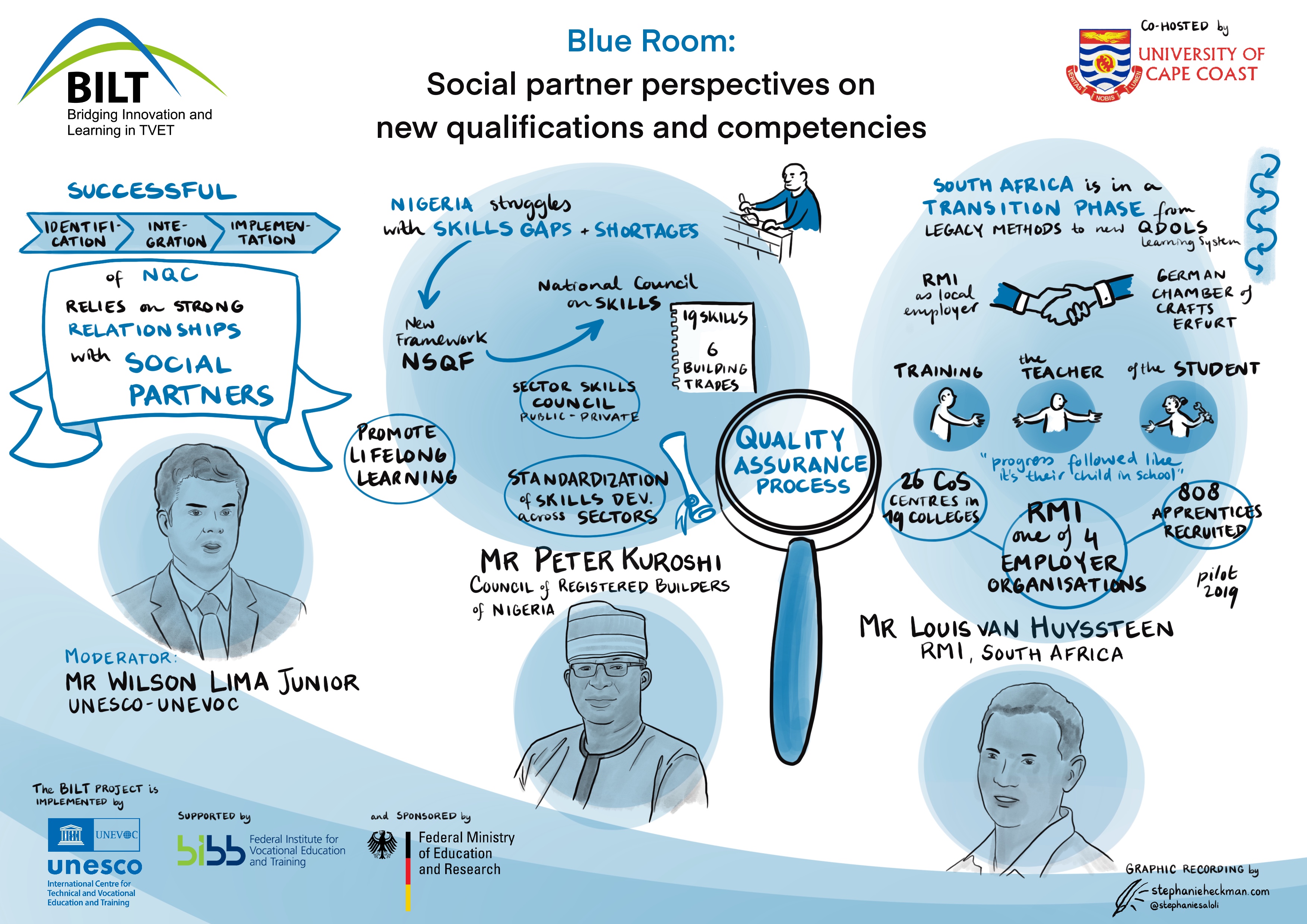
Blue Room, breakout session 1
This session will walk you through examples on how public private partnerships in TVET can contribute to quality assurance in the process of identification, integration and implementation of new qualifications and competencies.
Moderator: Mr Wilson Lima Junior, UNESCO-UNEVOC
Panelists:
- Mr Peter Kuroshi, Registrar and Secretary of Council, Council of Registered Builders of Nigeria
- Mr Louis van Huyssteen, National Director Training, Retail Motor Industry Organisation (RMI), South Africa
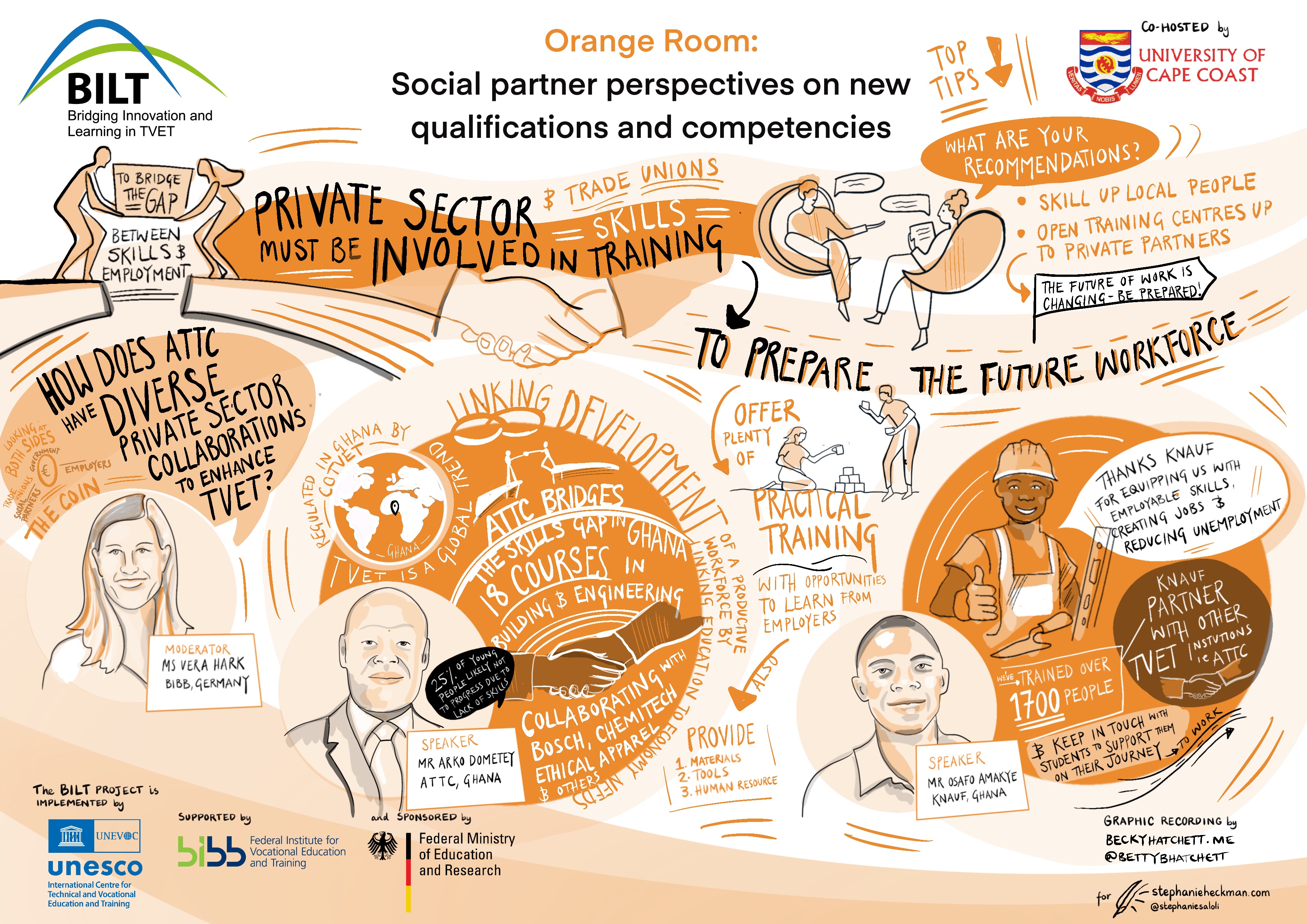
Orange Room, breakout session 2
Join this session to learn from ATTC’s principal how collaboration with international companies helps to deliver relevant training. A representative from Knauf Ghana, seasoned ATTC partner, will bring the perspective of the private sector.
Moderator: Ms Vera Hark, BIBB
Panelists:
- Mr Arko Dometey, Principal, Accra Technical Training Centre (ATTC), Ghana
- Mr Osafo Amakye, Training Manager, Knauf Ghana
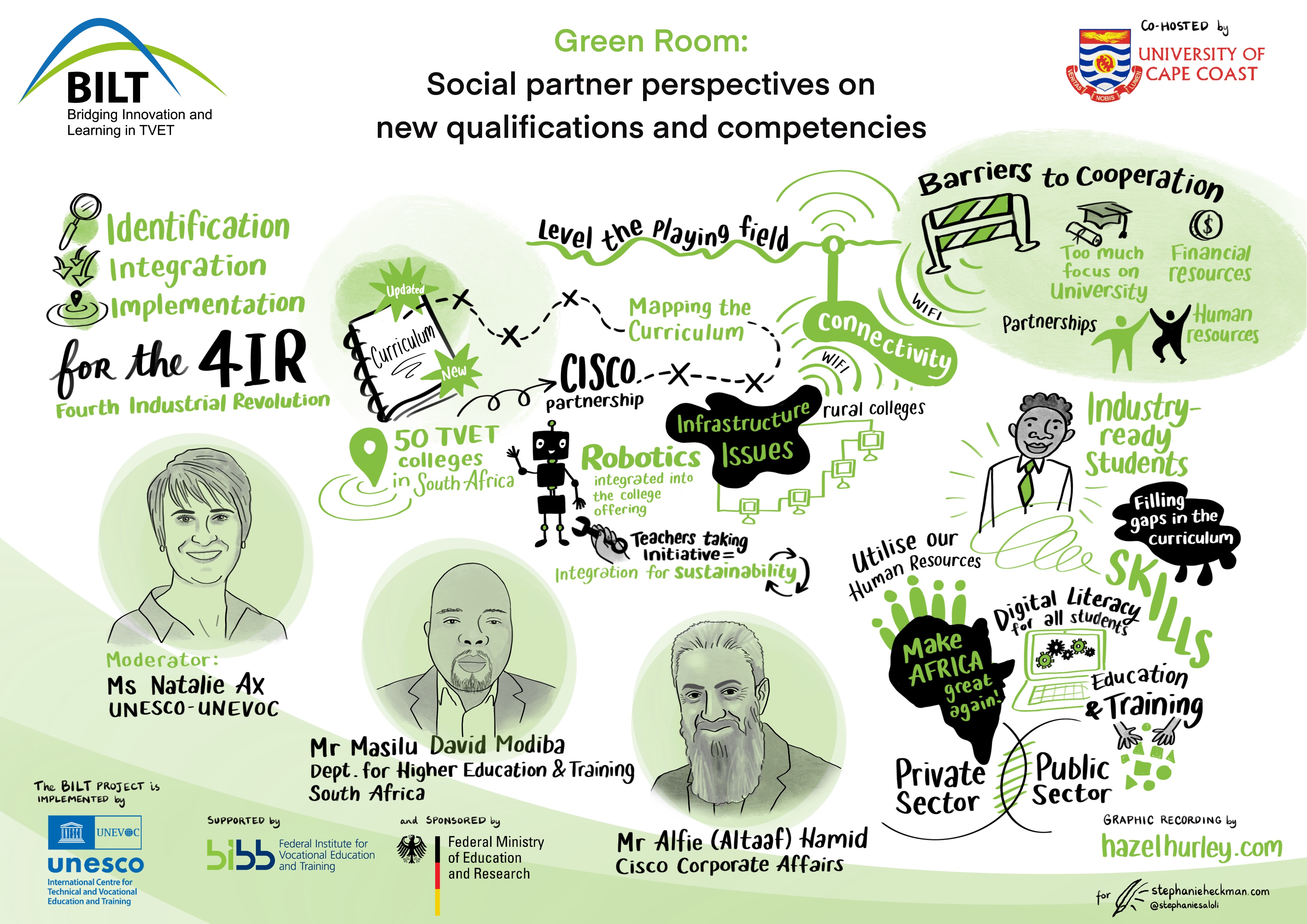
Green Room, breakout session 3
Integrating 4IR in the national curriculum: The Cisco Networking Academy in South Africa. Join us to find out how the Department for Higher Education and Training (DHET) and Cisco collaborate to make South Africa’s TVET system and the country’s workforce fit for the Fourth Industrial Revolution.
Moderator: Ms Natalie Ax, UNESCO-UNEVOC
Speakers:
- Mr Alfie (Altaaf) Hamid, Manager: Global Partnerships, Cisco Corporate Affairs on “Cisco Networking Academy”
- Mr Masilu David Modiba, Deputy Director for TVET Colleges Curriculum Development and Support, Department for Higher Education and Training, South Africa
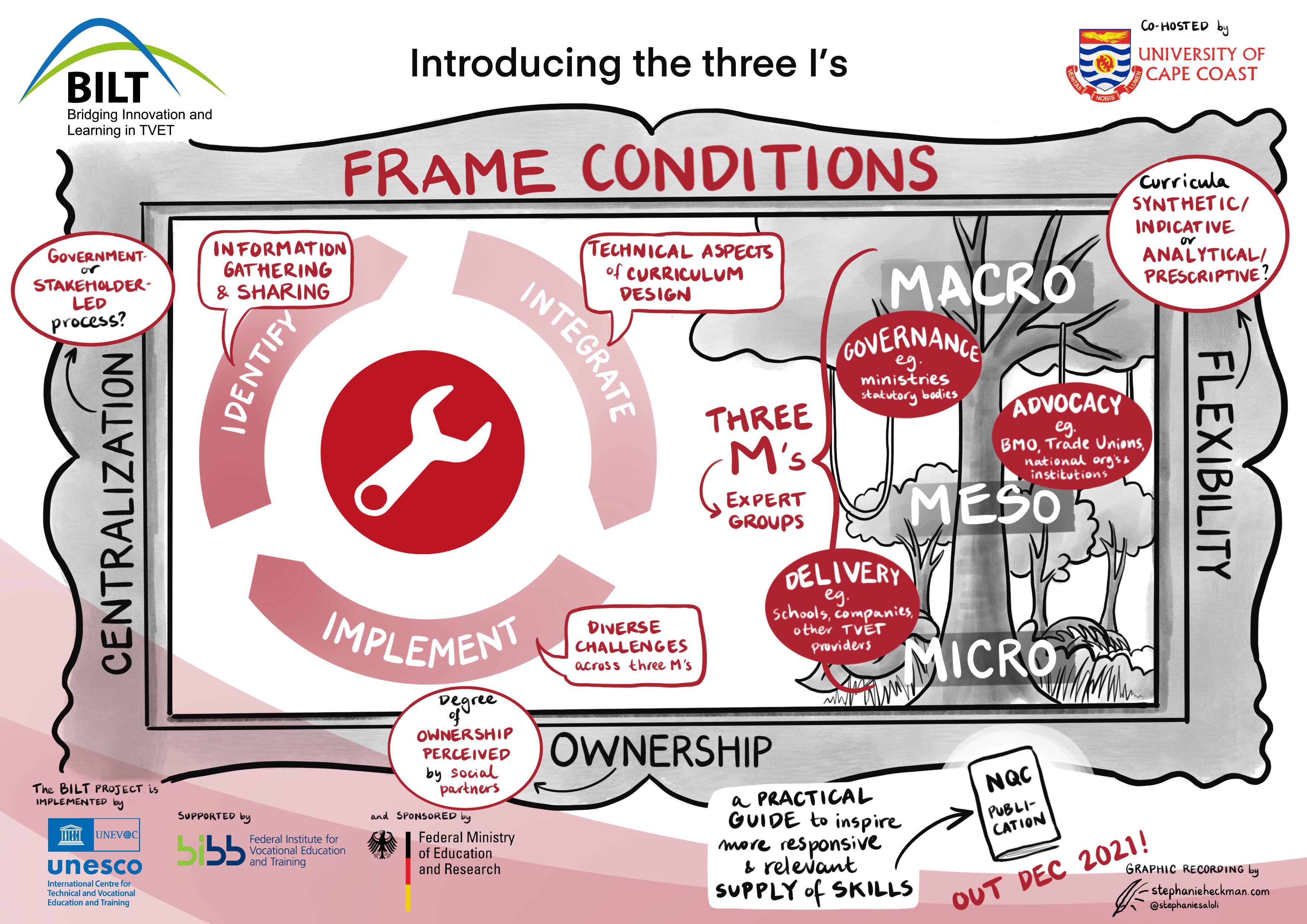
Introducing the “three I’s”
The introduction aims to develop a deeper understanding of the conditions for the “three I’s” process developed by the BILT expert group: identification, integration and implementation of new qualifications and competencies.
- Ms Vera Hark, BIBB, Germany
- Mr Wilson Lima Junior, UNESCO-UNEVOC
Parallel breakout sessions
Continuing on the “three I’s”, three parallel breakout sessions delve deeper into the processes of identifying, integrating and implementing new qualifications and competencies. Each session – conducted in parallel – explores essential elements of the process and presents examples from TVET systems that can serve as a starting point and inspiration for stakeholders in other contexts.
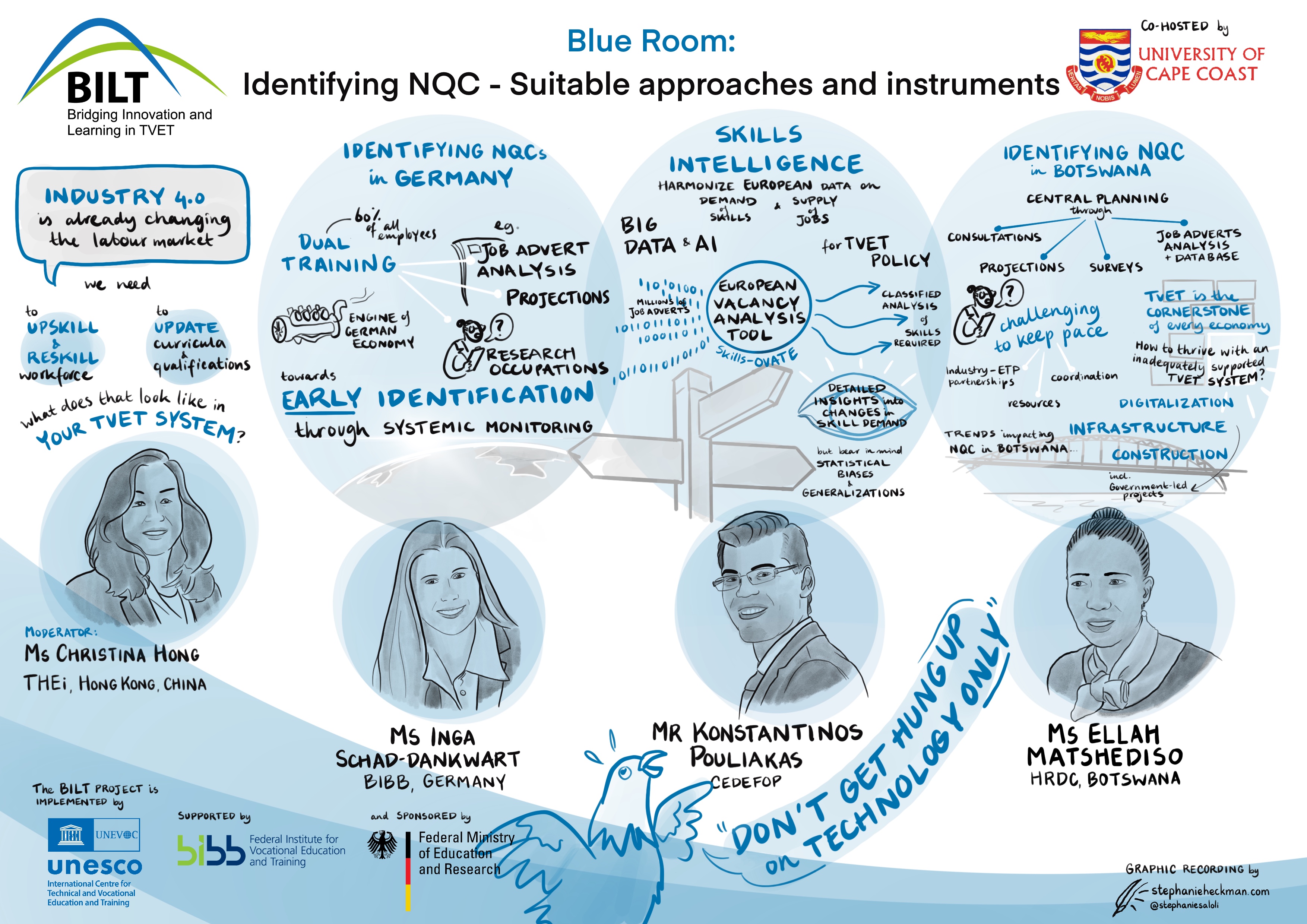
Blue Room, breakout session 1
Identifying new qualifications and competencies - suitable approaches and instruments
This session aims to explore challenges and solutions faced by TVET systems in identifying relevant and future-oriented qualifications and competencies in a fast-evolving technological scenario.
Moderator: Ms Christina Hong, President, Technological and Higher Education Institute (THEi), Hong Kong, China
Panelists:
- Ms Inga Schad-Dankwart, Senior Researcher, Federal Institute for Vocational Education and Training (BIBB), Germany
- Ms Ellah Matshediso, Director, Human Resource Development Planning-Supply, Human Resource Development Council (HRDC), Botswana
- Mr Konstantinos Pouliakas, Senior Expert, European Centre for the Development of Vocational Training (Cedefop)
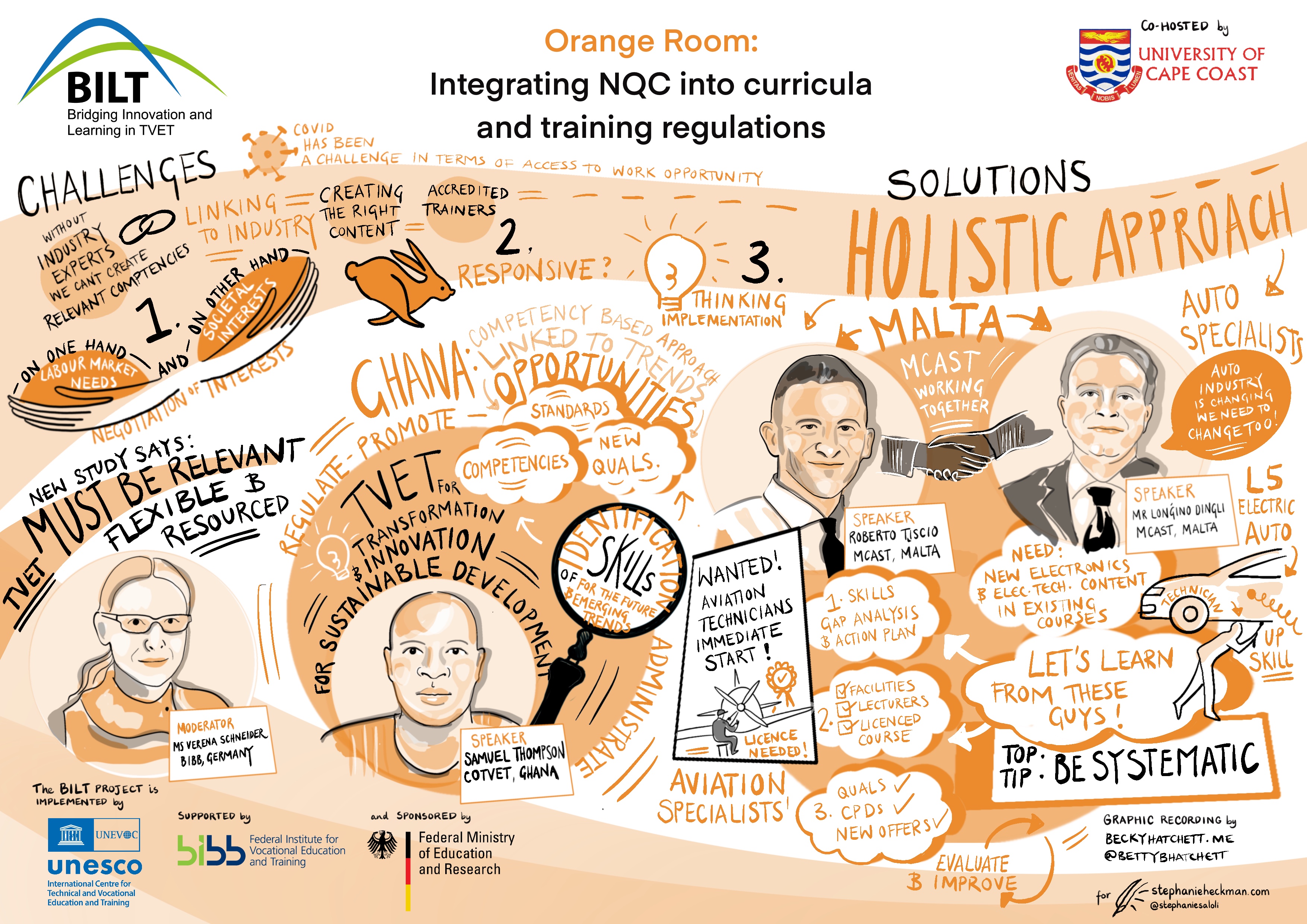
Orange room, breakout session 2
Integrating new qualifications and competencies into curricula and training regulations
The objective of this session is to understand the hurdles and catalysts to design flexible and appealing curricula, increasing lifelong learning opportunities to students and learners. We will also explore the existing interfaces with the processes of identification and implementation.
Moderator: Ms Verena Schneider, Senior Researcher, Federal Institute for Vocational Education and Training (BIBB), Germany
Panelists:
- Mr Samuel Thompson, Coordinator, Policy and Planning, Council for Technical and Vocational Education and Training (COTVET), Ghana
- Mr Longino Dingli, Deputy Director, Automotive Engineering & IET Foundation, and
- Mr Roberto Tiscio, Deputy Director of the Institute of Engineering and Transport Malta College of Arts, Science and Technology (MCAST), Malta
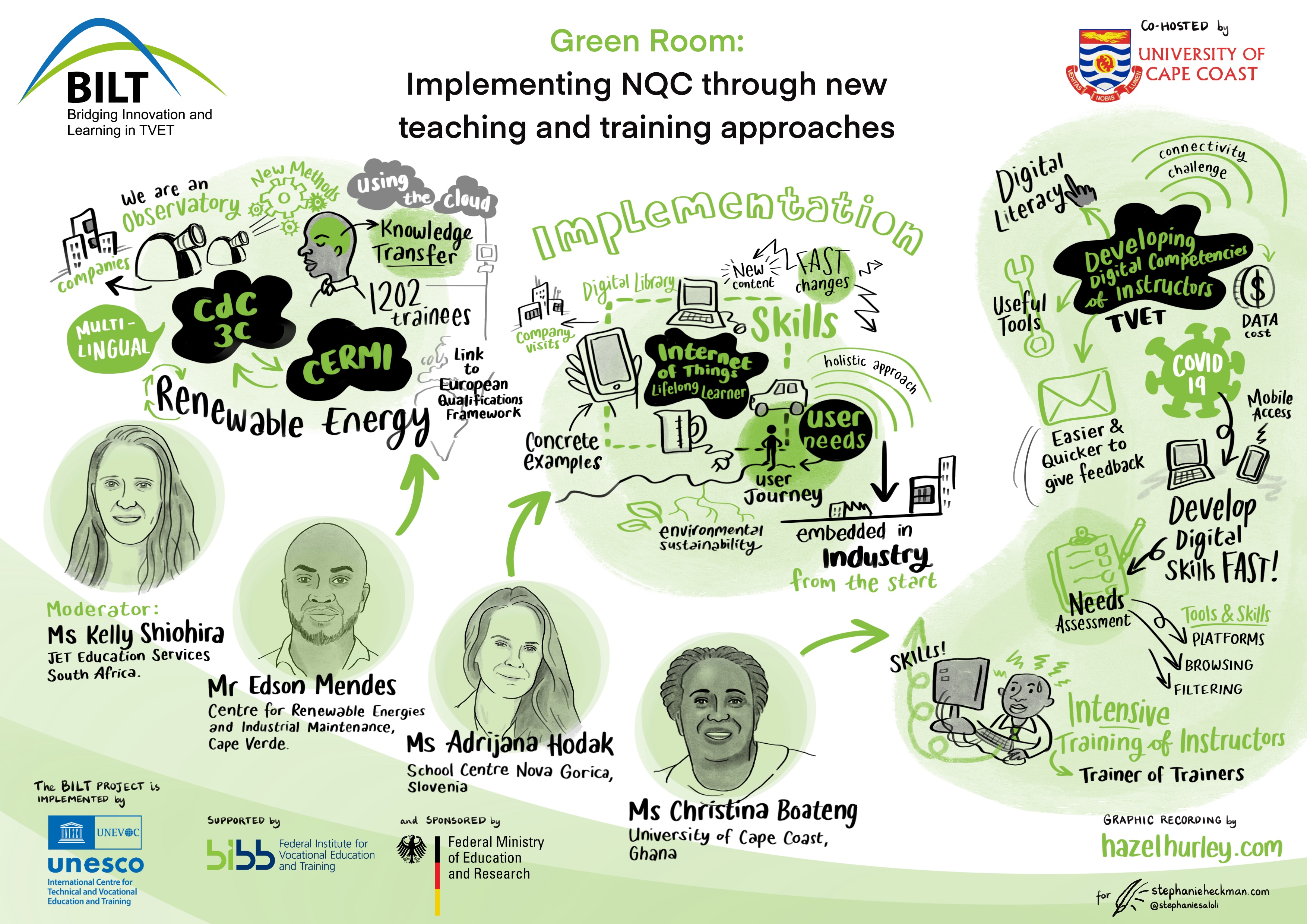
Green room, breakout session 3
Implementing new qualifications and competencies through new teaching and training approaches
The sessions aims to take stock of the diverse institutional settings in place in Africa and Europe and how they condition the evolvement of the teaching and training practice.
Moderator: Ms Kelly Shiohira, JET Education Services, South Africa
Panelists:
- Ms Christina Boateng, Senior Lecturer, Department of VOTEC, University of Cape Coast, Ghana
- Ms Adrijana Hodak, Head of Intercompany training centre, School Center Nova Gorica, Slovenia
- Mr Edson Mendes, Deputy General Director, Training and Metrology Department, Center for Renewable Energies and Industrial Maintenance (CERMI), Cape Verde
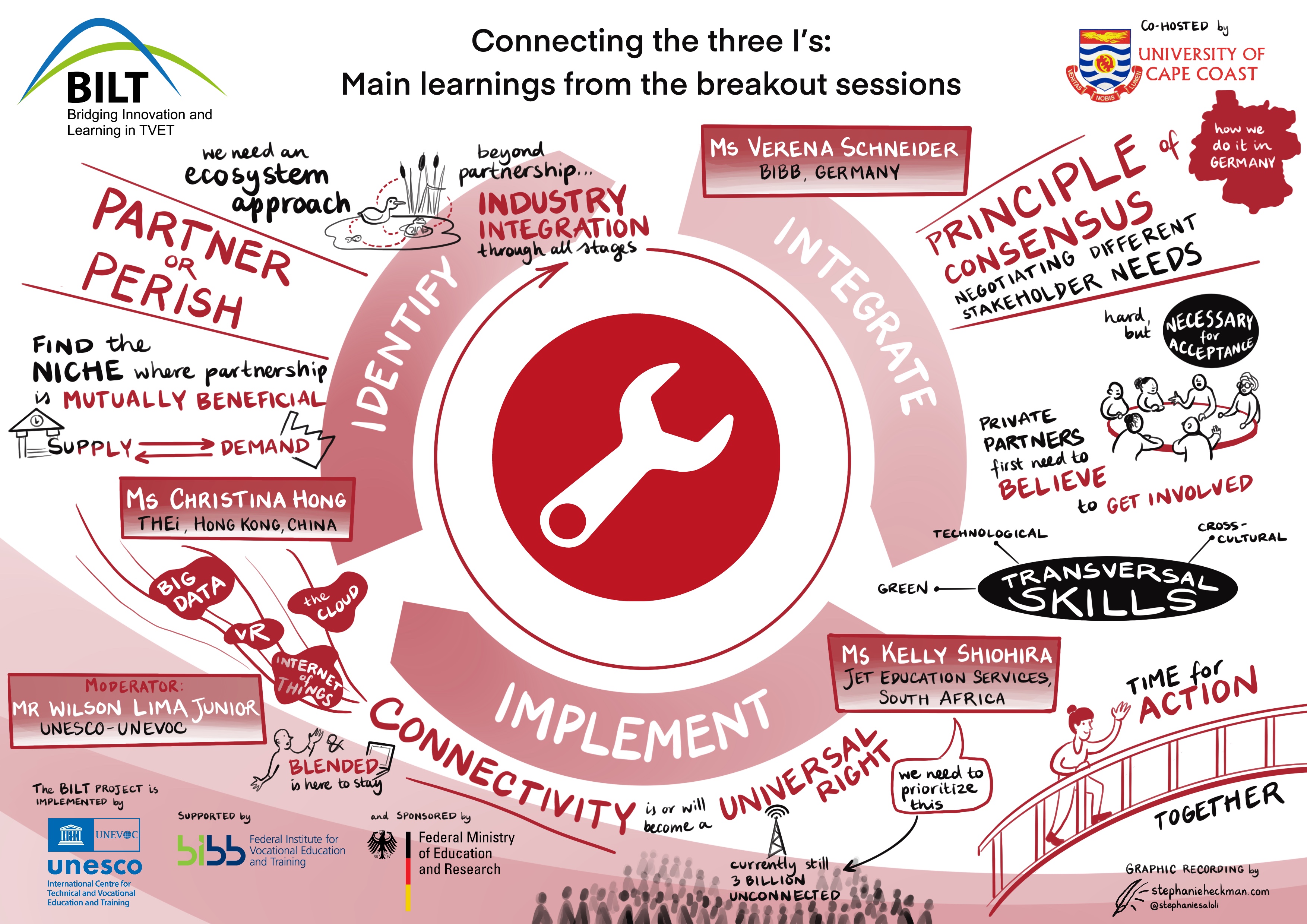
Connecting the three I's: main learnings from the breakout sessions
The panelists will present the main takeaways from each breakout session while highlighting the interplay between the identification, integration and implementation of new qualifications and competencies.
Moderator: Mr Wilson Lima Junior, UNESCO-UNEVOC
Panelists:
- Ms Christina Hong, THEi, Hong Kong, China
- Ms Verena Schneider, BIBB, Germany
- Ms Kelly Shiohira, JET Education Services, South Africa
Closing of the conference
Objective: wrap up the event and look at the next steps for the BILT project until December 2021; highlight the existing opportunities for TVET institutions from across the globe to engage in the project’s activities.
- Ms Sarah Darkwa, University of Cape Coast, Ghana
- Mr Jens Liebe, UNESCO-UNEVOC
Networking & parallel information sessions
Blue Room, Info session 1
How to submit an ‘Innovation and Learning Practice’
Ms Alexandra Filippova, Programme Assistant, UNESCO-UNEVOC
Orange Room, Info session 2
UNESCO-UNEVOC's online tools and services
Mr Max Ehlers, Team Leader for Knowledge Management and IT, UNESCO-UNEVOC
Green Room, Info session 3
International cooperation at University of Cape Coast
Mr Kwaku A. Boakye, Dean of International Education, University of Cape Coast, Ghana


.focus();)
.focus();)
.focus();)
.focus();)
.focus();)
.focus();)
.focus();)
.focus();)
.focus();)
.focus();)
.focus();)
.focus();)
 Facebook
 Twitter